
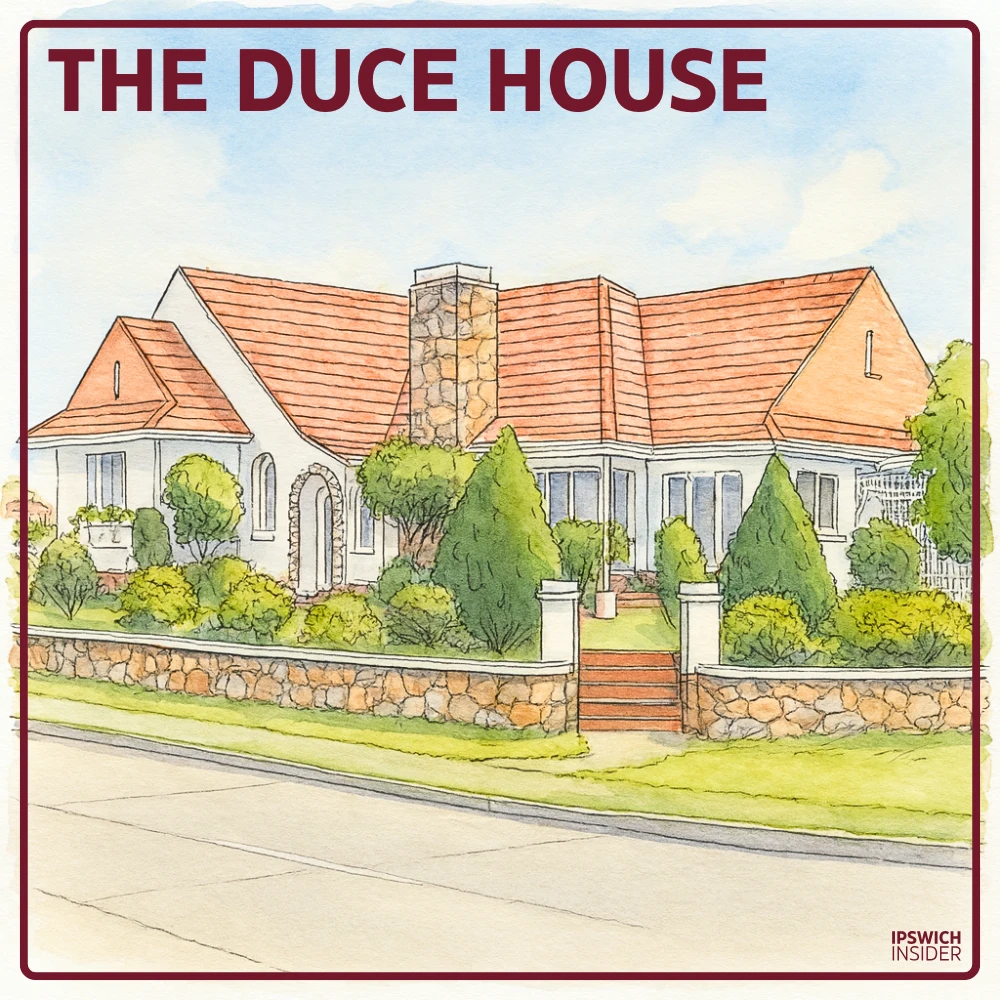
The Duce House at a Glance
- English Domestic Revival. A compact rendered brick cottage built around 1952 for racehorse owners Norm and Norma Duce. Sits on a corner block carved from the old Elamang estate.
- First Pool. Widely believed to have had the 1st private swimming pool in Ipswich. Built right in the front yard facing Brisbane Road. 2 decades before backyard pools became common.
- 3 Owners. In 70-plus years, only 3 families have owned the house. Pool was filled in at some point. Then dug back out by the current owners after 2007.
🔢 By The Numbers
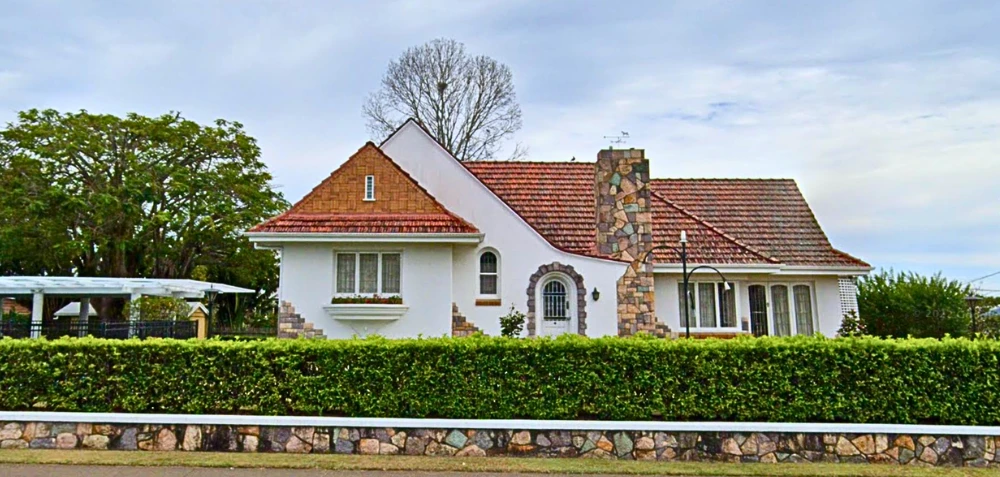
- Address: 88 Brisbane Road, East Ipswich QLD 4305
- Built: c.1952
- Style: English Domestic Revival (cottage variant)
- Land: 1,468 m²
- Rooms: 3 bed, 1 bath
- Estate: Carved from Richard Watson’s 22-acre Elamang estate, subdivided into 59 lots in 1911
- Wait: 10 years between buying the land (1942) and building the house (1952)
- Pool: Believed to be the first private pool in Ipswich — roughly 20 years before backyard pools became common
- Owners: Just 3 families in 70+ years
- Sale: Sold at auction in 2007 for a reported $543,000
- Original: Driveway, pipe door chime, flower box, sunroom, pergola, walnut wardrobe, incinerator and dumbwaiter — all still intact from 1952
Imagine it’s 1955.
You’re driving down Brisbane Road…
…And there it is: a swimming pool in someone’s front yard.
Nobody in Ipswich had a private pool. The Duces did.
Norm and Norma Duce ran a car dealership in Ipswich and owned racehorses, and the story goes that winnings from the track helped pay for the house.
While everyone else in post-war Ipswich was building fibro boxes, they went rendered brick, leadlight windows and a pool with a pergola.
Then at some point, the pool got filled in and buried under tonnes of dirt. It stayed that way for years until the current owners dug it back out.
Here’s the full story of the house that’s been greeting Ipswich for 70 years.
But first: have a walk around The Duce House on Google Street View:
📜 Origins & History
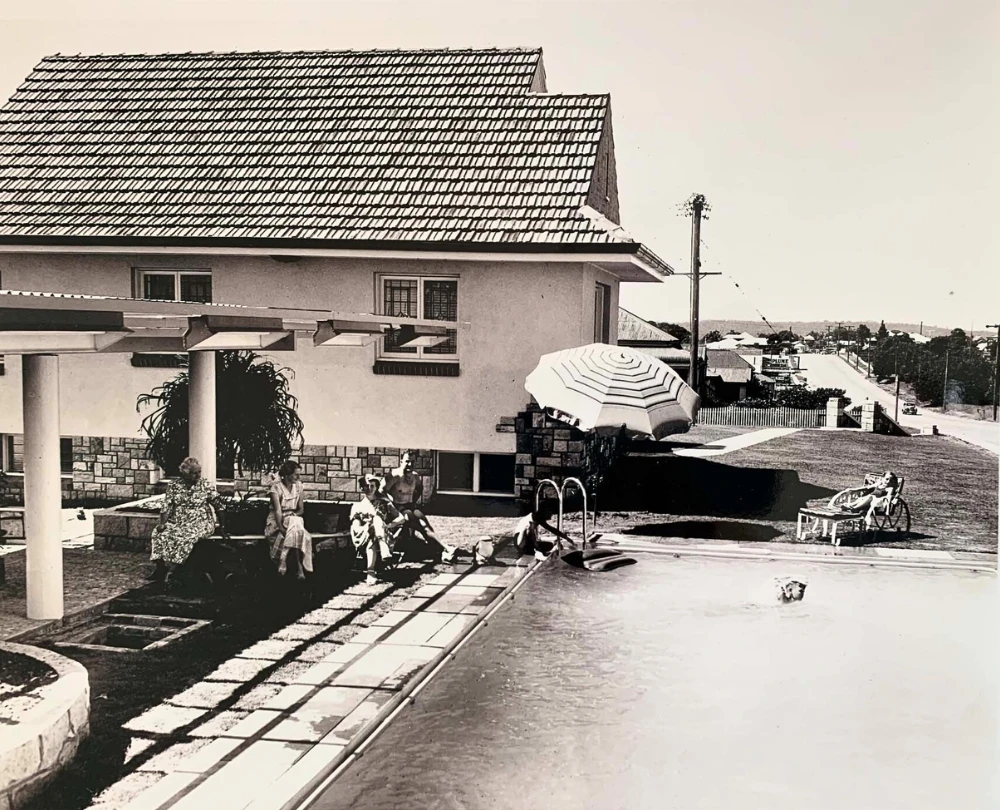
The Duce family poolside, looking toward Brisbane Rd, Booval. c. 1953. Image courtesy of Leonie Cannon (Nee Duce) / Ipswich First
Highlight
Built around 1952 on a corner block carved from the old Elamang estate. The land sat empty for a decade after purchase. Wartime rationing meant nobody could build.
- Land. The block was once part of Richard Watson’s 22-acre Elamang estate, subdivided into 59 lots in 1911.
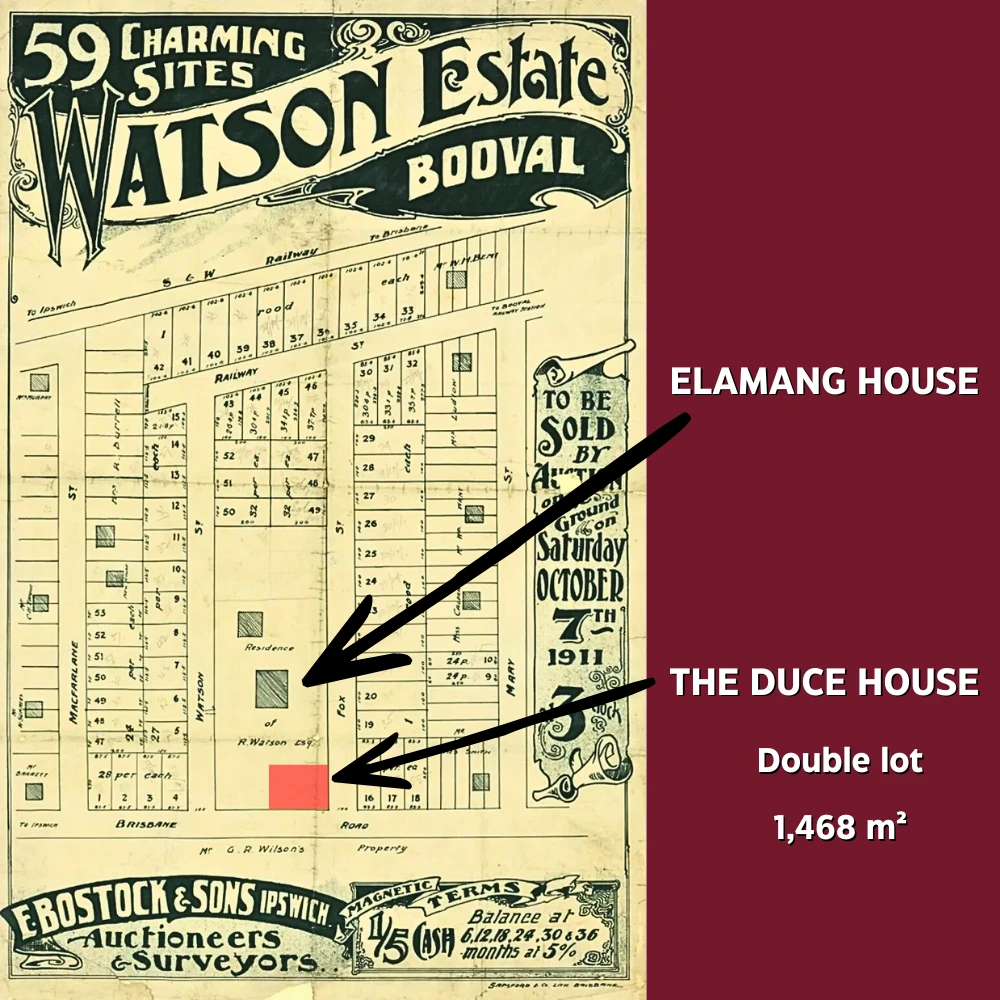
Watson Estate Auction Flyer 1911

Current 2025 lot division and land valuation (QLDGlobe)
- Streets. Watson named Fox Street after his wife and Watson Street after himself. Both border the property.
- Purchased. The corner block was bought in late 1942, mid-war.
- Family roots. The Duces were already on Brisbane Road before the house was built. A 1950 funeral notice for Alfred Duce, described as “late of Brisbane-road, Booval,” lists Norm and Norma among the relatives.
- Built. The house went up around 1952 — a full decade later, thanks to post-war material shortages.
- Owners. Built for Norm and Norma Duce, local racehorse owners. Race winnings reportedly helped fund the build.
- Car sales. Norm also ran Duce Car Sales on Brisbane Street, Ipswich, which opened in March 1949. In post-war Ipswich, that would have been good money.
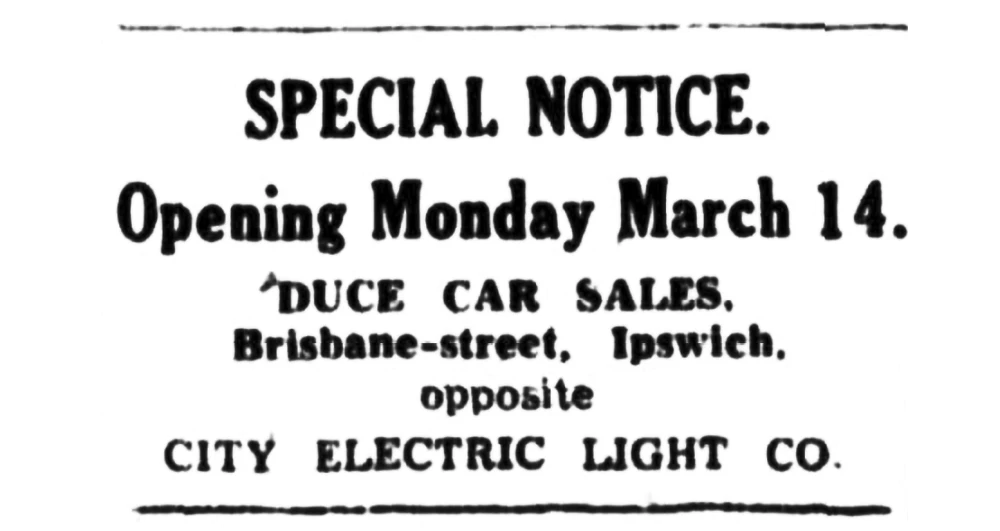
Duce Car Sales Special Notice – Mar 1949 (Source: QT)
- Horses. Trove records confirm Norm owned at least two racehorses: El Wonder (Eagle Farm, 1952) and Fort William, purchased in December 1953.
- Outlier. While most new Ipswich homes of the era were basic fibro cottages, this was rendered brick with leadlight windows and a swimming pool.
🏗️ Architecture & Design
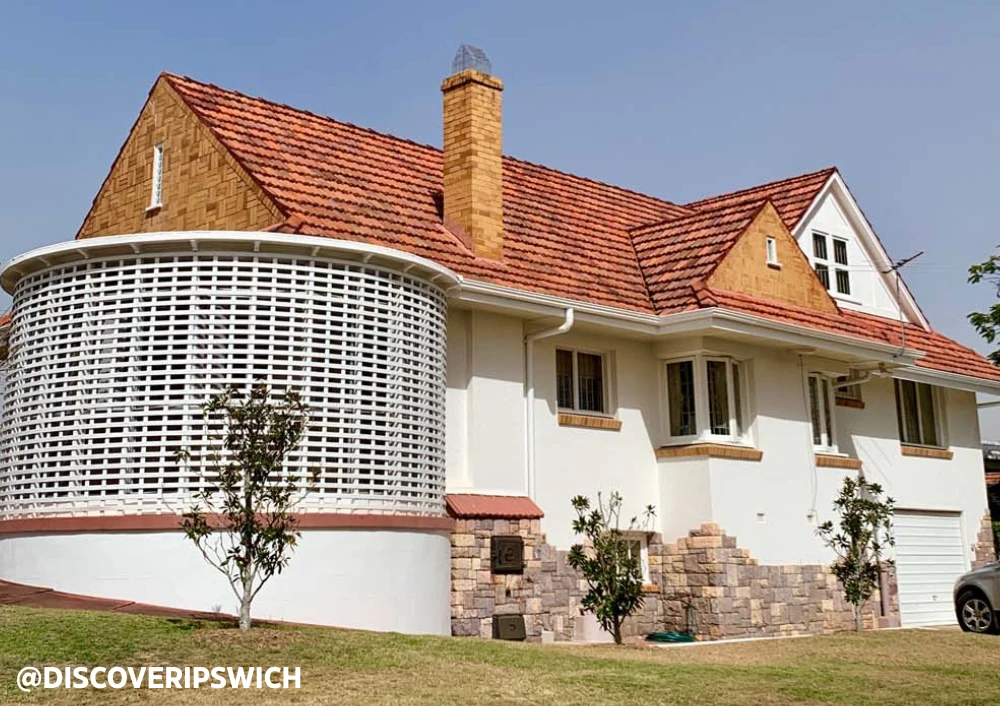
The Duce House from Fox St. (Image: Discover Ipswich)
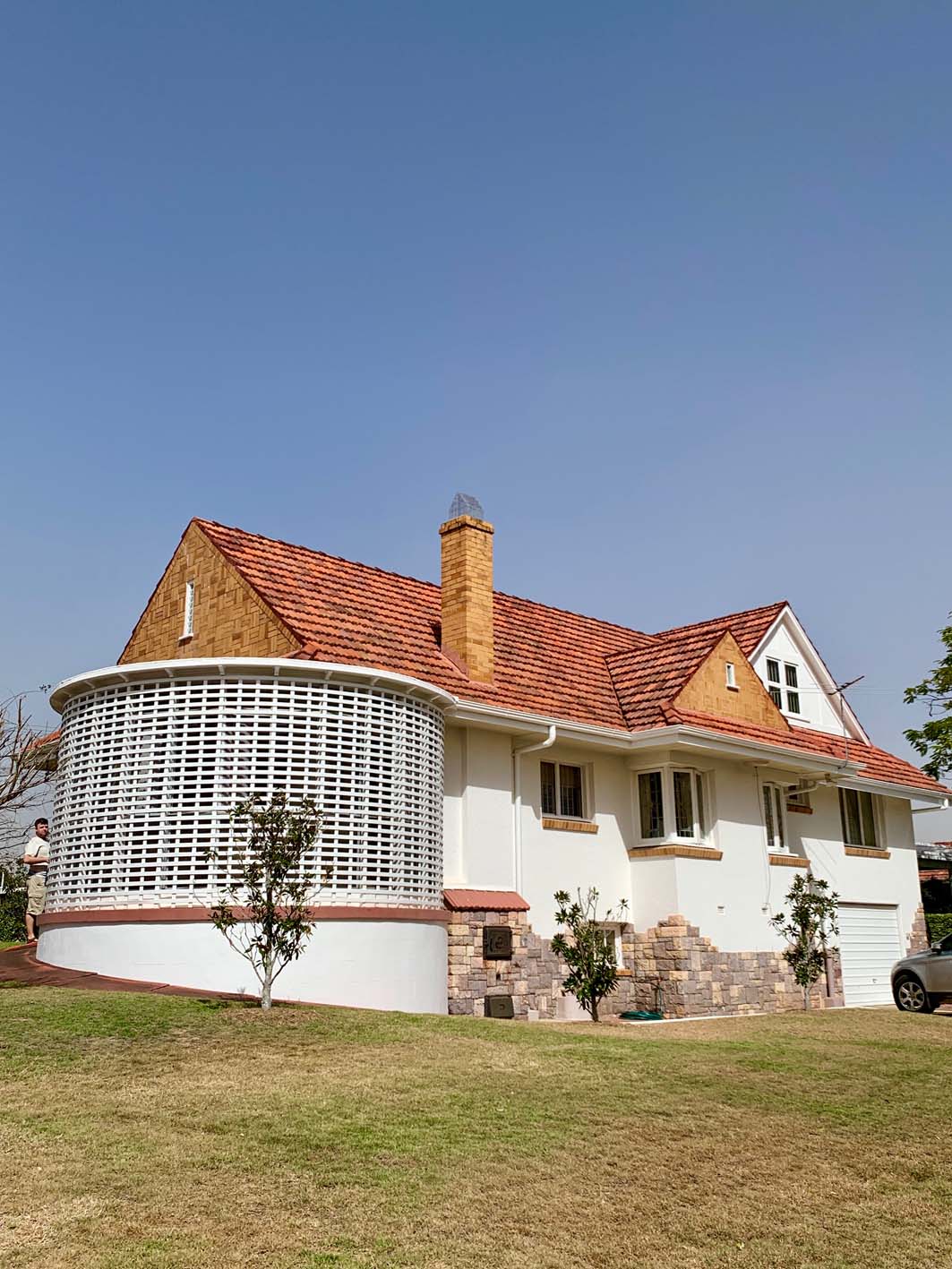
Highlight
A compact 3-bedder that punches well above its size. English Domestic Revival style. Rare for a post-war build. With the house, pool, pergola and driveway all designed as one piece.
- Style. Late cottage version of English Domestic Revival. A 1920s–40s look built in 1952, deliberately old-school.
- Architect. Unknown. Reportedly modelled on a Brisbane house on Old Cleveland Road that Mrs Duce admired.
- Exterior. Striking patchwork brickwork against white render, leadlight windows, prominent chimney, weather vane.
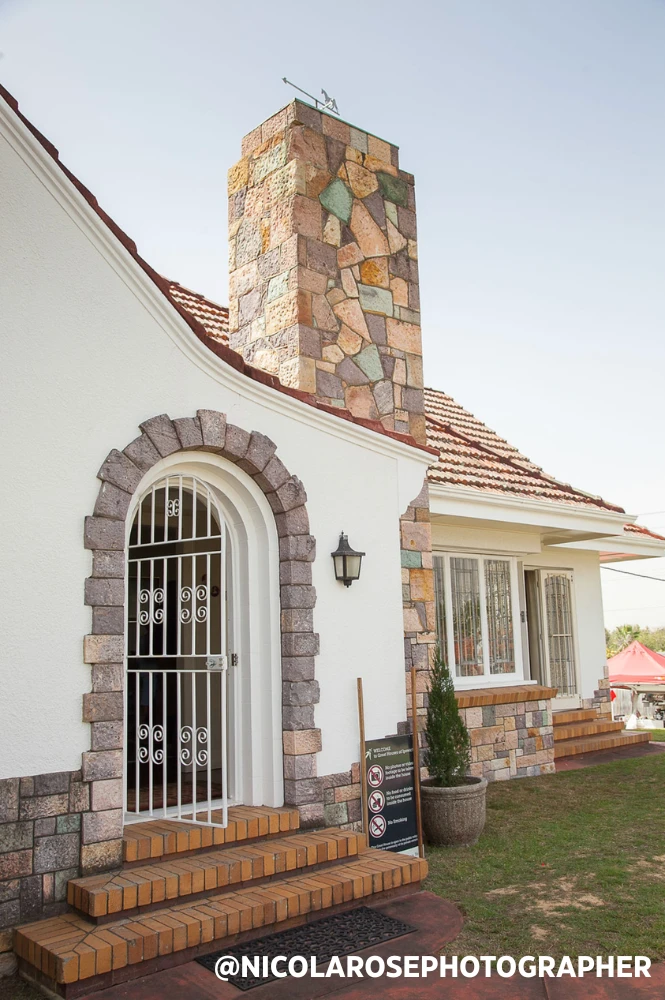
The Duce House front entrance (Source: Nicola Rose Photographer)
- Driveway. Original patchwork concrete — ties visually to the brickwork.

- Interior. Pipe door chime, walnut veneer built-in wardrobe, integrated incinerator, laundry dumbwaiter. All original.
- Sunroom. Screened sunroom with arched passageways connecting inside to garden.
- Pool. Believed to be the first private pool in Ipswich, built into the front yard facing Brisbane Road. Pools didn’t become common here until the 1970s.
- Size. Three beds, one bath, ~1,468 m² block. Small house, big presence.
⏳ Through the Years
Highlight
Three owners in 70-plus years. The pool was filled in at some point, then dug back out after 2007. The house has never been anything other than a home.
- 1911. Elamang estate subdivided — 59 lots go to auction.
- 1942. Corner block purchased by Norm and Norma Duce.
- ~1952. House built with integrated pool, pergola and all signature details.
- 1954. A Queensland Times social column confirms “Mr. and Mrs. Norm. Duce, Brisbane Road, Booval” arriving home from a holiday in Sydney. The house was well and truly lived in.
- 1950s–60s. The front-yard pool becomes a local talking point. Kids and drivers rubberneck on Brisbane Road.
- 1963. Sold to Gerald and Molly Nolan. Gerald ran Nolan’s Pharmacy at Brisbane and Nicholas Streets. The corner locals called “Nolan’s Corner” for decades.
- Unknown date. The pool gets filled in and buried.
- 2007. Current owners buy at auction for a reported $543,000.
- Post-2007. Kitchen refurbished. Pool excavated and reinstated.
- 2019. Opens for Great Houses of Ipswich — the first post-war home ever featured.
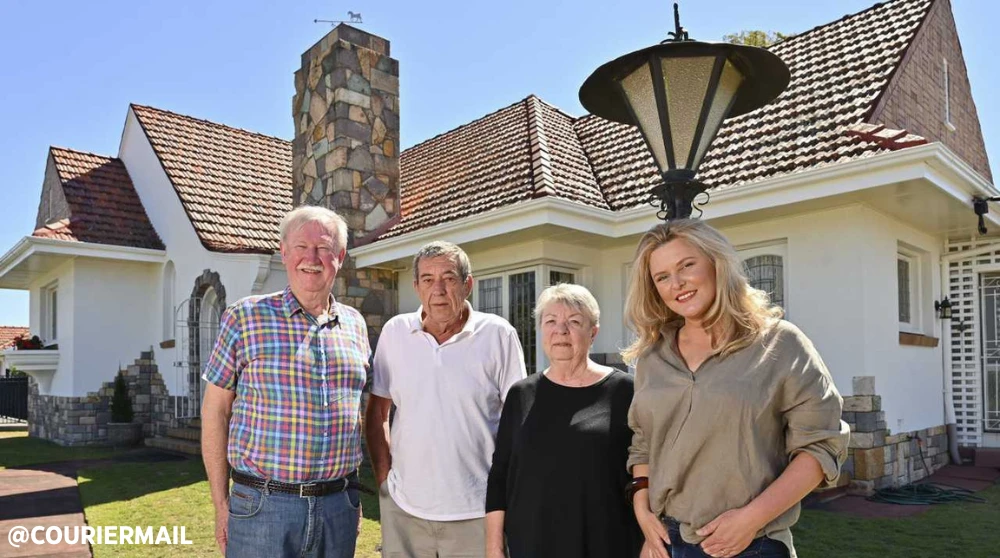
Out front The Duce House with Arthur Frame of the National Trust (left) and the current owners. 2019 Great Houses of Ipswich event. Image: Courier Mail
🛠️ Renovations & Restorations
Highlight
Almost nothing has changed. The pool was filled in then dug back out. The kitchen was modernised. Everything else is original 1952 fabric as far as we can tell.
- Pool. Filled in at an unknown date, then excavated and reinstated by the current owners after 2007.
- Kitchen. Refurbished post-2007 — the only other documented change.
- Still original. Patchwork driveway, pipe door chime, window flower box, sunroom, pergola, retaining walls, walnut wardrobe, incinerator, dumbwaiter all intact from 1952.
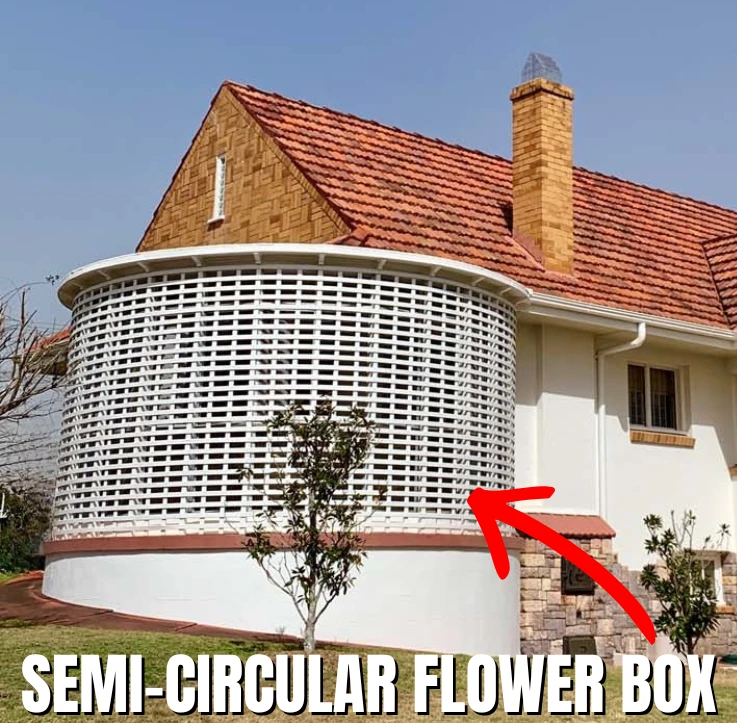
The original semi-circular window flower box, built into the facade in 1952.
- Council award. The restoration work earned an Ipswich City Council Award for Excellence. Best Maintained Heritage Property.
- Three owners, zero gut jobs. Every family that’s held this house has left the character alone.
🌟 Why it Matters / Heritage Importance
Highlight
Not state-listed, doesn’t need to be. It’s the house that greets you as you drive into Ipswich, carries the city’s best “first pool” story, and proves post-war homes deserve the same respect as the Victorian ones.
- Listing. Not on the Queensland Heritage Register.
- Gateway. Sits on Brisbane Road at the entrance to the inner suburbs. It’s the type of house you notice driving into Ipswich from the motorway.
- Pool legend. The “first private pool in Ipswich” claim is unproven but persistent. The story itself is part of what makes the house matter.
- Post-war heritage. Most celebrated Ipswich heritage homes are Victorian or Federation. This one proves a 1950s house can hold its own.
- Intact. After 70-plus years, the house retains almost all its original fabric. A rare survival for any building, let alone a post-war one.
- Community memory. Locals still remember slowing down on Brisbane Road to peek at the pool. That shared memory makes it everyone’s house.
Sources
- The Duce House. PictureIpswich.com.au
- Take a look back at these Great Houses of Ipswich. DiscoverIpswich.com.au
- Explore the Great Houses of Ipswich. IpswichFirst.com.au
- Mid-Century Ipswich: 1946-1969 — Chasing Our Past At Home. PictureIpswich.com.au
- Nolan’s Pharmacy. PictureIpswich.com.au
- Watson Estate, Booval — Map of the Week. SLQ.qld.gov.au