
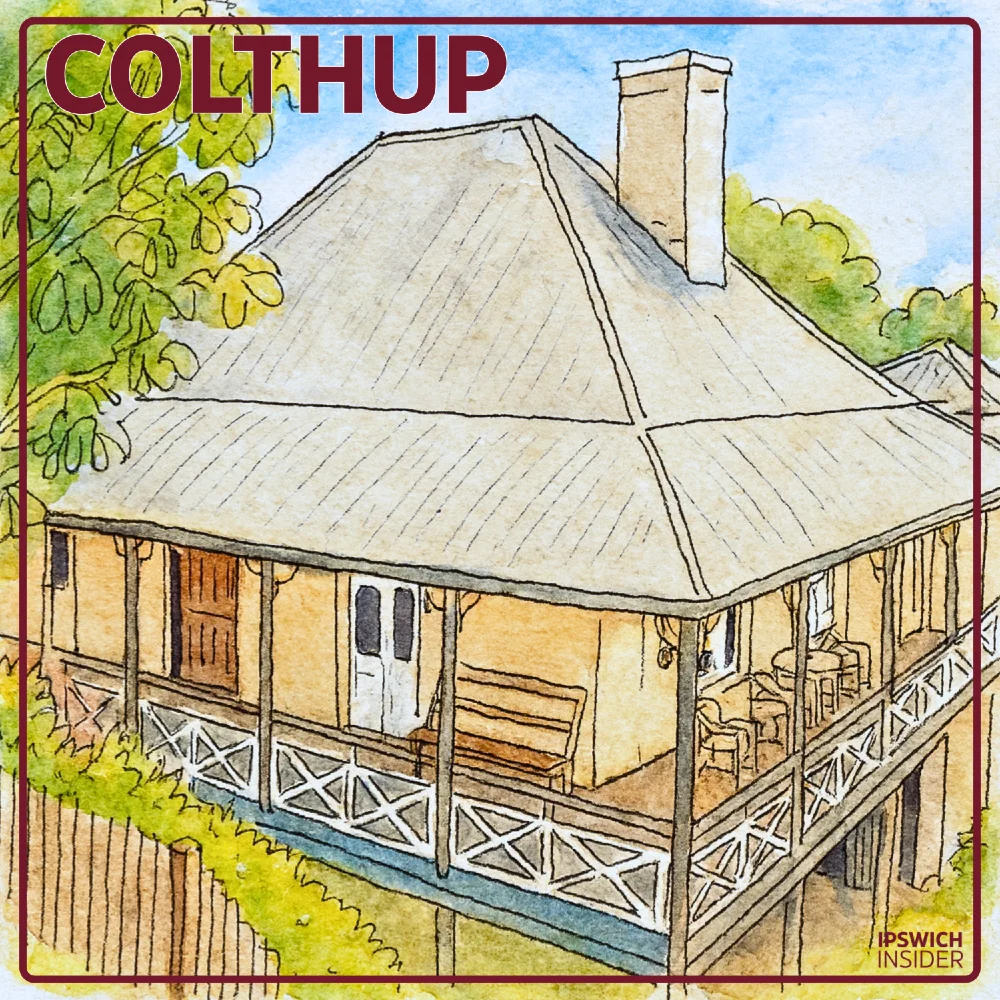
Colthup at a Glance
- Style. A late Victorian colonial brick home built around 1880 by Ipswich builder John Farrelly as one of four matching houses on Limestone Street.
- Build materials. The house was built using recycled bricks and timber salvaged from the fire-damaged St Mary’s Convent, so some of its fabric is older than the house itself.
- Prestige. It is regarded as the most intact of Farrelly’s four houses, keeping its original layout, joinery and even a concrete bath in a small room under the front verandah.
🔢 By The Numbers

- Address.: 109 Limestone Street, Ipswich QLD
- Listed on Queensland Heritage Register 21 Oct 1992: Place ID# 600582
- Built.: c.1880
- Age.: Over 140 years old
- Land.: 767 m² block
- Rooms.: 6 bedrooms and two bathrooms
- Floors.: 2-storey brick house
- Row.: 1 of 4 matching brick houses on this part of Limestone Street
- Sale 1992.: Sold in 1992 for $95,000
- Sale 1998.: Sold in 1998 for $85,000
- Sale 2022.: Sold in 2022 for $755,000
Colthup is not your typical Ipswich house.
Most neighbours went up in timber. This one was built in brick, using salvaged material from the burnt St Mary’s Convent. A piece of Ipswich church history is literally built into its walls.
There is another surprise. Under the front verandah sits a tiny stone room with a built in concrete bathtub, an odd little feature that has lasted for more than a century.
The house takes its name from James Colthup, a furniture maker and ironmonger who became its 2nd owner. More than 100 years on, locals still call it “Colthup’s House”… Some names stick.
Take a look and have a walk around Colthup at 109 Limestone Street.
📜 Origins & History
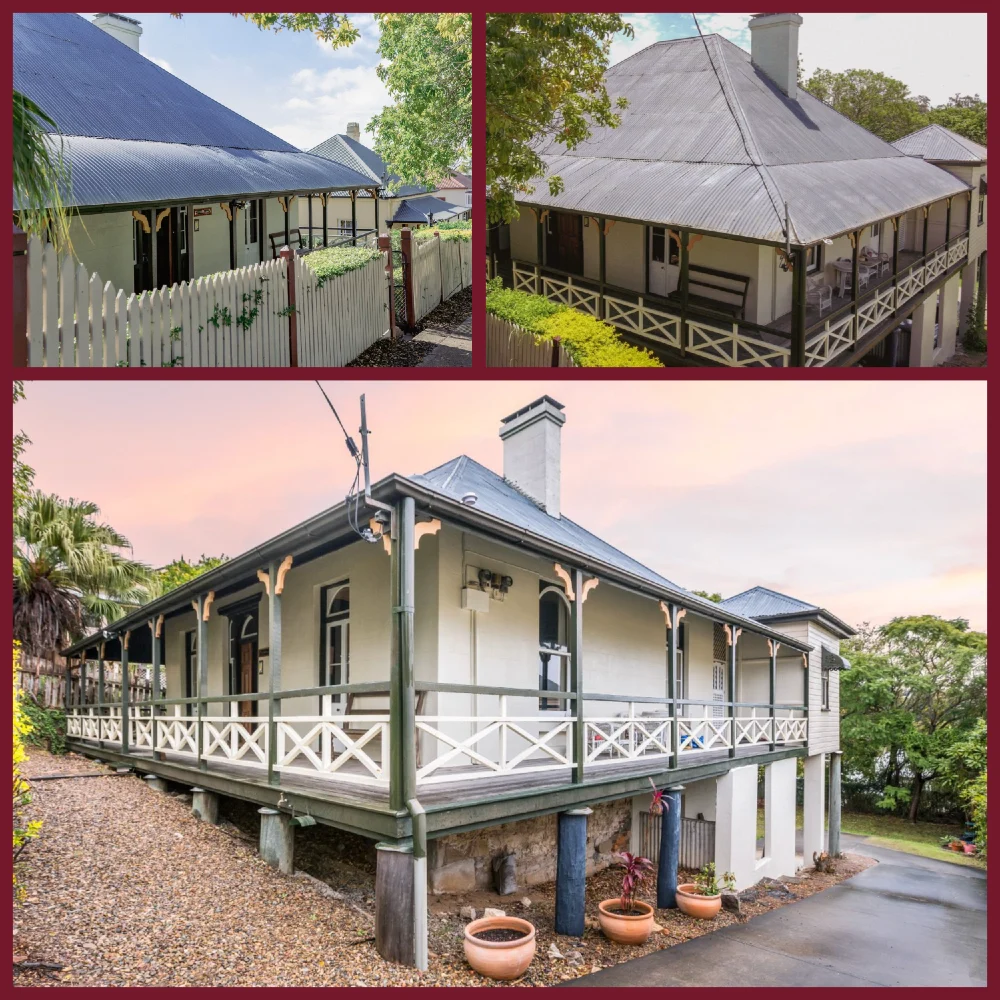
Colthup Image Sources: IpswichRealEstate.au
Highlight
Colthup’s House was built around 1880 as one of four brick homes on Limestone Street by local builder John Farrelly. It started life as a middle‑class rental, using bricks and timber salvaged from the burnt St Mary’s Convent.
- Site. The home locals call Colthup’s House stands at 109 Limestone Street on Denmark Hill, a short walk from the Ipswich CBD.
- c.1880. Around 1880 Ipswich builder John Farrelly put up this two‑storey brick house on Limestone Street.
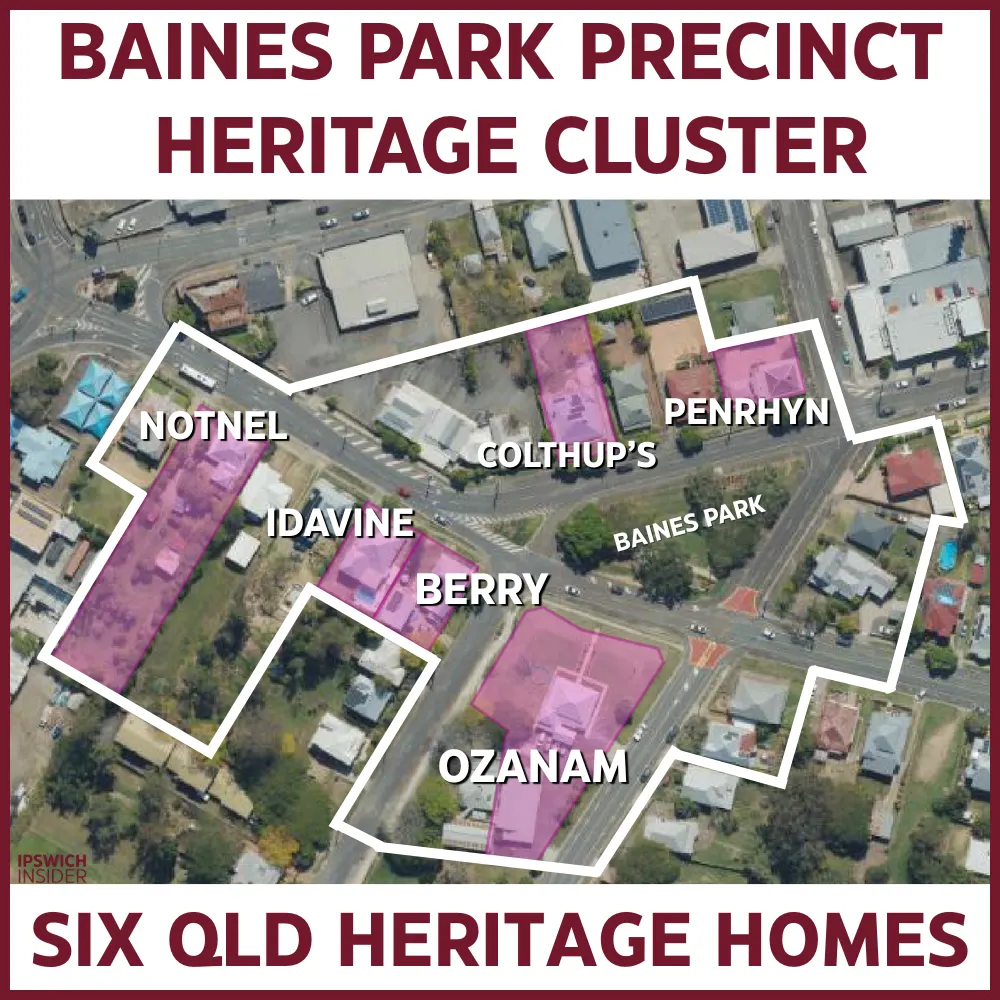
- Four houses. In the mid‑1870s Farrelly bought four side‑by‑side blocks and later built four similar brick houses now known as 103, 105, 107 and 109 Limestone Street.
- Rentals. He treated all four as rental homes and did not live in number 109 himself.
- Next door. From the mid‑1880s he lived in the corner house at 103 Limestone Street, later called Penrhyn, while keeping the rest as investments.
- Convent fire. Farrelly built the row using bricks and timber salvaged from the ruined St Mary’s Convent after a fire in the late 1870s.
- Salvage clues. Heavy beams and distinctive window parts in 109 Limestone Street are read as signs of this recycled material.
- Growth. At the time Ipswich was Queensland’s second‑largest town and a busy coal and rail centre, with a new rail link to Brisbane and a growing population.
- Denmark Hill. A rising middle class of managers and shopkeepers was choosing solid homes on Denmark Hill and nearby streets rather than down in the valley.
- 1881 roadworks. In 1881 Farrelly complained to council that new filling on Limestone Street had raised the footpath above his corner verandah and changed how the houses met the road.
- Farrelly summary. John Farrelly was an Irish‑born builder‑designer who settled in Ipswich in 1861, worked on major local jobs such as the Exhibition Buildings and St Patrick’s Hall, ran once for parliament, died in 1904 at 103 Limestone Street and left the four houses as part of his estate.
🏗️ Architecture & Design

Highlight
Colthup’s House is a two‑storey brick home that looks single‑storey from the street, with verandahs around the upper floor and a steep iron roof. Inside, a central hall, high timber ceilings, curved sash windows and working fireplaces show how a late‑1800s Ipswich family lived.
- Levels. From Limestone Street the house reads as a single‑storey home, but the land falls so the rear shows a full second level.
- Structure. It is built of solid brick walls with render ruled to look like neat stone blocks.
- Roof. A steep hipped roof in corrugated metal breaks at the eaves to form a curved verandah roof around the upper floor.
- Verandahs. Verandahs run around all four sides of the upper level, with the front verandah open to the street and other sides partly enclosed.
- Upper plan. Upstairs a central hallway runs front to back and now holds the stair down to the lower level.

- Rooms. Three bedrooms open off one side of the hall and two formal rooms with fireplaces and French doors to the verandah open off the other.
- Doors. The original front and back doors have narrow sidelights with pointed arches and coloured glass, which wash soft light into the hall.
- Ceilings. Most upstairs rooms have high tongue‑and‑groove timber ceilings that follow the roof shape, while the hallway ceiling has been lined with plasterboard.
- Windows. The house has timber double‑hung sash windows with small panes and distinctive curved top sashes that stand out in Ipswich.
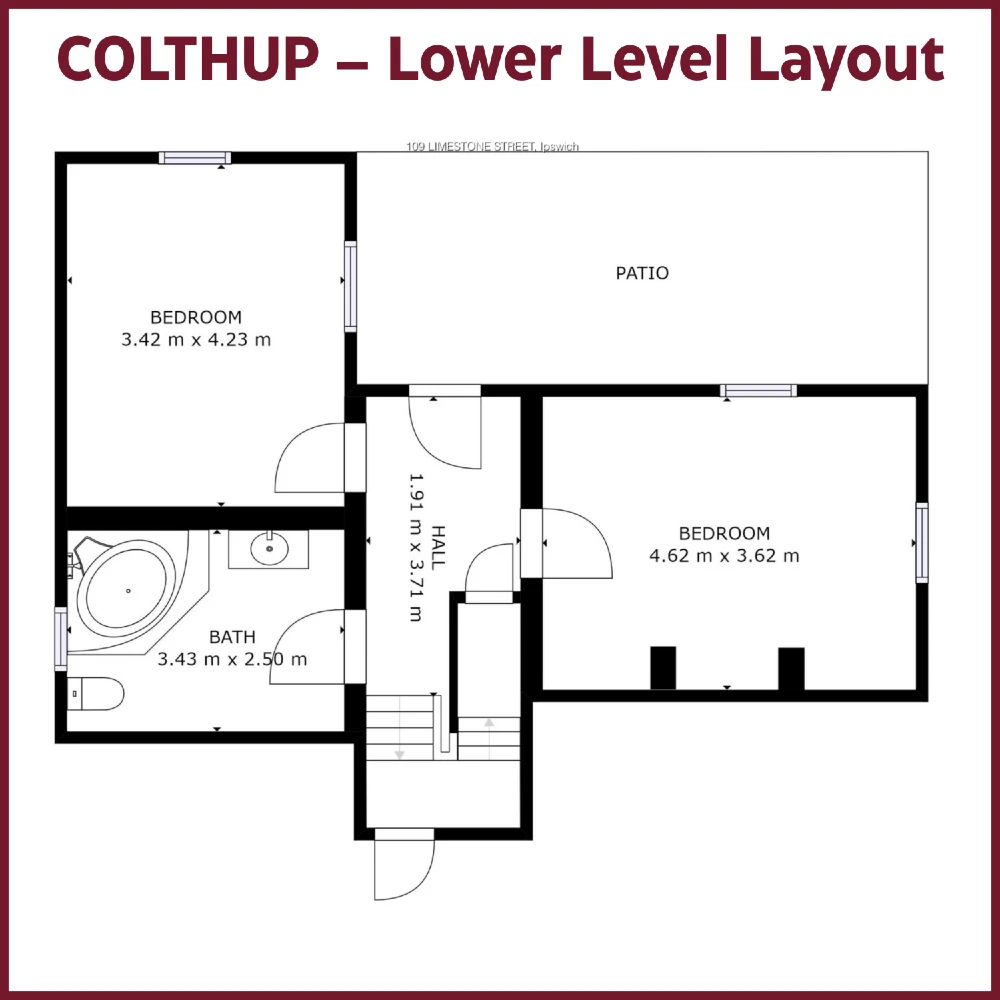
- Lower level. Downstairs there is a hallway, two bedrooms and a new bathroom, with one bedroom still showing a large old kitchen fireplace.
- Bath room. Under the front verandah a small stone‑lined room with a concrete floor holds a built‑in concrete bath that local stories treat as the original bathroom.
- Rear extension. The house has been extended at the rear to create a family room, kitchen and bathroom added to the original core.
- Materials. Because all four houses in the row use the same brick, roof and verandah pattern, they read together as one matching group on Limestone Street.
- Type. In a city known for high‑set timber Queenslanders, this solid brick home with wide verandahs is closer in feel to other masonry houses like Brickstone and Keiraville than to the average cottage.
⏳ Through the Years
Highlight
The house moved from Farrelly’s rental stock to the Colthup family home, then through flat conversions and several sales. Recent sale records show how a modest nineteenth‑century rental has become a valued heritage property.
- 1880s. In the late nineteenth century Farrelly owned and rented out all four Limestone Street houses while living next door at 103.
- 1909. In 1909 ironmonger and house furnisher James Barnett Colthup bought 109 Limestone Street from the Farrelly estate and moved his family in.
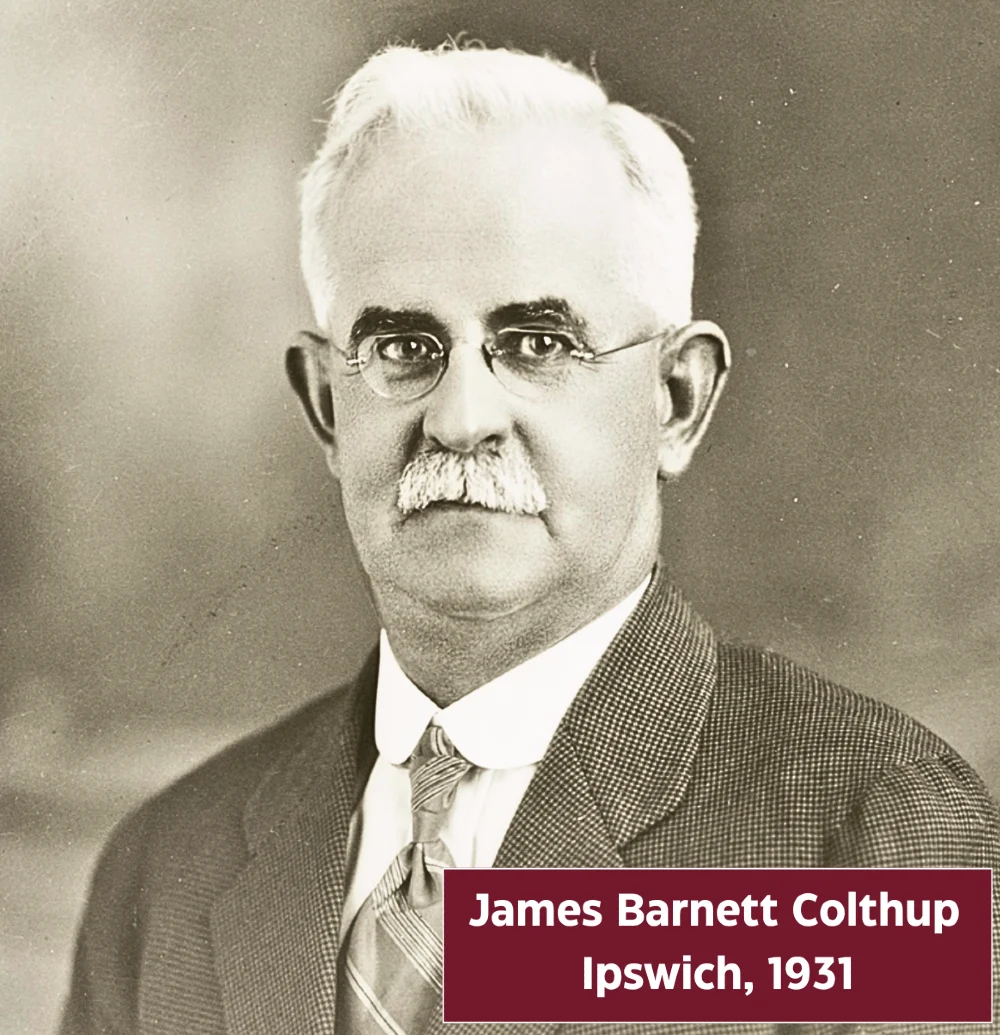
- 1910s. Through the 1910s the Colthups lived here while James ran his hardware and furniture shop in Nicholas Street and became a well‑known local club man.
- 1910s name. During these years locals began calling the place “Colthup’s House”, a name that has stuck long after the family sold.
- 1918. In 1918 the Colthup family sold 109 Limestone Street, and the property then passed through several private owners.
- 1930s. By the 1930s the house had been turned into flats, with verandahs enclosed and the original internal staircase removed.
- 1992. In April 1992 the property sold for $95,000, and later that year it was entered on the Queensland Heritage Register as “Residence, 109 Limestone Street (c1880), Colthup’s House.”
- 1998. In February 1998 the house sold again for $85,000, reflecting a different stage in Ipswich’s property market.
- 2022. On 24 January 2022 the property sold for $755,000 as a six‑bedroom, two‑bathroom house on a 767 m² block.
- Today. Recent listings market the house as a flexible home or office space, but it continues to present mainly as a historic residence on Limestone Street.
🛠️ Renovations & Restorations
Highlight
Flat conversion in the 1930s changed the verandahs and stair, and later work added new rooms and services. Even so, most of the layout and joinery people see today is still from the 1880s.
- 1930s flats. The house was converted to flats in the 1930s, when verandahs were enclosed and the original internal staircase was taken out.
- Side verandah. One side verandah on the upper floor is now enclosed as a storeroom, rather than open all the way around.
- Back verandah. The back verandah remains closed in with coloured glass windows set into the outer wall.
- Front verandah. Earlier enclosure removed the original verandah detailing, and the front verandah now presents to the street with later balustrade and trim.
- Internal stair. The current layout includes a stair in the upper hall down to the lower level, restoring indoor access between floors after the flat era.
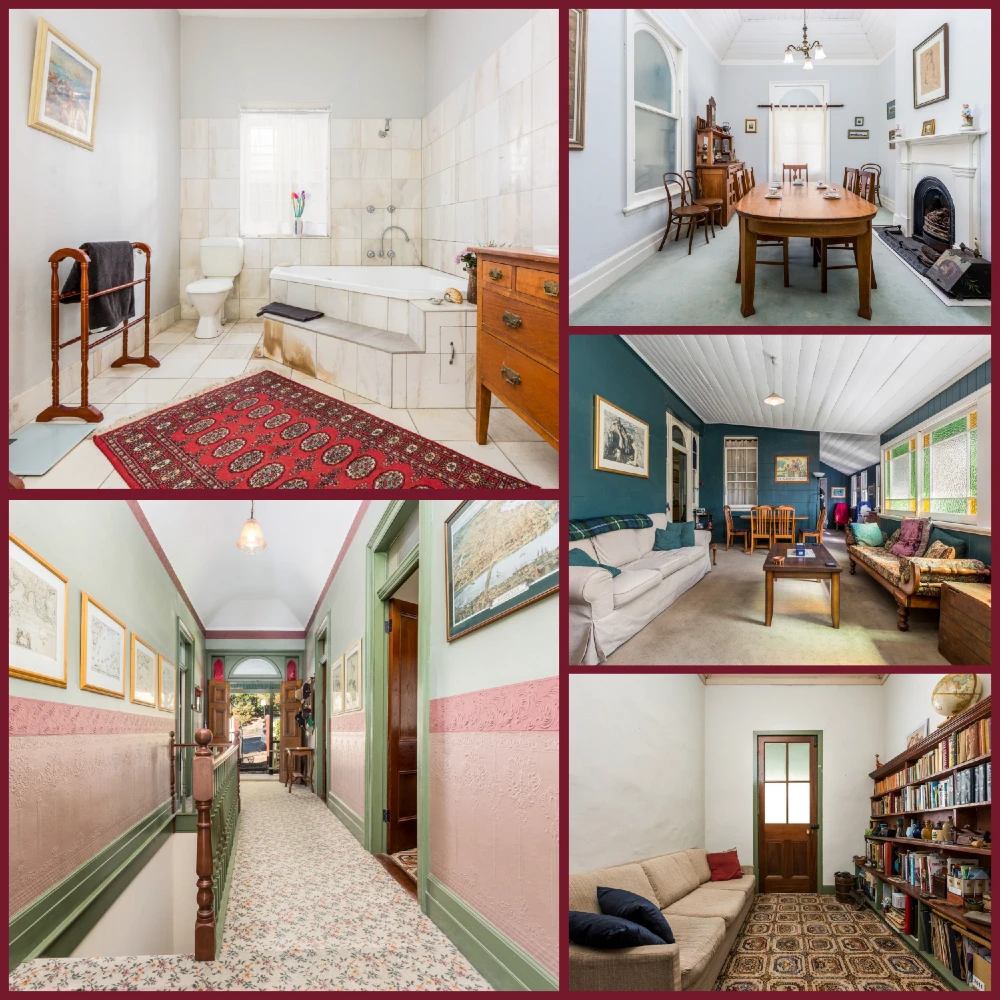
Inside Colthup
- Hall ceiling. The upstairs hallway ceiling has been lined with plasterboard, unlike the older timber ceilings in surrounding rooms.
- New bathroom. The lower level holds a new bathroom alongside the old kitchen fireplace room and bedrooms.
- Rear rooms. A later rear extension provides extra living space in the form of a family room, kitchen and bathroom behind the original brick core.
- Concrete bath. The small room under the front verandah keeps its concrete tub as a historic oddity rather than being stripped out.
- Overall fabric. Despite these changes, heritage descriptions note that the original design is still clear and most interior joinery is intact.
🌟 Why it Matters / Heritage Importance
Highlight
Colthup’s House is the best‑kept of four matching brick homes on Limestone Street and is protected on the Queensland Heritage Register. It matters for its rare brick construction, convent salvage story, strong street presence and links to both Farrelly and the Colthup family.
- Heritage listing. The place is listed on the Queensland Heritage Register as “Residence, 109 Limestone Street (c1880), Colthup’s House.”
- Rare group. It is one of a row of four brick houses built together by John Farrelly on Limestone Street, a type of small development now seen as rare in Queensland.
- Most intact. Heritage reports describe 109 Limestone Street as the most intact of the four, with its plan and joinery still clear despite later changes.
- Everyday home. The house stands as a good example of an 1880s middle‑class home in Ipswich, showing how a solid brick dwelling worked in local conditions.
- Reused fabric. Its use of recycled materials from St Mary’s Convent tells a story of thrift and reuse after a major fire in the parish.
- Streetscape role. Together with its three neighbours, the house helps form a strong nineteenth‑century streetscape on upper Limestone Street near Burnett Street.
- Builder link. The place has a close link to John Farrelly, a key Ipswich builder and designer whose work and community role shaped this part of town.
- Colthup link. The long‑used name “Colthup’s House” and ties to Colthup Chambers and Colthup Home connect the building with a well‑known Ipswich business family.
- Social change. The shift from family home to flats and back again reflects wider housing and economic changes in Ipswich across the twentieth century.
- Historic detail. Surviving items like the concrete bath, old kitchen fireplace and sash windows give residents and visitors a direct glimpse of daily life more than 140 years ago.
Sources
- Colthup’s House. Wikipedia.org.
- Colthup Furniture Store. PictureIpswich.com.au.