

Toronto at a Glance
- Gothic rarity. Built 1863, Toronto is among Queensland’s last Carpenter-Gothic timber homes, still flaunting steep gables and scalloped trim.
- Red Cross legacy. During WWI Miss Rowlands packed Red Cross parcels here, and 1,600 locals lined up to tour the house in 2017.
- Heritage survivor. State-listed since 1992, most 1860s fabric remains thanks to a 1970s restoration and vigilant owners.
🔢 By The Numbers
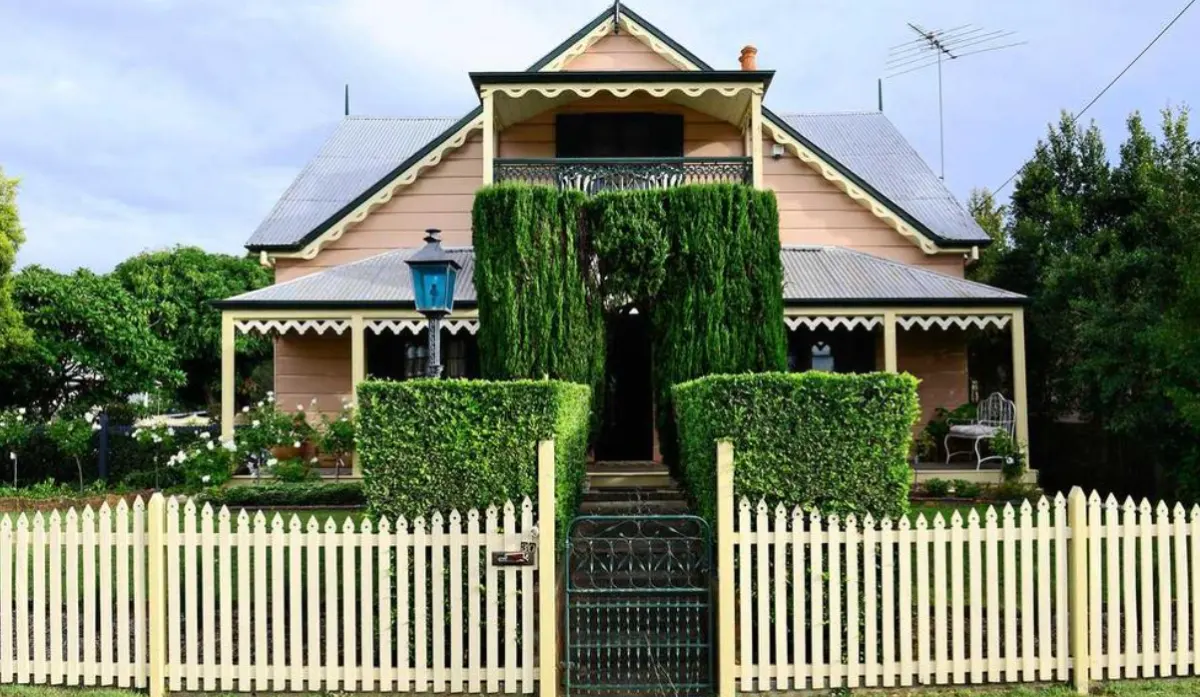
- Address: 30 Quarry St, Ipswich QLD
- Heritage Listing (since 1992): 600595
- Built: 1863 — 162 years old
- Price: Land bought for £45 in 1863 (A$15 k today)
- Storeys: 2-level timber house
- Rooms: 9 originally, 7 today
- Bathrooms: 1
- Land size: 1,248 m²
- Roof: Corrugated iron laid over shingles in 1906
- Water: Town mains connected 1909
- Visitors: 1,600 toured during 2017 open day
- Restoration: Full restump & rewire in early 1970s
In 1863 banker’s widow Elizabeth Lloyd paid £45 for a block less than a kilometre from Ipswich’s centre and built a timber cottage called Devonshire Cottage.
Lloyd never moved in, but the house still stands.
About twenty years later Canadian owner James Jackes painted it dusty pink, added steep gables and scalloped trim, and renamed it Toronto after his hometown in Canada.
During World War I local volunteer Josephine Rowlands used the house to pack Red Cross parcels.
Today more than 1,600 people line up on open days to see inside this rare two-storey Gothic cottage.
Explore more Iconic Ipswich homes:
📜 Origins & History
Highlight
Toronto began life in 1863 as Devonshire Cottage for banker’s widow Elizabeth Lloyd on an elevated Quarry Street allotment. Its first decade mixed rental income with clergy tenants, foreshadowing a long stretch as an investment property rather than a family seat.
- Construction. The two-storey home rose in 1863 for banker’s widow Elizabeth Lloyd.
- Purchase. Lloyd secured the land on 6 April 1863 for £45 in the booming Ipswich market.
- Naming. She christened the house Devonshire Cottage to honour English ties.
- Site. Toronto sits on a gentle rise of land that once gave town views and hinted at respectability.

Toronto location on Quarry St.
- Manse. From 1870 Reverend Dr Mossop rented it as a Congregational manse.
- Sale. Investor William Tamlyn bought the property in 1873 and kept it as a rental.
🏗️ Architecture & Design
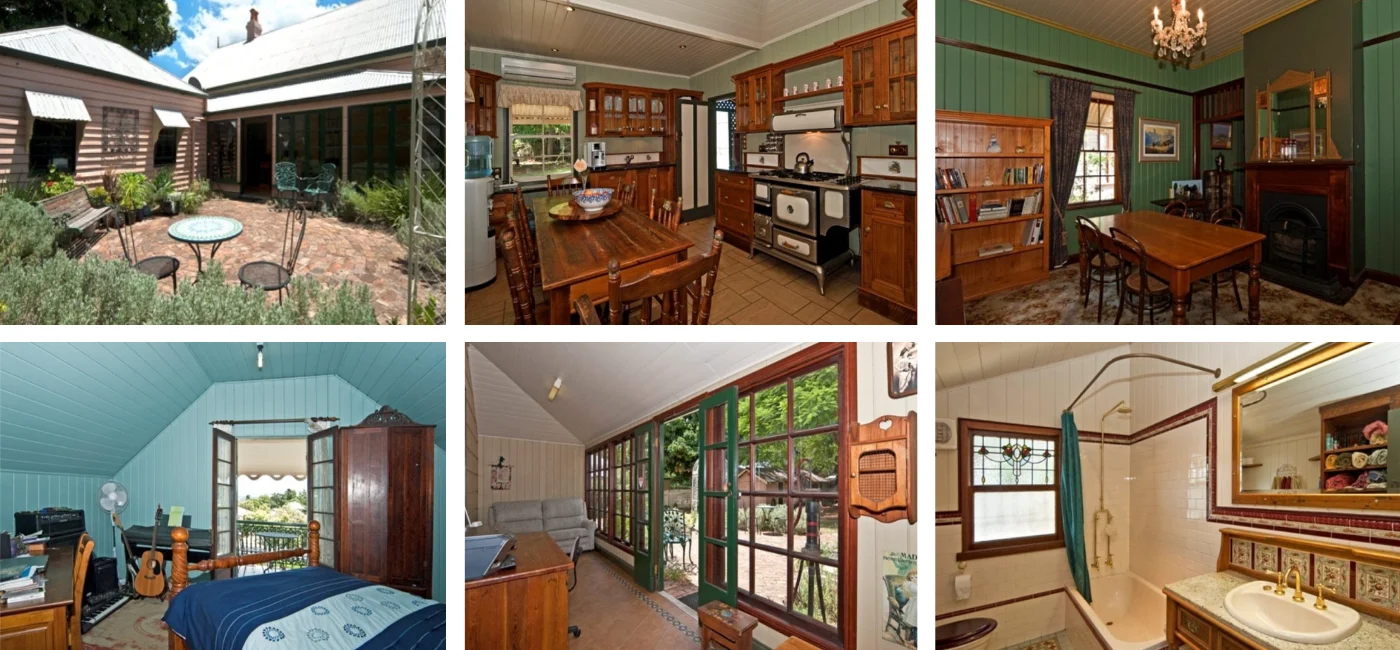
Photos from 2010 property sale.
Highlight
Toronto is a rare Carpenter Gothic survivor: steep gables, scalloped timber trim and broad verandahs cloak a timber-framed, shingle-roofed core that still carries many original 1860s materials and joinery.
- Style. The house shows Carpenter Gothic lines with intersecting gables.
- Timber. Walls use wide pine chamferboards on stumps.
- Roof. Corrugated iron protects the original shingles beneath.
- Trim. Each gable sports scalloped bargeboard gingerbread.
- Verandahs. Full-width decks give shaded outdoor living.
- Balcony. A tiny attic porch carries cast-iron rails.
- Interior. Tongue-and-groove walls frame a fretworked hallway arch.
- Rooms. The plan began with nine rooms, now seven.
- Stairs. A steep narrow timber stair rises to the attic.
- Outbuildings. A brick tank, detached coach-house and kitchen wing remain.
⏳ Through the Years
Highlight
Ownership swung from investors to community figures and, finally, heritage champions, mirroring Ipswich’s economic swings while layering stories onto the house.
- Renaming. In 1882 James Alexander Jackes bought the house and dubbed it Toronto after his Canadian birthplace.
- Upgrades. Jackes added iron roofing in 1906 and connected town water in 1909.
- Advocacy. In 1904 Jackes petitioned Council to repair Quarry Street.
- Rowlands. Miss Josephine Rowlands became resident owner in 1914.
- Red Cross. During WWI she ran the Ipswich Red Cross from the parlour.
- Estate. After her 1939 death, Peter and Alice McKelvie purchased the home in 1940.
- Modernising. The McKelvies opened rooms and fitted a cedar overmantel.
- Short Stint. Colin and Margaret Medlin owned the property 1965-70.
- Restoration. Don and Val Follett led a major restoration from 1970.
- 1995 Sale. After two decades with the Folletts, Toronto changed hands for $246,500.
- 2010 Sale. Ray White Ipswich sold the home for $600,000 on 31 May 2010.
- 2016 Sale. The property last traded on 26 July 2016 for $154,696.
Interpreting the $154,696 (2016) Record
- Likely explanation – related-party transfer or restructure. The low figure likely reflects a title shuffle such as adding or removing a partner, moving the house into a family trust/SMSF, or settling an estate.
- Possible part-share only. Queensland Land Registry sometimes records the price for one undivided share (e.g., 25 %), so the headline amount can appear far below market.
- Listing. Toronto joined the Queensland Heritage Register in 1992 and welcomed 1,600 visitors in 2017.
🛠️ Renovations & Restorations
Highlight
From iron roofing to rewiring and a faithful pink repaint, each wave of work fixed problems while defending almost every original feature.
- Iron. A corrugated iron roof went over the shingles in 1906.
- Water. Municipal reticulated water arrived in 1909.
- Open-Plan. The 1940s removed a pantry wall for open space.
- Overmantel. A salvaged cedar fireplace piece brightened the parlour.
- Laundry. The thatched wash-house gained iron roofing in the 1940s.
- Restumping. Full re-stumping and rewiring began in the 1970s.
- Colour. Stripped paint revealed and revived the dusty-pink exterior.
- Verandah. Removing a later bathroom restored the front line.
- Fernery. A timber fern house rose in 1977.
- Garage. The stable became a coach-house garage.
- Bathroom. A discreet 1985 bathroom went into the rear verandah.
- Maintenance. Recent owners added hidden air-conditioning and fresh paint.
🌟 Why it Matters / Heritage Importance

Toronto inventory on the Ipswich Heritage Register.
Highlight
As a rare 1860s Carpenter Gothic house with intact fabric, Toronto anchors Quarry Street’s character and showcases the power of private conservation.
- Listing. Toronto is State-listed as Place 600595 under the Queensland Heritage Register.
- Rarity. It is one of the last Carpenter Gothic homes in Queensland.
- Integrity. Most original timber fabric survives intact.
- Aesthetics. Steep gables and trim deliver striking Gothic charm.
- Social. The house hosted WWI Red Cross efforts.
- Education. The Follett work became a beacon for private conservation.
- Streetscape. Its form defines the Quarry Street vista.
- Community. Heritage open days drew 1,600 visitors in 2017.
- Relics. A hospital lamppost and factory windows recycle Ipswich history on site.
- Continuity. Standing since 1863, it reflects Ipswich’s boom-town roots.
Sources
- Toronto, Ipswich. Wikipedia.
- Toronto, 30 Quarry Street, Ipswich. Picture Ipswich.
- Ipswich Houses: Toronto. Ipswich Libraries.
- The incredible history of Toronto in Ipswich. CourierMail.
- 30 Quarry Street, Ipswich, Qld 4305. Realestate.com.au.