
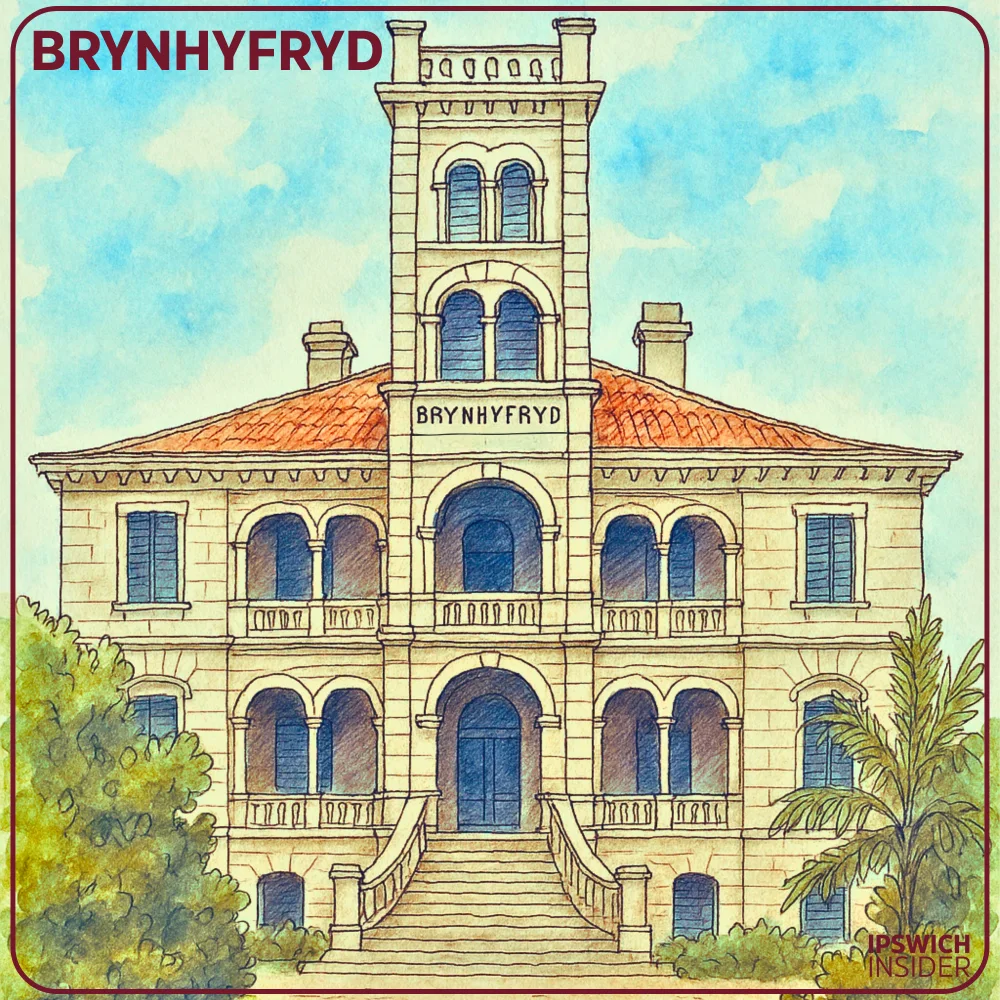
Brynhyfryd at a Glance:
- Castle elegance. Iconic 1889 mansion with four-storey castle tower.
- Tech pioneer. Early electric lights, hydraulic lift, spring-fed plumbing.
- Social hub. Hosted elite Gatsby-like parties at the beginning — and Welsh cultural events.
- Lasting legacy. Demolished in 1937, relics remain across Ipswich.
Once proudly standing atop Ipswich’s Blackstone Hill, Brynhyfryd Castle was the epitome of lavish luxury and cutting-edge innovation in Queensland’s late 19th century.
Constructed for Welsh coal magnate Lewis Thomas, known affectionately as the “Coal King,” this 49-room mansion symbolized the immense wealth and ambitious dreams of Ipswich during its industrial boom.
Though lost to mining interests by 1937, Brynhyfryd’s legendary tales of extravagant parties, pioneering architecture, and community spirit endure, echoing through Ipswich’s history and identity to this day.
Check out more Ipswich icons:
📖 History and Origins

Aerial view of Brynhyfryd Castle, 1930 — showing large terraced gardens and hilltop location. (Courtesy: Picture Ipswich)
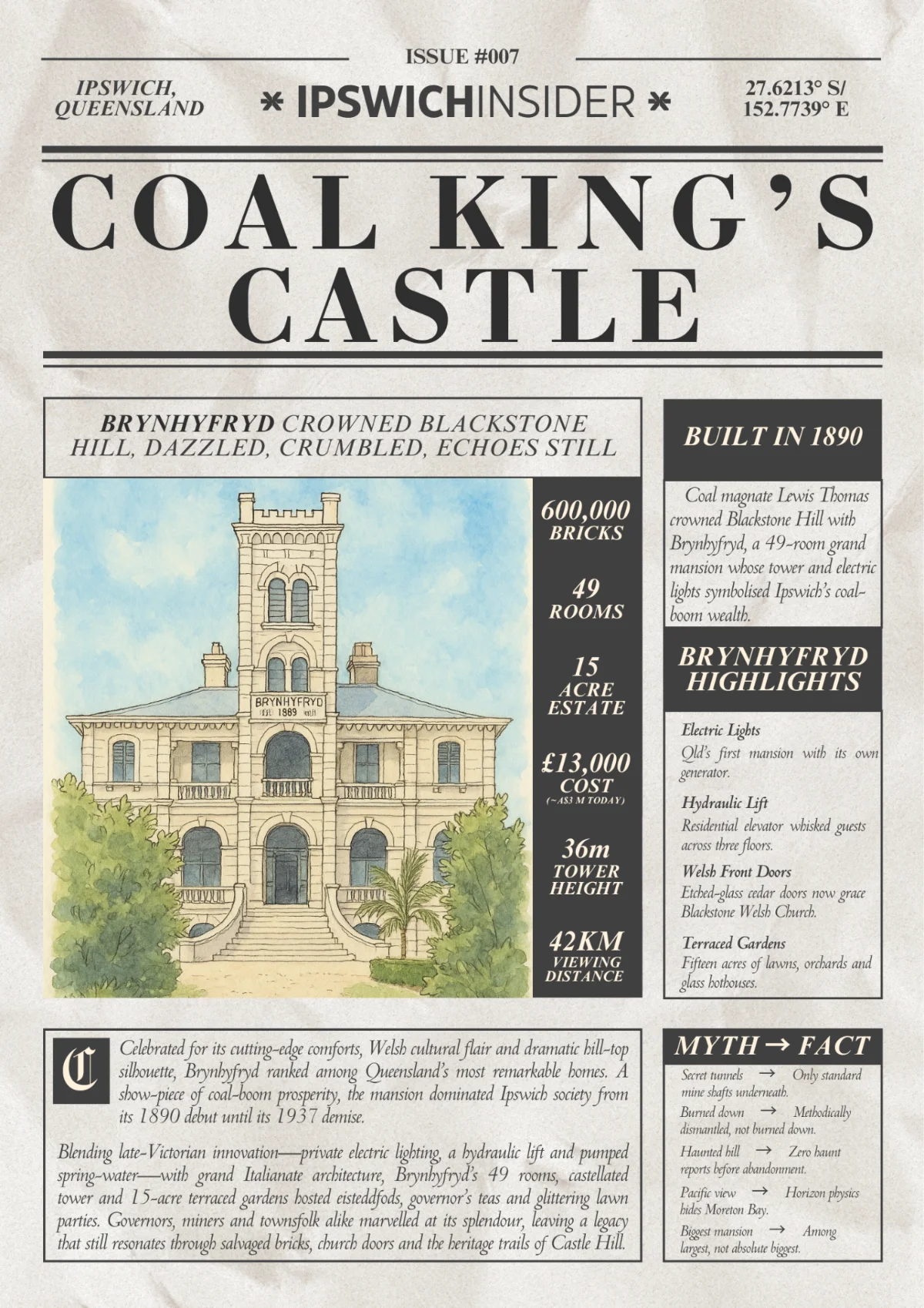
🗞️ Step into History:
- Imagined: How Brynhyfryd’s story might have appeared in a 1930s Queensland Times article
- Explore: Click to enlarge and experience Brynhyfryd through a vintage newspaper lens
- Discover: See how Ipswich’s iconic mansion was celebrated in its heyday
Highlights:
- Welsh immigrant ambition: Commissioned by Lewis Thomas, a Welsh immigrant who rose from miner to coal magnate, showcasing his remarkable social ascent.
- Strategic location: Chosen for its commanding views and proximity to Thomas’s coal mines, symbolising his dominance in local industry.
- Cultural significance: Became a centrepiece for the local Welsh community, hosting significant cultural and social events.
Origin Story
- Coal Boom. Brynhyfryd’s construction coincided with Queensland’s coal industry peak in the late 1880s, directly reflecting Ipswich’s prosperity from coal mining.
- Lewis Thomas’s Vision. Thomas deliberately avoided mining beneath the mansion site during his lifetime, prioritising stability and longevity over short-term profit.
- Community Landmark. Quickly became a cultural hub for Welsh immigrants, hosting eisteddfods, choir performances, and St. David’s Day celebrations.
- Local Rivalries. Built as a rival to Brisbane’s grand homes, establishing Ipswich’s elite status within Queensland’s social hierarchy.
- Family Legacy. Thomas intended Brynhyfryd as a lasting legacy for his family, showcasing their newfound status and contributing to Ipswich’s growth.
- Architectural Ambitions. Architect Samuel Shenton* designed the mansion to merge innovative engineering and Victorian grandeur, symbolising the optimism of the era.
*Picture Ipswich incorrectly lists George Brockwell Gill as architect because later repair papers carried his letterhead after he took over Samuel Shenton’s practice. Contemporary 1889 tenders confirm Shenton drew the original plans for Brynhyfryd
- Philanthropic Influence. Lewis Thomas’s substantial local contributions, including funding educational scholarships and cultural activities, further enhanced Brynhyfryd’s prestige.
📐 Architectural Marvels
Highlights:
- 600,000 locally-made bricks formed the structure, reflecting local industry and craftsmanship.
- Advanced features: Included a private electric lighting system, hydraulic elevator (rare for Queensland residences), and indoor plumbing powered by a natural spring.
- Extensive landscaping: Featured 15 acres of terraced gardens, greenhouses, orchards, and ornamental fountains.
Design Details
- Welsh Influence. Architectural design blended Victorian Italianate style with Gothic elements, honouring Lewis Thomas’s Welsh roots.
- Tower Views. Mansion’s four-storey tower provided panoramic views extending up to 42 km, with claims of distant ocean vistas on clear days.
- Water Infrastructure. A sophisticated system pumped water from a spring to a tower reservoir, providing consistent pressure for indoor amenities and garden irrigation.
- Quality Materials. Imported Welsh slate roofing, later replaced due to storm damage, alongside high-quality local cedar and silky oak interiors.
- Luxurious Interiors. Ornate marble fireplaces, intricate pressed-metal ceilings imported from England, and stained-glass windows gifted by the local Blackstone Congregational Church.
- Innovative Technology. Brynhyfryd’s electric lighting system was installed ahead of Brisbane’s Parliament House, showcasing Thomas’s commitment to modern conveniences.
- Elevator First. The hydraulic elevator was among the earliest residential lifts in Queensland, illustrating the cutting-edge technology integrated into the mansion.
- Service and Utility Areas. Featured dedicated servants’ quarters, dairy, pantry, and storerooms to sustain the large household efficiently.
- Outbuildings. Included a detached billiard pavilion, stables, coach-house, and gardener’s cottage, maintaining operational independence from the main house.
📅 Timeline: Rise and Fall
Highlights:
- 1890–1901: Mansion became Ipswich’s social center; hosted prestigious events, including the wedding of Lewis Thomas’s daughter, Mary, to Thomas Bridson Cribb Jr.
- 1930: Failed to sell during the Great Depression despite extensive public interest, marking the beginning of its decline.
- 1937: Purchased cheaply by Rylance Collieries and demolished to access coal beneath the property.
Timeline Details
- 1889–1890. Designed by architect Samuel Shenton and built by future mayor Peter Brown over an 18-month period.
- 1922. Death of Mary Thomas Cribb significantly reduced mansion’s occupancy and social activities, with Ann Thomas becoming its sole resident.
- 1930 Auction. Attracted over 2,000 visitors, yet economic hardships prevented any bids from meeting reserve prices.
- Material Salvage. Auction of mansion contents led to widespread dispersion of furniture, artworks, and valuable fittings across Ipswich homes and institutions.
- Systematic Dismantling. Local firms meticulously salvaged and reused materials, with bricks notably repurposed in numerous buildings across the city.
- Post-demolition Conditions. Mining subsidence and underground coal fires plagued the site, leading to further decay and instability.
- 1960 Clearance. Last structural remnants were removed, leaving the hill largely barren until community interest rekindled decades later.
- Modern Restoration. Ipswich City Council purchased the site in 2014 for $1, converting it into a public reserve to preserve and interpret the historic site.
🎩 Key Personalities
Coal King Lewis Thomas
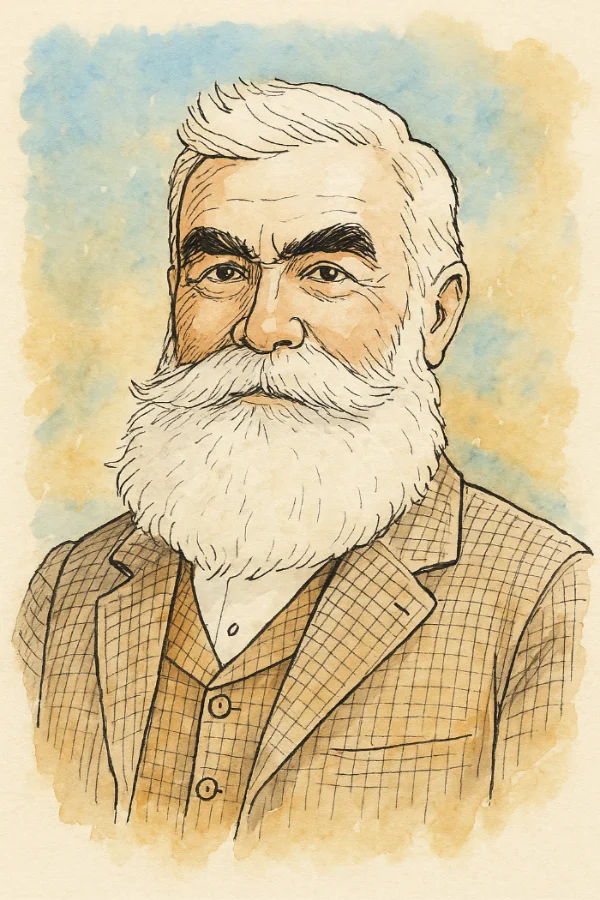
- Born in Wales in 1832 – worked in mills and mines from childhood
- Migrated to Australia in 1859 for gold mining – moved to Queensland in 1861
- Opened key Ipswich coal mines – Tivoli (1866), Aberdare at Blackstone (1870), and Dinmore
- Founded the United Welsh Church and Cambrian Choir in Blackstone
- Served as Minister for Bundamba (1893–1899) and Queensland Legislative Council member (1902–1913)
Highlights:
- Lewis Thomas (1832–1913): Coal magnate, philanthropist, and influential community leader; poured £13,000 into Brynhyfryd’s construction.
- Ann Thomas (1837–1930): Managed the estate effectively after Lewis’s death; recognized locally for resilience and commitment to community welfare.
- Mary Thomas Cribb (1877–1922): Sole heir to Brynhyfryd; her high-profile wedding to a Cribb heir significantly elevated mansion’s social status.
People Details
- Samuel Shenton. Original architect, known for integrating advanced technologies with Victorian opulence, designed other notable local landmarks.
- Peter Brown. Project builder whose work on Brynhyfryd elevated his status, leading to his eventual election as Ipswich Mayor.
- Thomas Bridson Cribb Jr. Married Mary Thomas, bridging two influential Ipswich families; the Cribb family notably owned prominent local businesses.
- Rylance Family. Purchased mansion primarily for mining, infamous locally for prioritizing economic gain over historical preservation.
- Community Figures. Local Welsh community leaders, miners, and workers frequently attended cultural and social events at Brynhyfryd.
- George Brockwell Gill. Noted architect, often mistakenly credited with Brynhyfryd’s design, who later influenced regional architectural standards.
- Local Benefactors. Lewis Thomas’s philanthropic initiatives significantly impacted Ipswich’s educational and cultural development.
🥂 Social & Cultural Significance
Highlights:
- Cultural Hub: Venue for elite gatherings, eisteddfods, and charitable events, central to Ipswich’s social calendar.
- Local Rivalries: Mansion symbolized Ipswich’s ambition to rival Brisbane’s grandeur, fostering local pride.
- Economic Prosperity: Brynhyfryd epitomized the prosperity generated by Ipswich’s booming coal industry.
Cultural Details
- Welsh Heritage. Brynhyfryd hosted significant cultural events that celebrated Welsh immigrant traditions and community solidarity.
- Household Operations. Mansion’s operation mirrored traditional English manor houses, promoting a self-sufficient estate with extensive staff.
- Economic Context. Construction costs were substantial, equivalent to roughly A$3 million today, reflecting the immense wealth from local coal extraction.
- Charitable Activities. Thomas family’s extensive philanthropy improved local schools, churches, and community institutions.
- Community Engagement. Open-door policy for cultural and social events strengthened Brynhyfryd’s community ties.
- Status Symbol. The mansion’s scale and luxury served as a public demonstration of Ipswich’s emerging industrial elite.
- Economic Decline. Its eventual decline mirrored broader economic downturns, highlighting vulnerabilities within the coal-based economy.
⚒️ Demolition & Legacy
Highlights:
- Economic Realities: Demolished for coal extraction beneath the site; economic pragmatism overshadowed heritage concerns.
- Material Reuse: Architectural elements like doors, fireplaces, and bricks integrated into local buildings, preserving its legacy.
- Cultural Impact: Demolition remembered locally as a cautionary heritage loss, shaping modern conservation perspectives.
Preservation Details
- Practical Salvage. Virtually every mansion component, from doors to garden statues, repurposed throughout Ipswich.
- Public Sentiment. Original acceptance evolved into regret and fond memories among Ipswich residents.
- Preserved Elements. Artifacts prominently displayed in local institutions, including Blackstone United Welsh Church and Ipswich Art Gallery.
- Environmental Damage. Post-demolition site deterioration due to mining subsidence significantly impacted local ecology and stability.
- Community Narratives. Brynhyfryd’s demolition narratives remain influential in local storytelling and heritage education.
- Historical Education. Inclusion in local school courses ensures continued community awareness and engagement with Brynhyfryd’s story.
🌳 Brynhyfryd Today
Highlights:
- Castle Hill Reserve: Now a vibrant public park featuring extensive trails for walking and mountain biking, historical markers, and educational signage.
- Public Access and Enjoyment: Popular recreational area, attracting visitors interested in both heritage and outdoor activities.
- Cultural and Historical Integration: Salvaged mansion artefacts regularly featured in local exhibitions, maintaining Brynhyfryd’s visibility.
Modern Day Details
- Trail Development. 16 km of mountain bike and walking trails integrate historical interpretation with recreational use.
- Site Interpretation. Detailed historical markers guide visitors through mansion’s footprint, gardens, and remnants.
- Artifact Preservation. Ipswich Art Gallery and local museums actively preserve and display Brynhyfryd-related materials.
- Educational Programming. Regular community events and school visits enrich local understanding of Ipswich’s industrial heritage.
- Environmental Restoration. Remediation of mining damage has revitalized Castle Hill, ensuring safe public access and use.
- Community Identity. Brynhyfryd’s memory actively shapes Ipswich’s identity, underscoring the importance of historical preservation.
Want to explore more iconic Ipswich homes?
Most people hike or bike around Castle Hill without realising they’re passing over the ghost of Ipswich’s own castle.
But Brynhyfryd was there—tower soaring, gardens sprawling, stories buzzing.
With the help from Ipswich Libraries, Picture Ipswich, the Ipswich Art Gallery, and carefully preserved local history, Ipswich Insider uncovers stories hidden in plain sight—like this one.
If you like them, then subscribe to our free weekly newsletter:
Sources:
- Brynhyfryd. Picture Ipswich.
- The legend of Blackstone Castle. Discover Ipswich.
- Brynhyfryd: The Lost Castle of Blackstone Hill. Ipswich Art Gallery.
- Queensland Places – Brynhyfryd Park, Blackstone. State Library Queensland.
- Trove Newspaper Clipping.
- Castle Hill (PDF).