

Woodlands at a Glance:
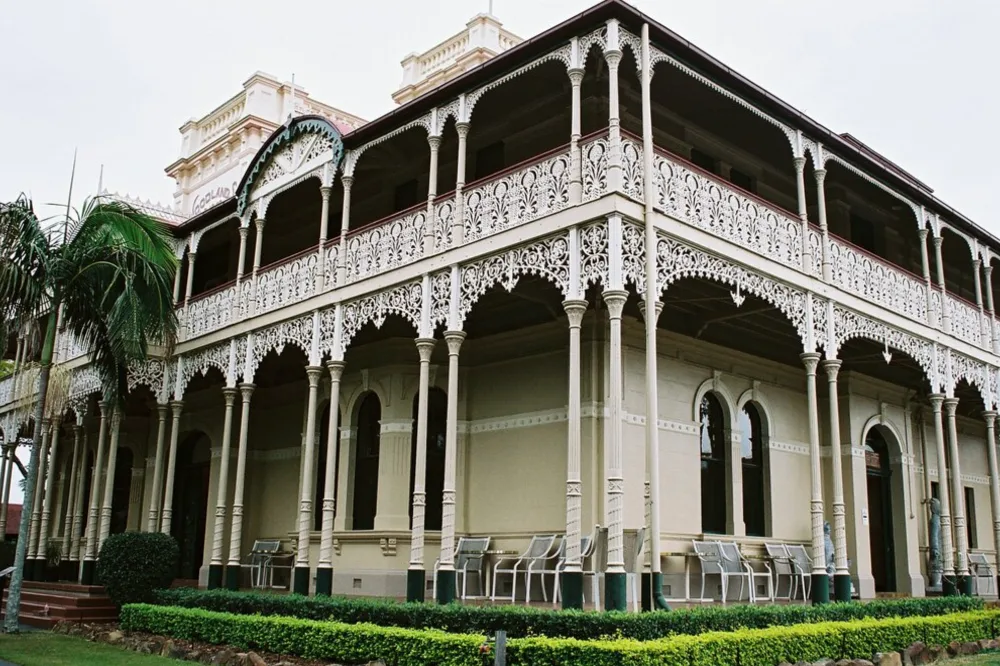
- Sugar-baron splendour. Grand 1891 Italianate villa crowned by an iconic 50-foot lookout tower.
- Sweeping hillside views. Set on 250 picturesque acres above Seminary Road, commanding stunning vistas of the Marburg Valley.
- Restored and revived. Methodically brought back to its prime by the Cooper family, now hosting weddings and overnight guests.
- Heritage treasure. Protected by the QLD Heritage Register since 1992 and a fav on Ipswich tour days.
🔢 Woodlands of Marburg — By the Numbers
- Location: 174 Seminary Road, Marburg QLD 4346 (Various adjoining lots combine to about 250 acres)
- Heritage Listing: QLD Heritage Register — Place ID 600734
- Year Built: 1889 – 1891
- Original Estate Size: about 1 200 acres under sugar-baron Thomas L. Smith
- Bedrooms: 10 principal bedrooms (plus extensive servants’ quarters)
- Notable Features: cedar-panelled dining and sitting rooms, vaulted sandstone cellar, secure strong room, 50-ft lookout tower
- Original Materials: rendered brick and local stone, Queensland red-cedar joinery, cast-iron verandah lace, marble fireplaces, sandstone cellar vaults
- Heritage Listing Date: 21 October 1992
Woodlands of Marburg is Queensland history in a single, stunning package. One part sugar fortune, one part spiritual sanctuary, and now a charming country escape for you to explore.
Back in 1889, sugar baron Tommy Smith dreamed big. He built his ideal showpiece: a grand two-storey Italianate mansion with a striking 50-foot tower. Picture wide verandahs dressed in ornate iron lace. Polished cedar rooms with marble fireplaces. And beneath your feet—a 15-room sandstone cellar once filled with barrels of rum from Smith’s own distillery.
But the mansion’s story didn’t end with sugar. In 1946, the Catholic Church took over. Priests moved in, turning it into St Vincent’s Seminary. Champagne to communion wine. Business chatter replaced by whispered prayers. A quiet chapter of reflection that lasted decades.
Today, Woodlands is thriving again—with you at the centre. It’s now a boutique hotel, wedding venue, and popular ghost-tour destination. You can sip estate-grown Verdelho by the shady grotto. Climb the tower at sunset for breathtaking valley views. Or grab a lantern and head underground into the old rum cellar for candle-lit tastings.
Every hallway and room whispers stories here. Tales of sugar wealth, sacred rituals, and maybe even spirits who linger long after the sun goes down.
Few places blend industry, spirituality, and legends quite like this. Woodlands isn’t just another historic home—it’s an experience you’ll carry with you long after you leave.
Part of a Series—Also Check Out These Ipswich Icons:
🔍 Snapshot of Woodlands of Marburg

Woodlands mansion and Marburg Country Inn building.
Snapshot Highlights
- Heritage mansion turned boutique hotel and event venue.
- Iconic 50-foot tower overlooking 250 picturesque acres.
- Carefully restored and heritage-protected since 1992.
Snapshot Details
- Era: Woodlands was built during Queensland’s boom years, with construction starting in 1889 and the Smith family moving in by July 1891.
- Style: Imagine a two-storey Italianate villa with wide verandahs wrapped in ornate cast-iron lace, topped by a striking 50-foot lookout tower.
- Size: The property today covers around 250 acres—down from the original thousand-acre estate owned by the Smith family.
- Protected: In 1992, Woodlands was officially listed on the Queensland Heritage Register, safeguarding it for future generations.
- Use today: Since 2002, Woodlands has welcomed guests as a tourist destination, venue and function location, with additions more recently as a boutique hotel, wedding destination & vineyard.
- Current Owners: The WOM Trust, controlled by the Cooper family. Management and Ops leased to David Ritchie and Michael Rowan.
- Attractions: Visitors come for the beautiful architecture, fascinating industrial history, former seminary stories, and famous ghost legends.
- Location: Sitting high on a ridge, Woodlands offers breathtaking views of Marburg Valley, especially at sunset.
- Condition: After extensive restoration work, the mansion is in excellent shape, needing only minor ongoing maintenance.
- Future Plans: Plans are underway to rebuild the historic stables from the 1890s and to create a new heritage walking trail around the estate.
🌱 Origins (1860s–1889)
Origin Highlights
- Smith family transforms timber land into sugar success.
- Innovative sugar mill with electric lighting in the 1880s.
- Designed by famed Ipswich architect George Brockwell Gill.
Origin Details
- Pioneers: English migrant Charles Smith settled on 568 acres near Marburg in 1870, initially running a sawmill.
- Disaster strikes: In 1880, a devastating fire destroyed their sawmill, but the Smith family quickly rebuilt, showing resilience that shaped the estate’s history.
- New beginnings: With timber supplies dwindling, Charles’s son Tommy Smith planted sugarcane in 1881, kicking off a booming sugar enterprise.
- Innovation: By 1885, Woodlands featured one of Queensland’s first electrically-lit sugar mills, a refinery, a rum distillery, and even its own telephone line to Walloon.
- Transport: Steel tramways were added in 1888 to move cane easily, making Woodlands known as the “most modern sugar mill in Southern Queensland.”
- Architectural ambition: Tommy hired Ipswich architect George Brockwell Gill, along with builder Samuel Shenton, to design a mansion matching his ambitions.
- Materials: All bricks were made on-site, local cedar (from around Wivenhoe) was used extensively, and stone from nearby quarries was crafted into the mansion’s cellar.
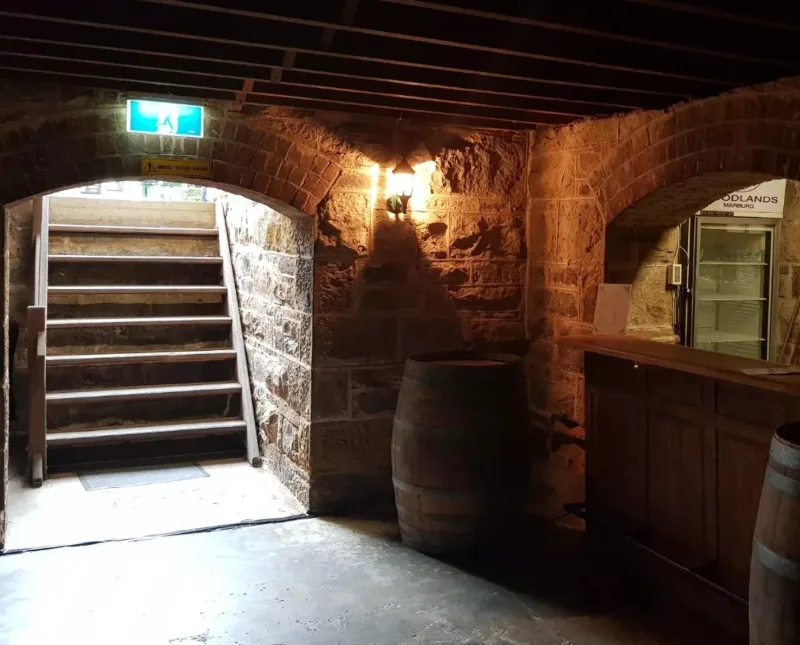
View inside the sandstone cellar.
- Excitement: The local newspaper advertised construction tenders for the mansion in January 1889, generating considerable interest in the community.
- Design approach: Gill’s elegant yet practical design featured deep verandahs, large windows, and the impressive central tower for views and ventilation.
- Moving in: By mid-1891, Tommy, his wife Mary, and their nine children settled into their grand new home, naming it “Woodlands.”
📅 Timeline History of Woodlands of Marburg
Timeline Highlights
- Built in 1891, became seminary in 1945, opened to public in 2002
- Survived sugar industry crash, priesthood years, and school era
- Officially heritage listed in 1992 to secure its preservation
Timeline Details
- 1891 launch: Woodlands became the Smith family home, known locally for lavish garden parties and social gatherings.
- Financial stress: By 1906, financial trouble forced the family to auction parts of their land, though they managed to keep the mansion itself.
- End of an era: In 1919, the local sugar industry collapsed, and the Marburg sugar mill closed permanently.
- Tommy’s passing: Tommy Smith died in 1931, marking the end of an era for the original owners.
- Church ownership: In 1944, Archbishop Duhig bought the property, creating St Vincent’s Seminary, which trained missionaries.
- Seminary era: The seminary opened in 1945, adding dormitories, a chapel, and even a pool hand-dug by students & other church members.
- Ownership changes: In 1954, ownership shifted directly to the Society of the Divine Word, who ran the seminary.
- School camp days: Ipswich Grammar School took over in 1986, using the site for educational retreats.
- Heritage listing: In 1992, Woodlands gained official heritage status, ensuring its protection and conservation.
- Public rebirth: From 2002 onwards, restoration works and new ownership transformed Woodlands into a public attraction and event venue.
👤 People Stories
People Highlights
- Tommy Smith: visionary sugar entrepreneur behind Woodlands
- George Gill: renowned Ipswich architect who designed the mansion
- Later chapters: priests, students, and modern restorers added to Woodlands’ story
Biographies
- Tommy Smith: A sawmill worker turned successful sugar entrepreneur who commissioned the Woodlands estate as a monument to his hard work.
- Charles Smith: Tommy’s father, whose early investments set Woodlands’ path.
- Mary Smith: Tommy’s wife, remembered locally for her lavender perfume that some say still haunts the mansion today.
- George Gill: London-born architect responsible for iconic Ipswich buildings; Woodlands is his best-preserved residential design.
- Samuel Shenton: Original builder who set the stage for Gill’s architectural success.
- Archbishop Duhig: Brisbane’s famous “Builder Bishop” who secured Woodlands for missionary training during World War II.
- Divine Word Fathers: Missionaries who built a devotional grotto and swimming pool and created a small cemetery on the property.
- Ipswich Grammar School: Rescued Woodlands from decline, using the mansion and grounds for leadership camps and retreats from 1986.
- Cooper Family: Local owners (2002–2017) who restored Woodlands lovingly, earning awards for their heritage conservation.
🏰 Architecture & Grounds
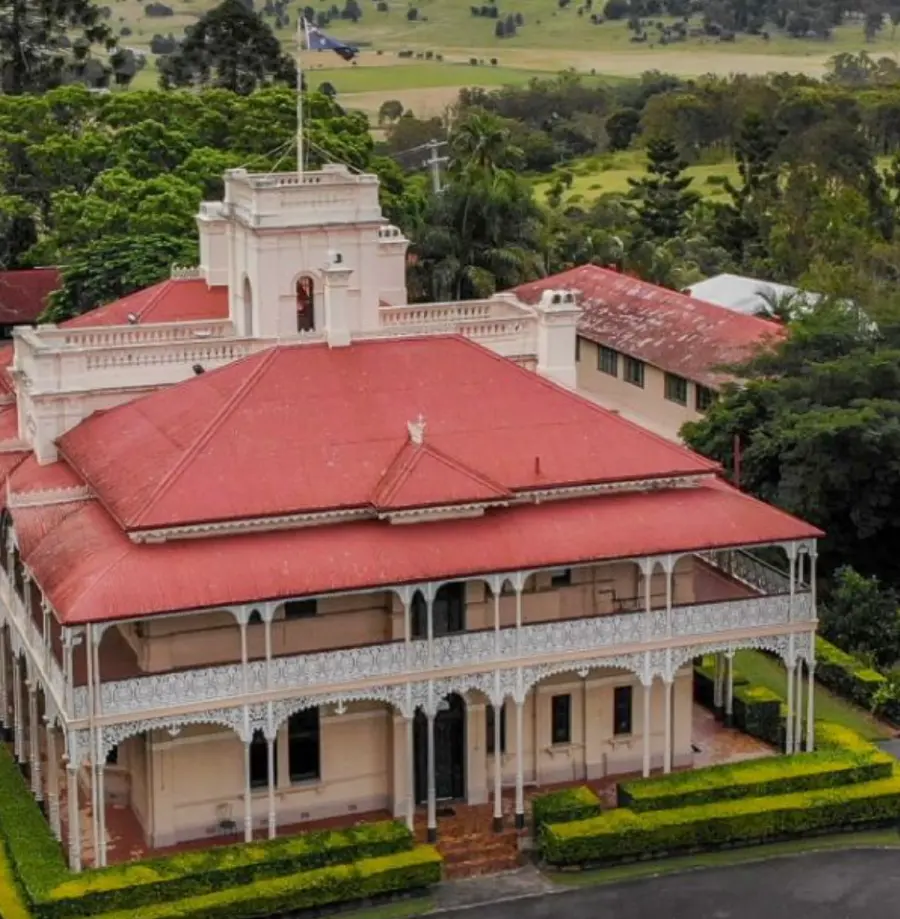
A great view of the rooftop viewing platform.
Architecture Highlights
- Italianate brick mansion wrapped in beautiful iron lace
- Tower cleverly houses 1890s water tanks for early indoor plumbing
- Grounds feature historic trees, vineyard, grotto, chapel, and small cemetery
Architecture Details
- Outside: Rendered brick walls, corrugated-iron roofing, and elegant cast-iron verandahs make Woodlands distinctive and beautiful.
- Verandahs: Carefully restored iron lacework reflects original 1880s craftsmanship.
- Iconic tower: Beyond offering impressive views, the 50-foot tower once stored large water tanks providing running water and flush toilets in 1891.
- Inside: Red cedar panelling throughout, with grand rooms and a sweeping central staircase.
- Cellar: A cool, sandstone cellar below housed wine, rum, and supplies for the estate.
- Trees: Tall Bunya pines and original olive trees frame the mansion’s driveway, planted in the late 1800s.
- Grotto: A stone chapel built by missionary priests in the mid-20th century, now a popular spot for weddings.
- Historic chapel: An 1888 timber church moved to the property and restored in 2004.
- Small cemetery: Final resting place of 18 missionary priests, quietly preserved on the hillside.
- Vineyard: Boutique Shiraz and Verdelho grapevines nod to the Smith family’s early winemaking attempts.
🛠️ Restoration Details
Restoration Highlights
- Gentle seminary additions, practical school upgrades, sensitive tourism renovations
- 2002–2006 restorations removed modern additions, bringing back historic charm
- Plans to rebuild original stables and add a heritage trail by 2026
Restoration Details
- Seminary days: 1945 renovations added dormitories and chapel buildings, preserving mansion interiors.
- Priests’ pool: Students at the seminary literally dug their own swimming pool by hand in the 1960s.
- School modifications: Ipswich Grammar installed practical facilities discreetly, keeping mansion views intact.
- Heritage protection: Heritage listing in 1992 halted further modernisation and created a detailed conservation plan.
- Major restoration: Early 2000s restoration removed inappropriate modifications, uncovering original features.
- Iron restoration: Lost verandah lace was carefully recreated from original patterns in 2019.
- Sandstone rebuild: Front steps and porte-cochère restored faithfully using historical photographs.
- Discreet upgrades: Air conditioning and fire-safety systems installed discreetly to preserve historical appearance.
- Chapel relocation: The 1888 chapel relocation earned Woodlands heritage awards and provided a romantic wedding venue.
- Future plans: Rebuilding of the original stables scheduled to start around 2026.
🎉 Social & Cultural Uses
Cultural Highlights
- Seminary students shaped decades of Woodlands’ history
- Today it’s a popular wedding, wine, and ghost-tour destination
- Community events keep the property alive and welcoming
Social & Cultural Details
- Missionary college: From 1945 until 1986, Woodlands was home to St Vincent’s Seminary, training hundreds of young missionaries.
- Local connection: Sunday Masses at the seminary chapel welcomed Marburg residents, creating lasting community ties.
- School camps: Ipswich Grammar students visited regularly in the 1980s and ’90s for outdoor activities and leadership camps, keeping local traditions alive.
- Public tours: Since reopening to visitors in 2002, Woodlands has offered guided tours, heritage walks, wine tastings, and elegant high teas.
- Weddings: The property hosts dozens of weddings a year, offering venues such as the historic chapel, romantic grotto, and marquee lawns.
- Film & TV: Woodlands featured as a filming location, appearing in the 2017 drama Don’t Tell and other productions, enhancing its reputation.
- Community events: The estate hosts classic car rallies, vintage fairs, and popular heritage open days like “Great Houses of Ipswich.”
- Ghost tours: Evening ghost tours regularly sell out, thanks to fascinating stories of spirits, such as Mary Smith’s lavender perfume and chanting priest sightings.
- Boutique vineyard: Small-scale wine production offers visitors Shiraz and Verdelho, inspired by early vineyard attempts by the Smith family.
- Local gatherings: Regular charity balls, craft retreats, and community fundraisers keep the mansion active and accessible.
🟢 Current Status
- Privately owned, carefully managed, heritage-focused
- Offers 20 unique guest rooms, dining options, and café
- Future projects: interactive trail app and stable reconstruction
- Today’s custodians: Managed & Operated by Michael Rowan and David Ritchie (owned by Cooper family) and team, combining hospitality experience with passion for heritage preservation.
- Guest rooms: Twenty comfortable rooms, ranging from casual motel-style accommodation to luxurious suites inside the historic mansion.
- Dining experiences: Enjoy modern Australian cuisine in the former seminary chapel restaurant or casual dining in the Tommy Smith Café.
- Heritage guidelines: All building work carefully follows Queensland’s heritage regulations, right down to approved paint colours and fittings.
- Revenue streams: Weddings, corporate retreats, and tourism activities sustain the ongoing preservation and maintenance of the property.
- Public access: Guided tours ensure Woodlands stays open to the community and fulfils heritage obligations.
- Excellent condition: Recent structural reports (2023) confirm the mansion’s excellent state, with only minor ongoing maintenance needed.
- Local partnerships: Collaboration with tourism groups like Discover Ipswich and regional wine trails helps draw visitors year-round.
- Interactive future: A planned augmented reality (AR) heritage trail app will soon guide visitors through the estate’s fascinating stories.
- Vision: Long-term, Woodlands aims to remain an active, welcoming place—not a static museum—balancing heritage with hospitality.
🆚 Comparisons To Other QLD Mansions & Estates
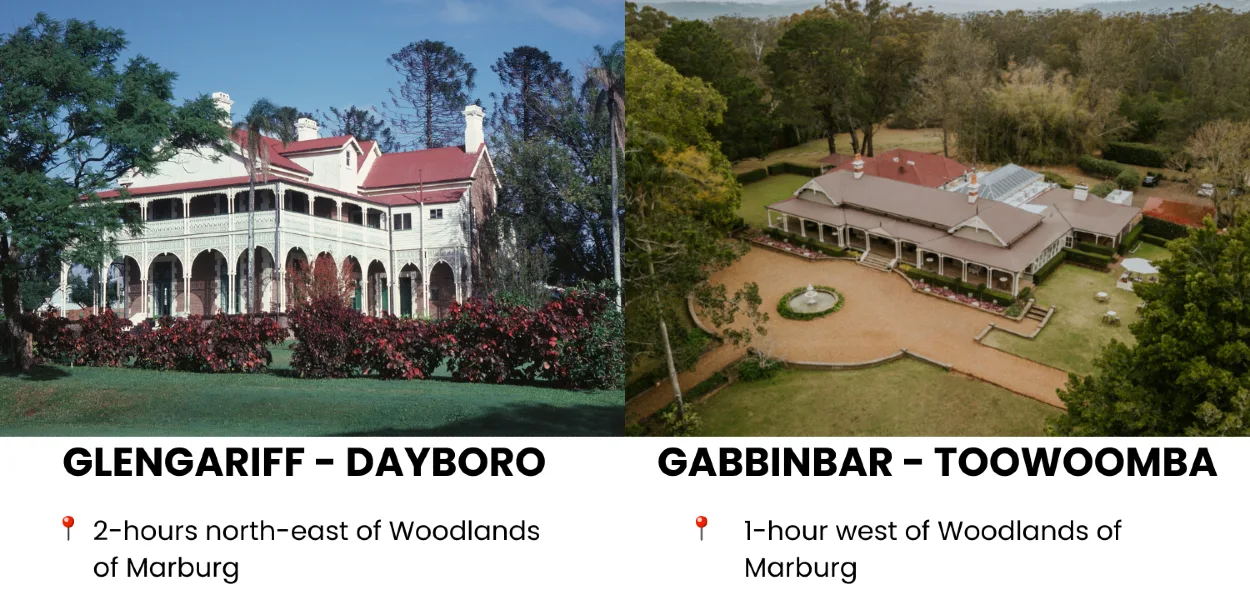
Two comparable and highly successful heritage wedding venues nearby.
Comparison Highlights
- Bigger paddocks than Glengariff, taller profile than Gabbinbar
- Shares the stage with Fairy Knoll and Garowie as Ipswich’s grand trio
- Only estate to blend sugar wealth, seminary years & a thriving ghost-tour trade
Comparison Details
- Glengariff (Dayboro): Dating to 1876, this 230-acre dairy-turned-wedding estate is still run by the Doyle family and hosts 150+ ceremonies a year.
- Gabbinbar Homestead (Toowoomba): A low-set timber villa built 1876 for Rev W.L. Nelson; it became the Queensland Governors’ summer retreat from 1906-09 and now trades as a high-end wedding venue.
- Fairy Knoll (Ipswich): Designed by G.B. Gill and finished in 1901; served as the Jefferis Turner Mothercraft Home for mothers and babies from 1952-86 before later respite-care use and a return to private residence.
- Garowie (Ipswich): A grand 1888 villa by architect Samuel Shenton; subdivided in the 1940s into seven flats, then painstakingly restored to a single home in the 1990s.
- Brynhyfryd (Blackstone, lost): The 49-room “Coal King’s Castle” rose in 1889-90 from Samuel Shenton’s plans and was razed for brick salvage by 1937—its loss highlights the rarity of surviving mansions like Woodlands and Garowie.
- Ormiston House (Redlands): Built 1858-65 for Captain Louis Hope, who milled Queensland’s first commercial sugar in 1864; runs today as a volunteer museum and tearooms.
- Fernberg (Brisbane): An Italianate villa designed by Benjamin Backhouse in 1865, now Government House; urban setting and official role differ from Woodlands’ rural, public-tour focus.
- Paronella Park (Mena Creek): José Paronella’s 1930s Spanish-style “castle” with its own hydro plant is a tourism icon, yet later and more romantic-fantasy than Woodlands’ authentic Victorian roots.
- Adaptive reuse: Glengariff, Gabbinbar, and Woodlands all thrive by pairing weddings and accommodation with careful heritage care—now the go-to model for keeping big Queensland homes alive.
- Unique blend: Among these peers, only Woodlands layers sugar-mill prosperity, four decades as a Catholic seminary, and a sold-out ghost-tour scene—plus its 50-ft tower still offers the best rural lookout in the bunch.
Want more Ipswich Goodness To Your Inbox Every Wednesday Morning?
Sources
- Woodlands, Marburg. Wikipedia.
- 10 Reasons to visit Woodlands of Marburg. Discover Ipswich.
- Woodlands of Marburg. Picture Ipswich.
- Woodlands of Marburg. Facebook Page.
- Woodlands of Marburg (PDF). Ipswich City Council.
- Woodlands of Marburg. Ipswich Libraries.
- Tale of a house up on the hill. The Courier Mail.