
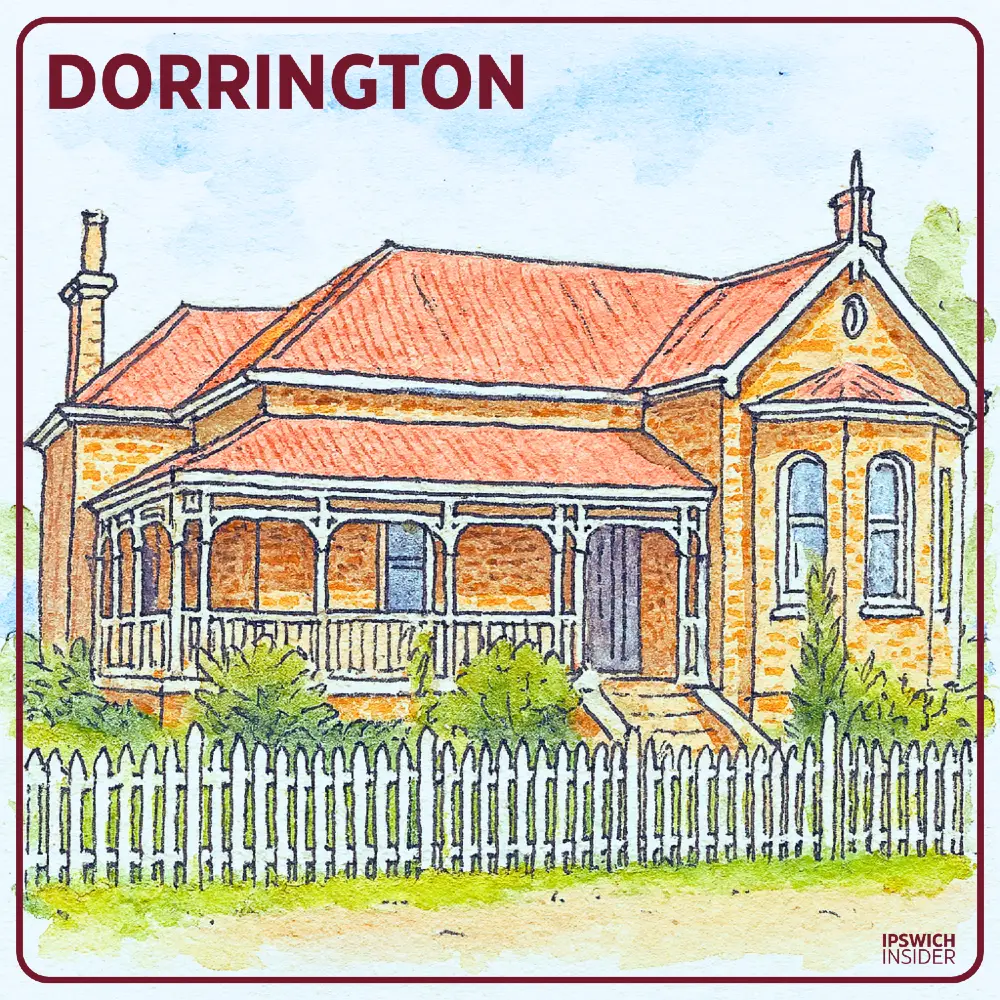
Dorrington at a Glance
- Federation‑era Brick. Architect George Brockwell Gill and builders Worley & Whitehead completed the villa in 1891. The Haigh’s moved in shortly after in 1892.
- Wartime Oasis. Renamed “The Oasis” in the 1940s when the Anthony family shared orchard fruit with neighbours.
- One Public Sale. Listed publicly only once, fetching $63,000 in 1975.
🔢 By The Numbers
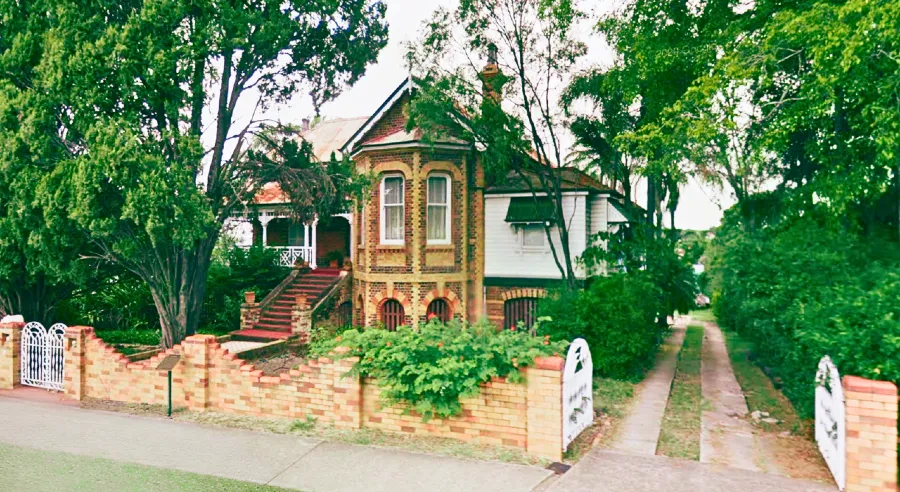
- Address: 88 Chermside Road, East Ipswich
- Built: 1891
- Storeys: 2
- Bedrooms: 5
- Land: 1123 m² today
- First Occupied: 1892 by Haigh family
- Anthony Purchase: 1944
- Subdivision Span: ~20 years (1940s-60s)
- Last Open Sale: $63,000 in 1975
- Estimated value (2025): $1.02 m
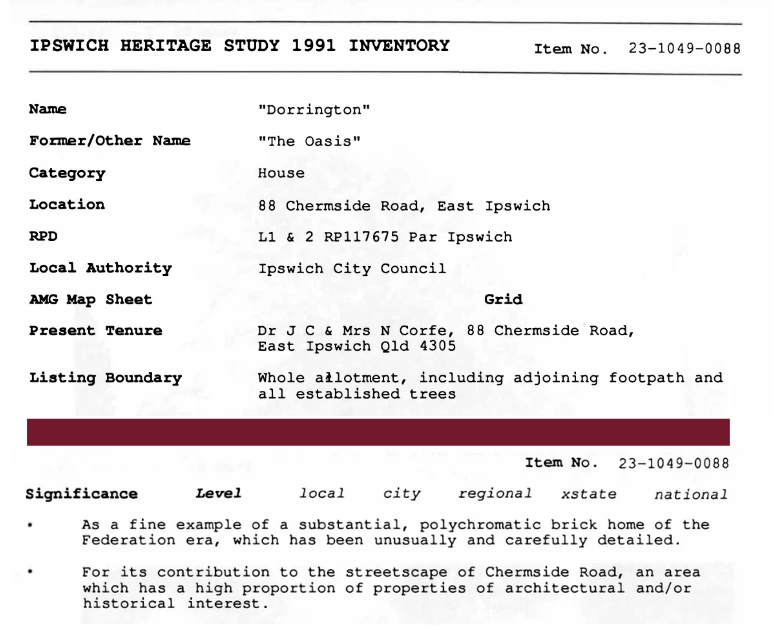
- Heritage Listing: 1991 (local)
- Plaque: 2006 council marker
- Age: 134 years in 2025
When Dorrington went up in 1891, East Ipswich still sat on the town’s outer fringe.
The district was dotted with open paddocks and a handful of sizeable semi-rural estates, not yet broken into the close-packed house blocks seen today.
The Haighs’ new brick villa occupied one of the largest of those holdings.
Their block ran south all the way to Brisbane Street and was laid out with a private tennis court, an orchard and deep ornamental gardens — ample space for leisure as well as produce.
Despite its country-estate scale, the property was only a short walk to the East Ipswich rail station and Ipswich’s commercial centre. Giving the family an enviable ‘best-of-both-worlds‘ lifestyle: pastoral quiet at home, city convenience close by.
Ready to dig deeper?
Scroll on for the full Dorrington story 👇
📜 Origins & History
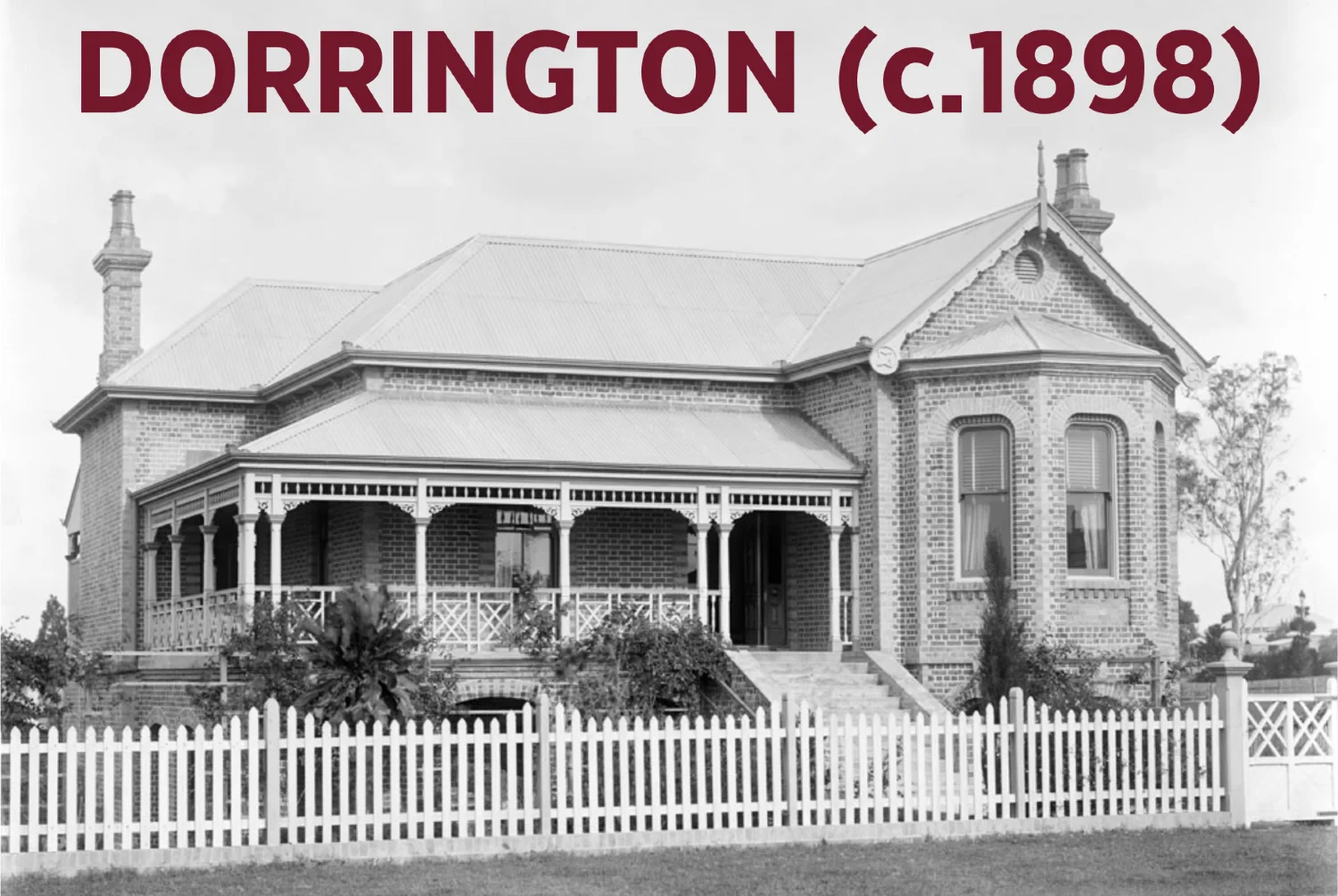
Highlight
Dorrington was built in 1891 for William and Elizabeth Haigh on a large semi‑rural block in East Ipswich (at least 1 hectare at the time). Designed by architect George Brockwell Gill and named after an English village, the brick house became the Haigh family’s long‑term home.
- Construction. Finished in 1891 for auctioneer William Henry Haigh and his wife Elizabeth (née Cribb).
- Designer. Planned by noted Ipswich architect George Brockwell Gill.
- Builders. Erected by Worley & Whitehead, the firm also building Ipswich Girls’ Grammar at the time.
- Land. Site passed from James Gibbon (1851) to John Ventris Jennings (1867) before its 1891 sale to the builders.
- Name. Called Dorrington after a village near Leeds, reflecting the Haigh family’s English roots.
- Setting. Early grounds held a tennis court, orchard and sweeping lawns on what was then Ipswich bouroughs fringe.

- Use. Served as a private family home for the Haighs and their four children from 1892 onward.
🏗️ Architecture & Design
Highlight
The house is a rare two‑storey Federation Queen Anne brick villa with wide verandahs and tall chimneys, blending late Victorian craftsmanship with features suited to Queensland’s climate. Its solid construction sets it apart from the timber “Queenslanders” common in 1890s Ipswich.
- Style. Federation Queen Anne two‑storey brick villa—unusual for Ipswich homes of the era.
- Roof. High‑pitched hipped iron roof with broad eaves for shade.
- Verandahs. Wide wrap‑around spaces with decorative balustrades on at least two sides.
- Chimneys. Several tall brick stacks signal multiple fireplaces.
- Facade. Symmetrical front with bay windows and a gabled porch.
- Layout. About five bedrooms, formal rooms and a central hallway suited to cross‑breezes.
- Contrast. Brick build and masonry detail differed from the timber “Queenslander” norm while matching the scale of other grand villas.
⏳ Through the Years
Highlight
From Haigh family residence to Anthony ownership and local heritage listing, Dorrington’s story traces more than 130 years of Ipswich change while the house itself has remained a private home.
- 1892. Haigh family moved in and began nearly four decades of residence.
- 1922. William Haigh died at home; funeral left from Dorrington.
- 1936. Elizabeth Haigh passed away, ending the original family era.
- 1944. Jack and Marina Anthony bought the house, renaming it “The Oasis“.
- 1940s-60s. Grounds were subdivided, shrinking the estate as housing demand rose.
- 1975. Sold for $63,000, reflecting its heritage value on a town lot.
- 1991. Entered the Ipswich heritage register; council plaque added in 2006.
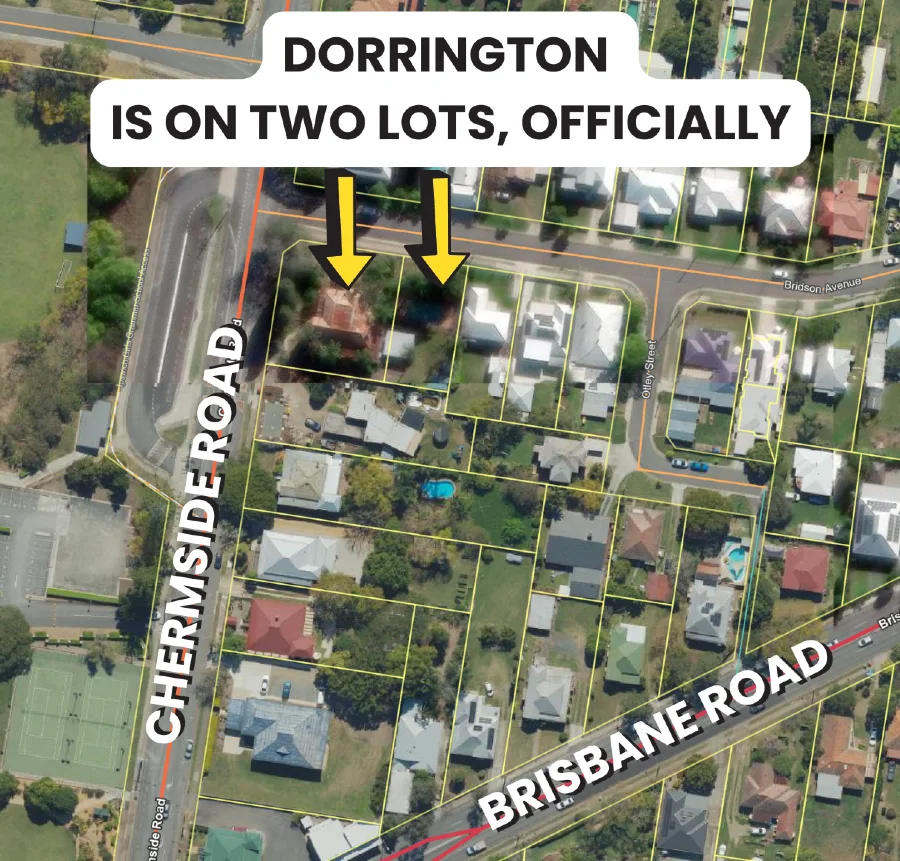
- Today. Remains a private home on about 1,123 m² (officially 2 lots), maintained (although the trees around the home seem quite overgrown…maybe by design?)
🛠️ Renovations & Restorations
Highlight
Most changes centred on dividing land and routine upkeep: verandah tweaks, service upgrades and roof maintenance, while the core brick shell and key details stayed intact.
- Subdivision. Tennis court and orchards were lost as land was split from the 1940s to 1960s.
- Footprint. Main house has remained the same size and shape since the late 1890s/early 1900s.
- Verandahs. Some sections were enclosed mid‑century then later reopened.
- Services. Plumbing, wiring, kitchens and bathrooms saw modern upgrades over time.

- Timber wing. The weatherboard addition on the south side (present in the 1969 photo above but absent in the c. 1898 image at the top of this article) must have gone up between 1898 and 1969. There is another image taken in the early 1900s that seems to show the addition present. So maybe it was added a few years after the original build? Or maybe it was added in the 1940s? Hard to be 100% certain.
- Roof. Corrugated iron and gutters have been replaced as part of maintenance.
- Integrity. Original brick walls, chimneys and verandah trim are still largely intact; outbuildings have gone.
🌟 Why it Matters / Heritage Importance
Highlight
Dorrington is a locally listed landmark that showcases architect G. B. Gill’s skill, tells of the Cribb and Haigh families and enriches East Ipswich’s historic streetscape.
- Listing. Added to the Ipswich heritage register in 1991 and marked with a plaque in 2006.
- Architect. Displays the residential work of George Brockwell Gill, a key Ipswich designer.
- Rarity. One of few two‑storey brick houses from the 1890s in the city.
- Families. Links to the Cribb & Haigh clans, central to Ipswich commerce and society.
- Nickname. The Anthony era saw it known as “The Oasis”, showing community fondness.
- Condition. Stands in good repair; main risk is unsympathetic development.
Sources:
- Dorrington. PictureIpswich.com.au
- George Brockwell Gill Self‑Guided Tour. Arcgis.com