

Brickstone “Brixton” at a Glance
- 3-storey Georgian brick villa. Built in 1864 by master builder William Hancock for James Swan.
- Restoration. Converted from 1920s flats back to a grand family home during 1985–88.
- Rare trio. 3 Hancock erected brick houses side-by-side on Murphy Street (#11, #13 and #15).
- Significant. Contributes to the Denmark Hill streetscape and stands as an architecturally significant mid-Victorian home.
🔢 By The Numbers

- Address: 11 Murphy St, Ipswich QLD (Denmark Hill Precinct)
- Heritage Listed (Oct 1992): ID #600590
- Built: 1864
- Land: 599 m² corner block
- Cluster: 3 brick homes built together on Murphy Street – #11 Brickstone, #13 Cornubia, #15 Collingwood
- Dormers: 4 attic dormer windows
- Ceilings: 14-ft height
- Rooms: 8 principal rooms in the original plan
- Bedrooms: 4 after restoration
- Price 1989: $280,000 sale
- Price 2012: $550,000 sale
- Price 2018: $610,000 sale
In 1864 master builder William Hancock raised 3 brick houses on Murphy Street in Ipswich.
Only one, Brickstone (originally called Brixton) still wears its original face and now carries a full Queensland Heritage listing.
The attic lay sealed for sixty silent years after the house became flats in the 1920s.
In the 1980s restorer owners cut through ceilings, craned in a reclaimed cedar staircase and gave those forgotten rooms new light.
Brickstone’s rare Georgian lines, solid brick walls and intact roof cresting set it apart from its altered neighbours at #13 and #15 Murphy St. Integrity, not luck, earned it state protection.
Today the house stands on Denmark Hill as a time capsule of Ipswich ambition—proof that one well-kept survivor can tell the whole street’s story.
Explore Iconic Ipswich Homes
📜 Origins & History

Brickstone viewed from Murphy St.
Highlight
Brickstone was built in the 1860s for wheelwright James Swan and crafted by master builder William Hancock. Its brick fabric and Denmark Hill address marked Ipswich’s mid-Victorian boom.
- Construction. Built circa 1864 as a two-storey brick home on Murphy Street.
- Owner. Original owner was James Kirby Swan, a local wheelwright.
- Builder. The house was erected by respected William Hancock.
Land. Swan bought Lot 53, Allotment 10, Section 17 — roughly 1/2 acre — on 15 Apr 1861; re-surveyed on 2 Oct 1869, Brickstone now stands on a 599 m² corner lot of Murphy St and Roderick St.
- Context. Ipswich’s coal and railway boom pushed demand for grand homes.
- Cluster. Hancock built three substantial brick houses in a row on Murphy Street.
- Material. Brickwork signalled wealth in a timber-dominated Queensland market.
- Name. The house was first called Brixton; “Brickstone” became common later.
🏗️ Architecture & Design
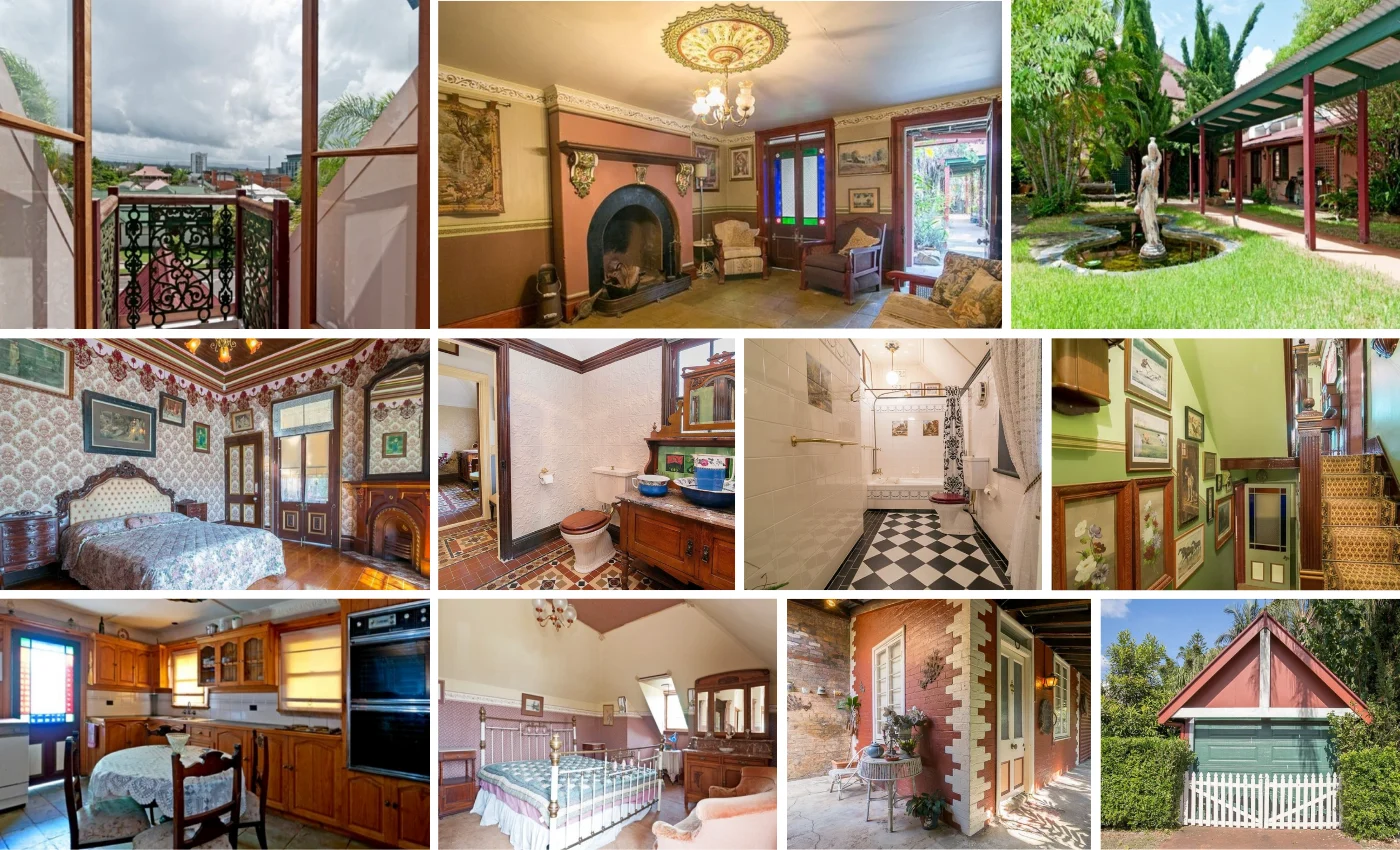
Brickstone interior from 2012 and 2018 RealEstate sale photos.
Highlight
A rare Georgian-influenced plan combines solid brick walls, a steep roof and an attic—features seldom found together in Queensland homes of the era.
- Style. The house shows a simple Georgian influence rare in Queensland.
- Walls. Double-cavity brick sits on a sandstone base with stucco lines.
- Roof. A steep hipped roof once held slate, later replaced by corrugated iron.
- Attic. A full attic storey with four 1980s dormers crowns the house.
- Verandah. A wrap-around verandah boasts cast-iron columns and rails.
- Plan. Four principal rooms flank a central hallway on the main level.

- Outbuilding. A detached brick kitchen survives at the rear.
- Interior. Features include a bay window, fireplaces and pressed-metal ceilings.
⏳ Through the Years
Highlight
Across 160 years Brickstone shifted from private home to flats, then back to a single heritage residence through multiple sales and a landmark restoration.
- 1861. James Swan bought the Murphy Street allotment.
- 1864. House completed and occupied by the Swan family.
- 1875. Ownership passed briefly to builder William Hancock.
- 1877. Samuel Irwin purchased the property as a private home.
- 1920s. House converted into flats, closing the attic and verandahs.
- 1930s–70s. The building served long-term tenants as low-cost apartments.
- 1985. Kirk Jensen and Peter Gelherr bought and began full restoration.
- 1988. A high-profile auction expected $400 k but did not meet reserve.
- 1989. Adele Rule acquired Brickstone for about $280 000.
1991 suburb shift. 14 Jun 1991 boundary review moved Denmark Hill—incl. 11 Murphy St—from West Ipswich into the core suburb of Ipswich.
- 2012. Change of hands after a $550,000 sale.
- 2018. Latest recorded sale at $610,000; like-for-like upkeep continues today.
🛠️ Renovations & Restorations
Highlight
Major changes include a 1920s flat conversion and a 1980s revival that reopened the attic, restored verandahs and reintroduced period finishes.
- Flats. In the 1920s the slate roof went, verandahs closed and rooms divided.
- Stairway. The internal attic stair was removed during the flat conversion.
- Dormers. Original dormer windows were lost and the attic sealed.
- 1980s. New owners reopened the attic and added four dormers.
- Verandah. Enclosures were stripped to restore open iron-work verandahs.
- Joinery. Period doors and trims were reinstated using salvage.
- Garden. A Victorian-style garden was planted during the makeover.
- Carport. A sympathetic timber carport appeared under Adele Rule’s care.
- 2019 new roof. Like‑for‑like corrugated‑iron roof replacement and verandah balustrades removed—no DA required, covered by heritage‑exempt maintenance.
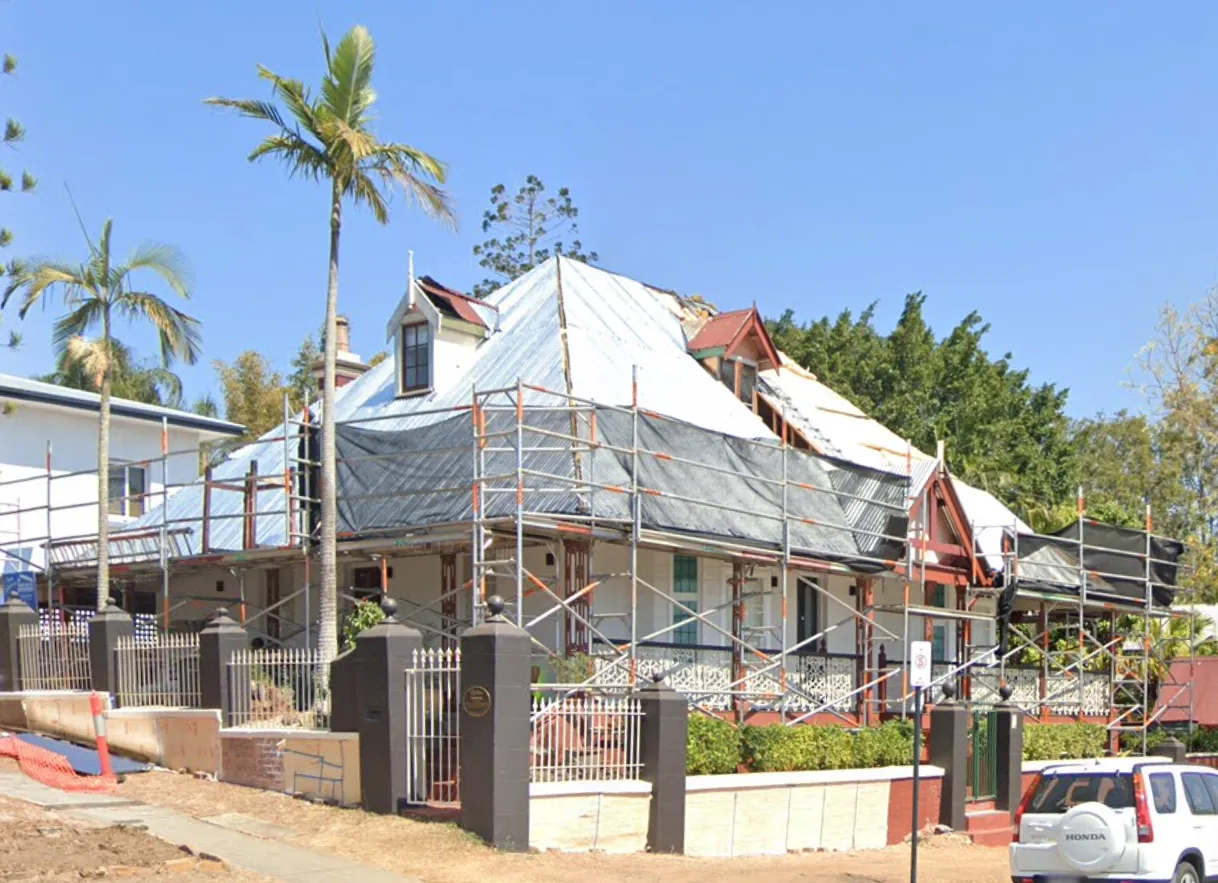
Brickstone – Sept 2019 new roof and more.
- No DAs 2019‑24. Council register shows no development applications for the property in this period; recent works fell under routine conservation.
Sources
- West Ipswich – Ipswich Heritage Study 1992 Volume 4. Picture Ipswich.
- Brickstone. Wikipedia.
- 11 Murphy Street, Ipswich, Qld 4305. RealEstate.com.au.