

Franklyn Vale Homestead at a Glance
- Style. Classic single-storey timber Queenslander homestead, built in the early 1870s.
- Known for. Remarkably intact late 19th and early 20th-century homestead complex including house, schoolroom, guest wing, meat house, summerhouse, and stately bunya pines.
- Mort family. Owned by the Mort family since 1849. The property name honours Sir John Franklin (1842), inspiring the nearby road and creek.
- Continuity. Still privately owned by Mort family descendants today.
🔢 By The Numbers
- Address: Franklyn Vale Homestead, Franklyn Vale Road, Mount Mort
- Heritage ID: ID 600728
- Started: 1849 (station set up)
- House built: Early 1870s (present homestead)
- Original land: About 60,000 hectares (Laidley Plains)
- Sheep included: 13,000 came with the deal
- Land opened: 48,000 acres taken back in 1877 for small farms
- Land kept: About 4,000 hectares stayed with the family
- Age: Nearly 175 years in one family
- Grant: $25,000 conservation funding in 2008
- New wings: 2 added around 1900 (schoolroom, guest wing)
Franklyn Vale Homestead began life back in 1849 as the home base for grazier Henry J. Mort, who moved to Queensland to manage sheep and cattle runs.
By the early 1870s, the simple slab huts were replaced by the spacious timber homestead you see today, built for Henry’s daughter Kate and her husband Edward Crace.
The property changed significantly when the government took back 1000s of acres in 1877, opening them for smaller farms.
Despite that, the Morts stayed and grew Franklyn Vale, even adding a schoolroom and guest wing in 1900 designed by notable architects Addison & Corrie.
Now QLD heritage-listed and still privately owned by Mort family descendants nearly 175 years later. Franklyn Vale Homestead stands as an extraordinary example of an intact Queensland pastoral property. Complete with rare original buildings and towering rows of bunya pines.
Have a look in more detail:
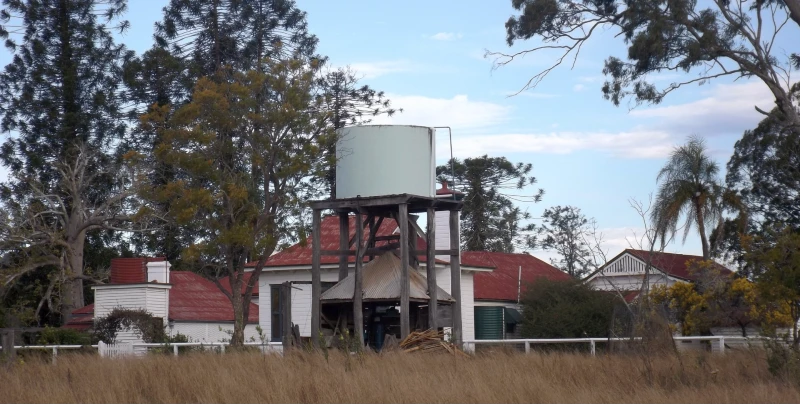
Take a walk around the front entrance to Franklyn Vale Homestead on Franklyn Vale Road. The showpiece home is on the other side of the buildings you can see here.
📜 Origins & History
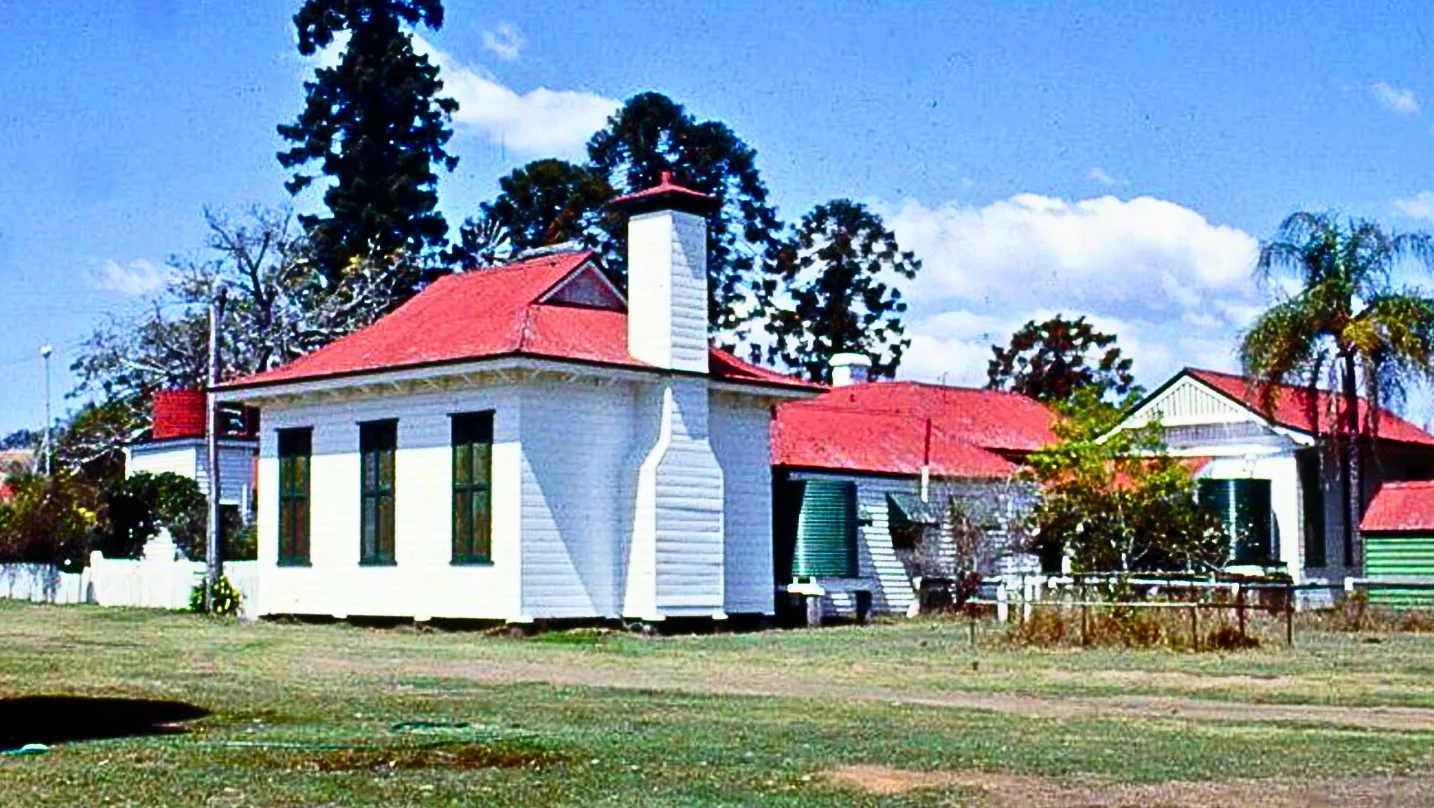
Franklyn Vale Homestead c.1992 (Source: Wikipedia) looking south-east from the water tank-stand. The schoolroom building is front-and-centre. The guest/bedroom wing at the far right. The main house roof + chimney can be seen in the background centre-right.
.jpg)
Highlight
Franklyn Vale began as a mid‑19th‑century pastoral run and became a family homestead in the early 1870s. The Mort family steered it through land changes and district growth while the new house took over from the first slab dwelling.
- Founding. The station home began in 1849 when Henry Jonathan Mort set up at Franklyn Vale.
- Lease. The run formed part of the Laidley Plains lease first taken up in 1843 by J. P. Robinson.
- Place name. Mount Mort was renamed from Gehrkevale during WWI to honour the Mort family; Franklyn Vale’s name dates to Sir John Franklin (1842).
- Transfer. In 1849 Thomas S. Mort acquired the lease and placed Henry as resident manager, taking over with 13,000 sheep.
- Partnership. In 1852 the lease passed to Henry Mort and James Laidley, who split management between sections.
- Stock. In the early 1850s the station shifted from sheep to cattle grazing.
- Move. In 1855 Henry Mort relocated to Sydney and left overseers to run the property.
- Reduction. By 1869 resumptions and a partnership split left about 4,000 hectares in Mort family freehold.
- Homestead. The present timber house was built in the early 1870s for Kate Crace (Henry’s daughter).
- Railway. In 1865 the line reached Grandchester, improving access to the district.
- Resumption. On 17 April 1877 the government resumed 48,000 acres from the estate for selection.
- Use. In its first decade the new house served as the station HQ and a family home.
🏗️ Architecture & Design
Highlight
The homestead is a one‑storey timber Queenslander style house adapted to climate and work. Wings and verandahs form a practical courtyard, while outbuildings and planned plantings round out a complete rural ensemble.
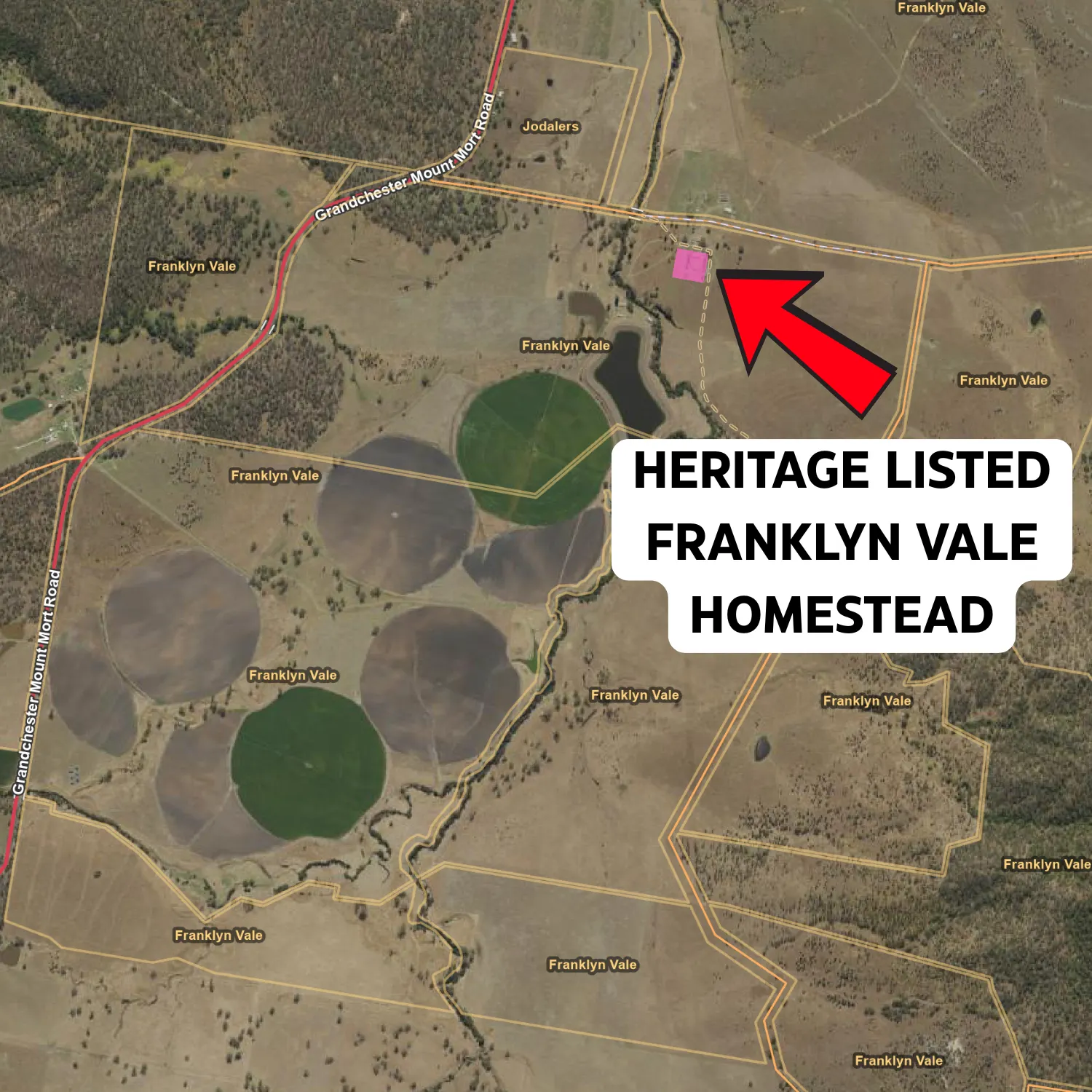
Pink square shows where the homestead is located within the greater Franklyn Vale station.

Franklyn Vale Homestead — Site Plan Key (north = road)
- Schoolroom. North‑west of the house. Gambrel (broken‑back) roof at the north end of the servants’ wing.
- Guest wing. South‑west corner of the house.
- Summerhouse. South‑east, beside the tennis court. Small square pavilion with a pyramid roof.
- Meat house. North‑east. Small square building with a pyramid roof and ventilator.
- Slab shed. Due north of the courtyard. Long gabled roof with lean‑tos. Tankstand at the south west end.
- Workers’ cottage. North‑east. Small weatherboard cottage on stumps with a gabled roof and front verandah.
- Courtyard. Opens to the north. Windmill pump at centre. Arched entrance gate on the north side.
- Bunya rows. Tree lines along the east and west sides of the homestead precinct.
- Roof. The main roof has twin hipped roofs of corrugated iron with a concealed box gutter.
- Verandahs. Wide verandahs wrap around under separate skillion roofs.
- Water. A windmill once pumped water to the courtyard, entered through an arched gate.
- Lattice. Verandah balustrades use timber lattice panels and the ceilings are board‑lined.
- Doors. Main rooms open by French doors with glazed fanlights and screens.
- Windows. Later wings have tall sash windows with timber‑framed gauze shutters.
- Chimney. The schoolroom has a brick chimney that is now boarded over.
- Walls. Many walls are single‑skin timber with stained joinery.
- Joinery. Fanlight frames, doors and trims use stained cedar/pine.
- Airflow. High fanlights aid ventilation when doors are closed.
- Drawing room. The lounge includes a small bay alcove opening to the verandah.
- Fireplaces. Several rooms retain brick fireplaces with timber mantels.
- Ceilings. Rooms have board‑lined ceilings, some with decorative roses.
- Kitchen wing. The detached kitchen wing shows exposed rafters and battens.
- Cooking. A large double fireplace anchors the kitchen.
- Structure. Service rooms use single‑skin tongue‑and‑groove walls.
- Sun control. West windows carry corrugated‑iron hoods.
- Setting. The homestead sits on the crest of a low hill amid formal gardens.
- Trees. Two parallel rows of bunya pines flank the house to east and west.
- Tennis. The former tennis court survives as a levelled site south of the house.
⏳ Through the Years
Highlight
Across generations, ownership and use remained within the Mort family. The station diversified and marked key milestones while staying in private hands.
- 1891. Ownership sat with Henry Mort and his sons Charles and Arthur, with Arthur managing.
- 1893. Charles Mort helped start a Grandchester creamery and butter factory.
- 1900. After Henry J. Mort died, Arthur Mort became sole owner of Franklyn Vale.
- 1900s–1910s. The station was used to fatten cattle from Arthur’s other holdings while keeping dairy.
- 1926. The property had been in Mort hands for 77 years.
- 1934. Arthur Mort died and leadership passed to his son Henry Chisholm Mort.
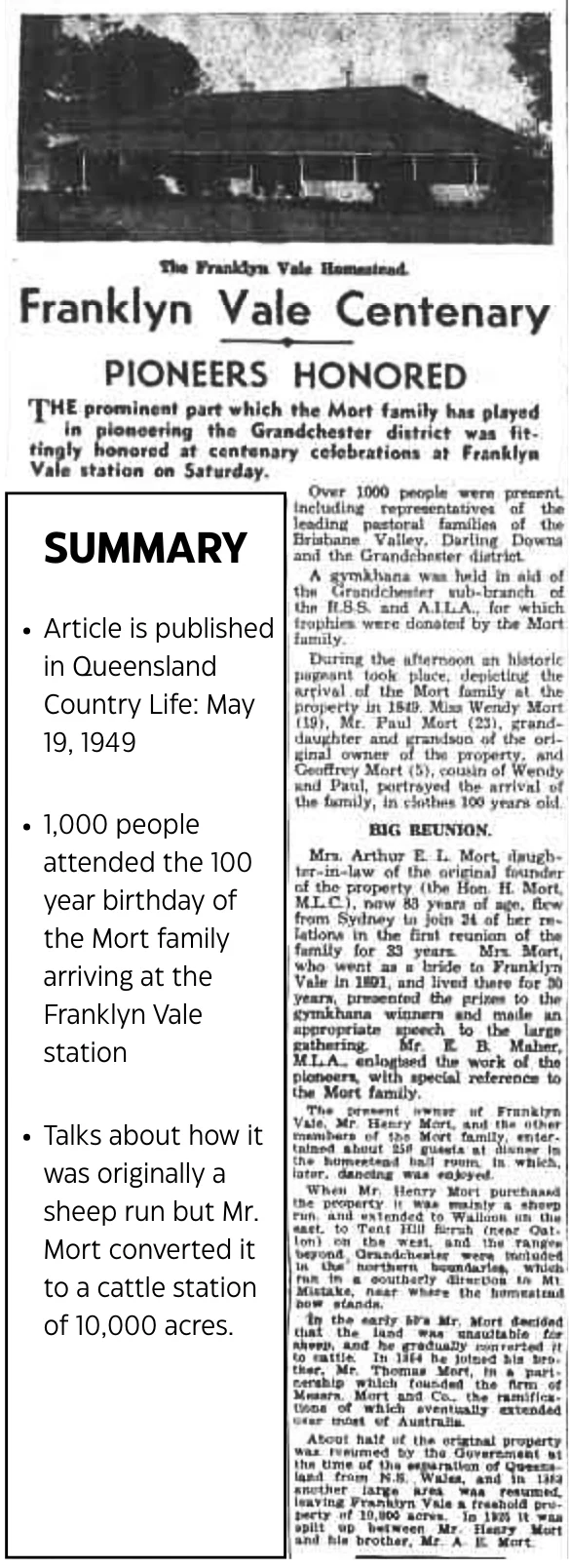
- 1949. This article (shown below) was published in Queensland Country Life on May 19, 1949 celebrating the centenary of Franklyn Vale station.
- 2000s. Mort descendants continued daily ownership and care of the homestead.
- 2020s. The place remains a working property and family home.
- 2025. Cropping parcel at 1 Franklyn Vale Rd (≈321 ha with pivots, multiple bores and a 500 ML dam) placed under contract as a separate title; heritage homestead excluded (guide $7–9m). See RealEstate.com.au listing here.
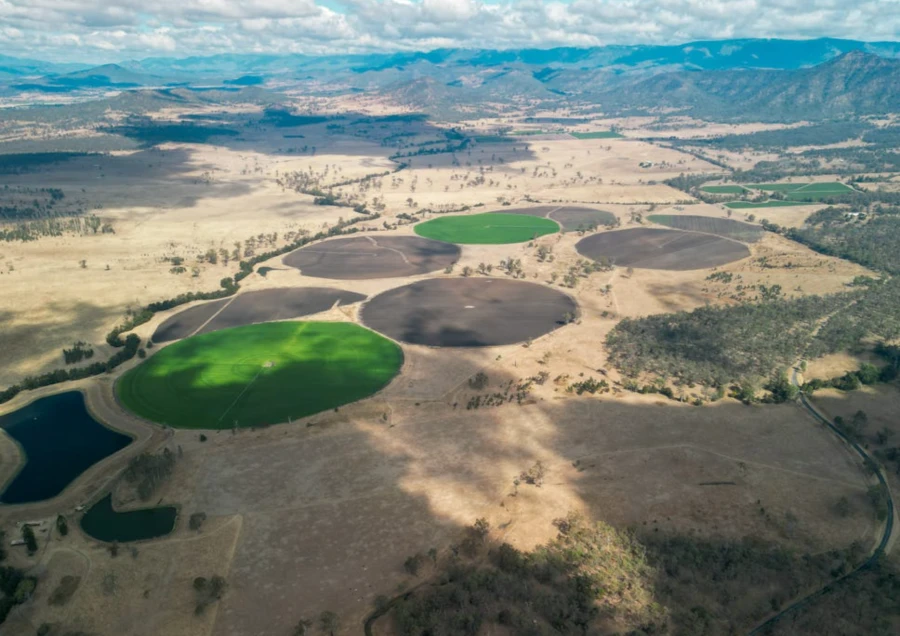
Drone image showing 1 Franklyn Vale Road, Mount Mort. This land is 321 ha for sale for the first time in 175 years (now under offer). The circles show 50 acre sweet corn and green bean crop growing with a centre pivot irrigator keeping it watered. Note: this sale does not include the heritage homestead which sites bottom left just out of image.
🛠️ Renovations & Restorations
Highlight
Added rooms and upgraded roofing and services in 1900. Later work focused on conservation grants and keeping original fabric intact.
- Architects. In 1900 the firm of Addison & Corrie designed new works at the homestead.
- Schoolroom. The 1900 reno added a schoolroom to the servants’ wing (NW corner).
- Guest wing. The 1900 program added a guest bedroom wing at the south‑west corner.
- Roofing. Around 1900 the original shingle roofs were sheathed in iron.
- Kitchen. The kitchen was enlarged and updated during the 1900 works.
- Garden room. Around 1901 a timber summerhouse was built in the garden.
- Grounds. Early 1900s works refined the gardens and established a tennis lawn.
- Grant. In 2008 the homestead received a $25,000 conservation grant.
- Integrity. Most of the original 1870s structure and the 1900 additions remain.
- Layers. The current roof retains iron over shingles as a visible historic layer.
- Outbuildings. Key outbuildings such as the slab shed and meat house survive on their original sites.
🌟 Why it Matters / Heritage Importance
Highlight
The homestead is protected for its historic, architectural and social significance. Its intact ensemble and long family link make it a clear example of a Queensland station homestead.
- Listing. The place sits on the Queensland Heritage Register (Place ID 600728) dated 21 October 1992.
- Recognition. It is noted by the National Trust and covered by local heritage overlays.
- History. The site helps show the pattern of Queensland’s pastoral development.
- Type. The place is a strong example of a rural homestead complex with house, wings and outbuildings.
- Aesthetic. Siting, gardens and the rows of bunya pines give it marked visual appeal.
- Association. The property has a long link with the Mort family over multiple generations.
- Continuity. The homestead remains a private residence and working property.
- Education. The place offers scope for learning about homestead conservation and rural life.
Sources
- Franklyn Vale Homestead. Wikipedia.org.