

Aberfeldy at a Glance:
- Victorian Filigree Queenslander. Designed by Henry Wyman in c.1878 as a grand timber showpiece.
- Newspaper Royalty. Built for the Kippen family, who ran The Queensland Times from 1877 to 1938.
- Sleeping Beauty. The home sat mysteriously empty for two decades (1997–2018) before the current custodian bought it for $700k.
🔢 By The Numbers

- Address: 3 Syntax Street, Sadliers Crossing
- Built: c.1878
- Layout: 4 bedrooms
- Outdoor: 3 verandahs
- Fireplaces: 2
- Value: $700,000 (2018 sale)
- Growth: Sold for $175k in 1989
- Dormant: Sat empty for ~20 years
- Plaque: Installed 2004
Back in the 1870s, if you ran The Queensland Times, you didn’t just build a cottage.
You built a headliner.
Aberfeldy was the family HQ for the Kippens—the bosses behind the local paper—and they made sure it looked the part.
Iron lace, twin gables, and even a “ballroom” inside make it a proper Ipswich Queenslander.
For a while there, the story went quiet. The house sat empty for nearly 20 years, gathering dust and fueling local curiosity.
Thankfully, the silence is long-over. A grateful new custodian has the keys and is pouring love (and plenty of money) back into the old girl.
And she’s looking great.
Have a wander in Google Street View:
📜 Origins & History
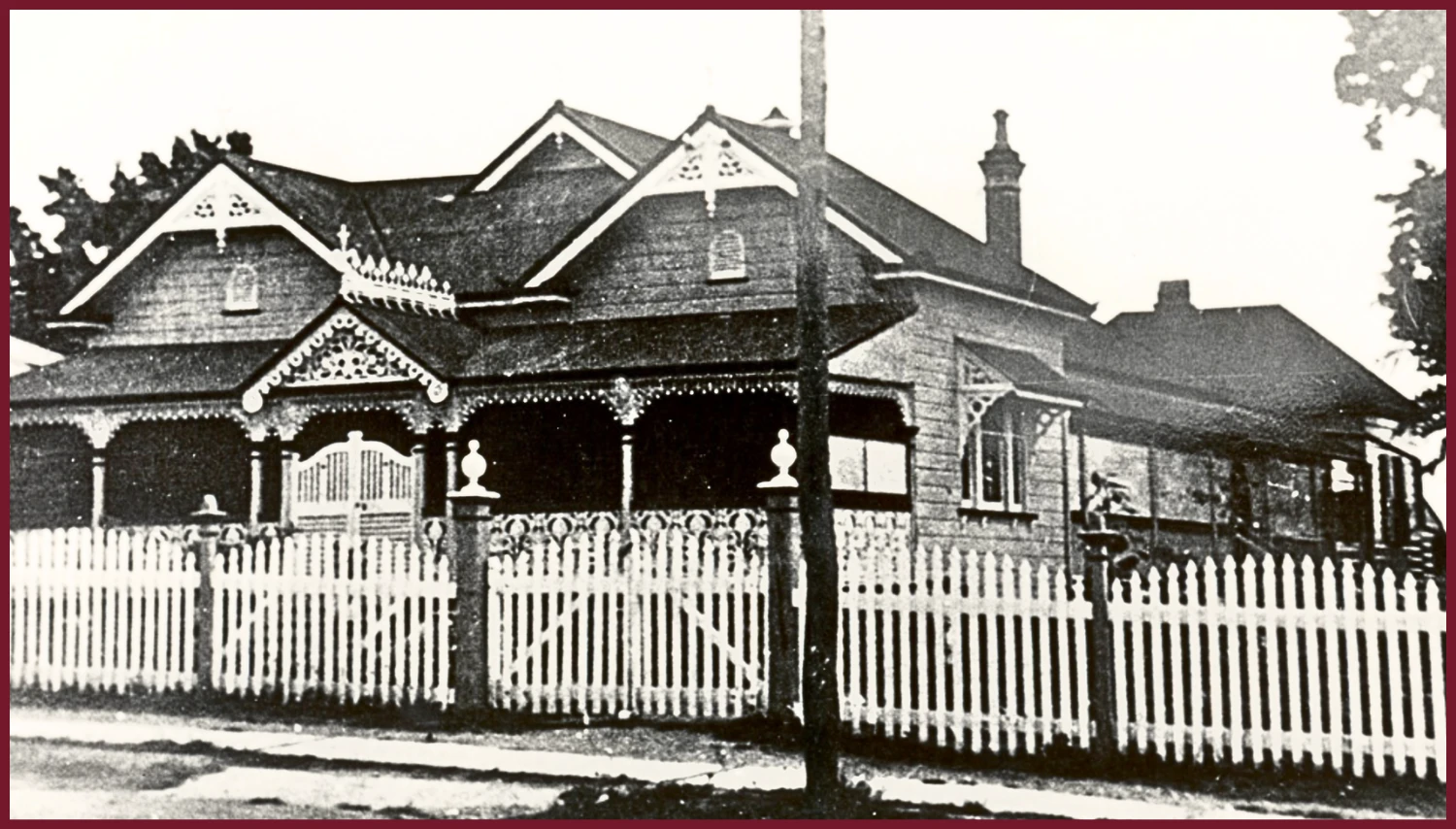
Aberfeldy – pre 1900 (Source: Picture Ipswich)
Highlight
Aberfeldy started as the Kippen family headquarters and is tied forever to the history of The Queensland Times. The name—and the people inside—link straight back to Scotland and a well-known local family network.
- Location. You’ll find Aberfeldy at 3 Syntax Street, Sadliers Crossing.
- Origins. Designed by architect Henry Wyman for William and Mary Kippen (née Broughton).
- Date. Built around c.1878.
- Namesake. Named after the burgh of Aberfeldy, Perthshire—William’s birthplace in Scotland.
- Family. Mary was the daughter of local identity Joseph Broughton.
🏗️ Architecture & Design
Highlight
This is a low-set timber home that knows how to make an entrance. The focus is entirely on the front façade—the gables, the intricate entry, and the verandahs work together to give it serious street presence.
- Style. A classic low-set timber house.
- Roofline. Dominated by a complex gable roofline.
- Frontage. The front elevation features two distinct projecting gables.
- Details. Gables are finished with decorative cast-iron finials.
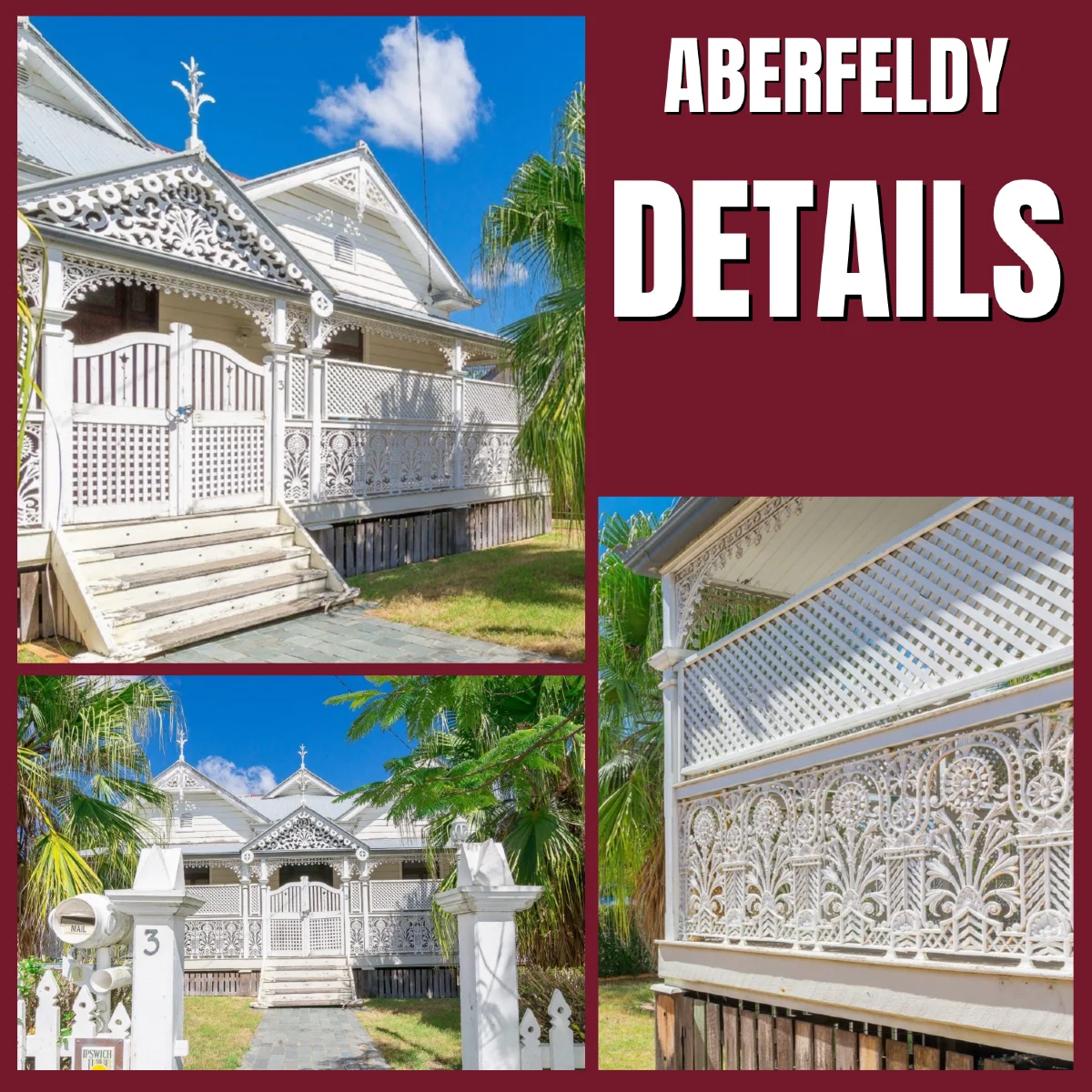
- Timberwork. Includes ornate timber pendants on the gables.
- Fretwork. Fine bargeboard fretwork sits behind the main detailing.
- The Entry. Marked by a projecting frontispiece coming off the verandah roof.
- Pediment. The entry features a detailed timber fretwork pediment.
- Ironwork. The ridge carries a decorative cast-iron fringe.
- Gablet. A smaller central gablet sits on the ridge between the main gables.
- Airflow. Main gable walls feature small louvred ventilator panels.

- Chimney. Topped with a traditional terracotta pot.
- Verandahs. Deep verandahs wrap around three sides of the home.
- Roofing. Verandahs are covered by separate straight roofing.
- Balustrades. Front verandah features cast-iron balustrades and fringing.
- Columns. Verandah posts are finished with moulded capitals.
- Privacy. Spaces between posts are filled with infill lattice.
- Windows. Side window hoods feature timber fretwork and brackets.
- Rear. The back of the home is private and not visible from the street.
- Garden. Two palms frame the entry path in symmetrical planting.
- Fence. The boundary is marked by an arched picket fence.
- Posts. Fence posts feature bevelled heads and moulded surrounds.
- Bedrooms. Four bedrooms, all fitted with built-in wardrobes.
- Master. Main bedroom includes a private ensuite.
- The “Ball Room”. A central hall with a vaulted ceiling and fireplace—described as a ball room.
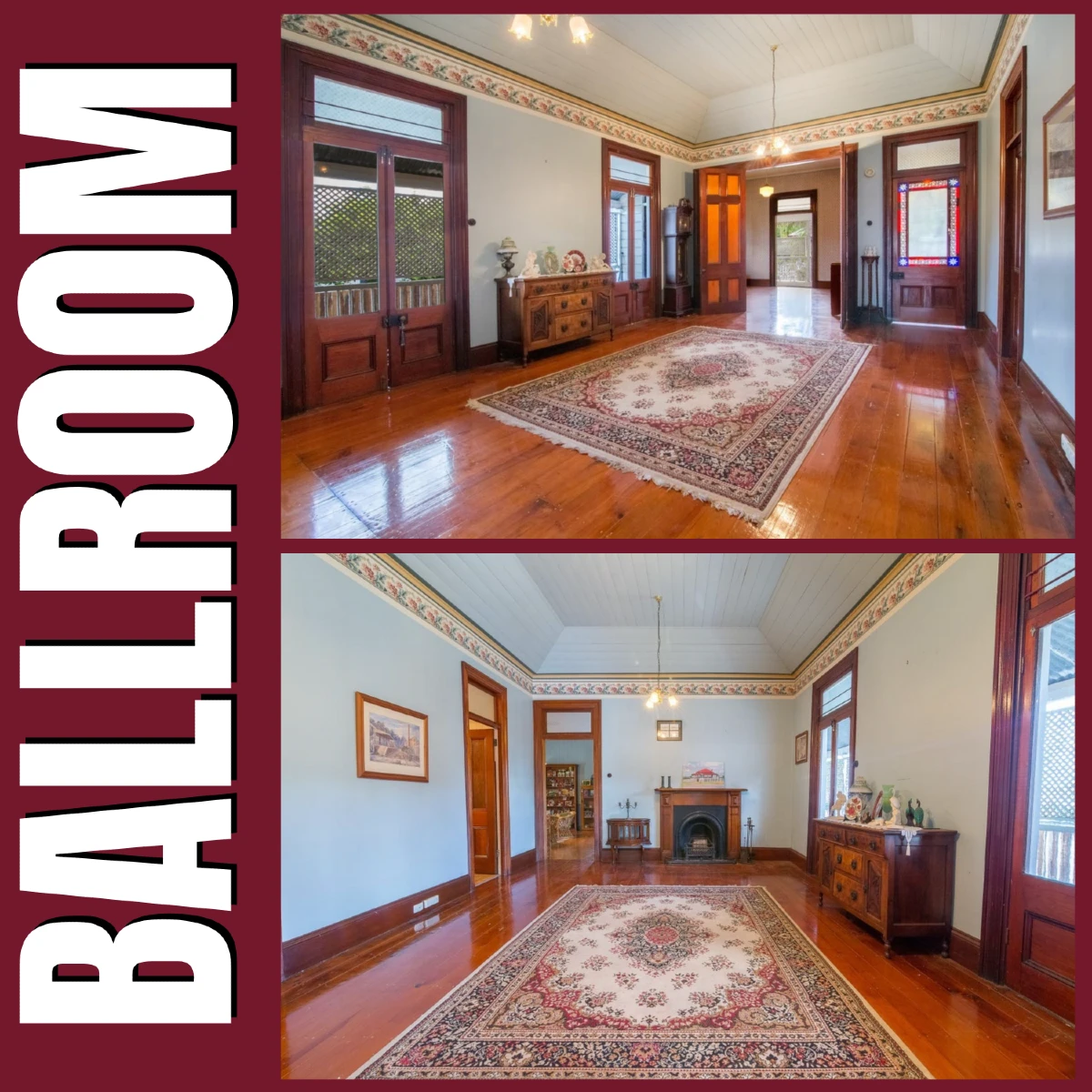
- Dining. Formal dining room connects to the ball room via timber doors.
- Lounge. Separate lounge opens out to the south-eastern verandah.
- Flow. A breezeway links the living areas to the rear utility rooms.
- Kitchen. Eat-in style, crafted from Tasmanian timber.
- Originals. Kitchen retains the original brick chimney.
- Winter. Kitchen includes a wood heater.
⏳ Through the Years
Highlight
The timeline tracks William Kippen’s journey from Scotland to Ipswich and his rise to the top of The Queensland Times. Later years show a quiet period where the house sat empty for decades between sales.
- 1850. William Kippen born in Aberfeldy, Perthshire, Scotland.
- 1855. Arrives in Australia with his parents in 1855.
- 1862. After time in Texas, William and his widowed mother move to Ipswich.
- 1914–1938. He climbs the ranks at the QT, eventually serving as Chairman of Directors.
- 1938. After retiring to Southport, the Kippens return to Ipswich; Mary passes away in 1938.
- 1940. William Kippen dies in 1940.
- 1989. Property sells for $175,000 (28 August).
- 1997. Property sells for $190,000 (3 October).
- 2018. Property sells for $700,000 (3 May).
🛠️ Renovations & Condition
Highlight
The house has grown beyond its original footprint, with later work adding complexity to the roofline. A notable slice of local history is that before 2018, this grand home sat empty for nearly 20 years.
- Evolution. Enlarged over the years, creating a more elaborate roofline.
- Timeline. Exact dates for the early extensions are unknown.
- Vacancy. Prior to the 2018 sale, the home was owned for two decades but never lived in.
- Current Works. The new custodian shared in a Facebook post that works include a new fence and gates, roof repairs, fresh paint, and new front stairs—preserving the home’s original “bones”.
🌟 Why it Matters
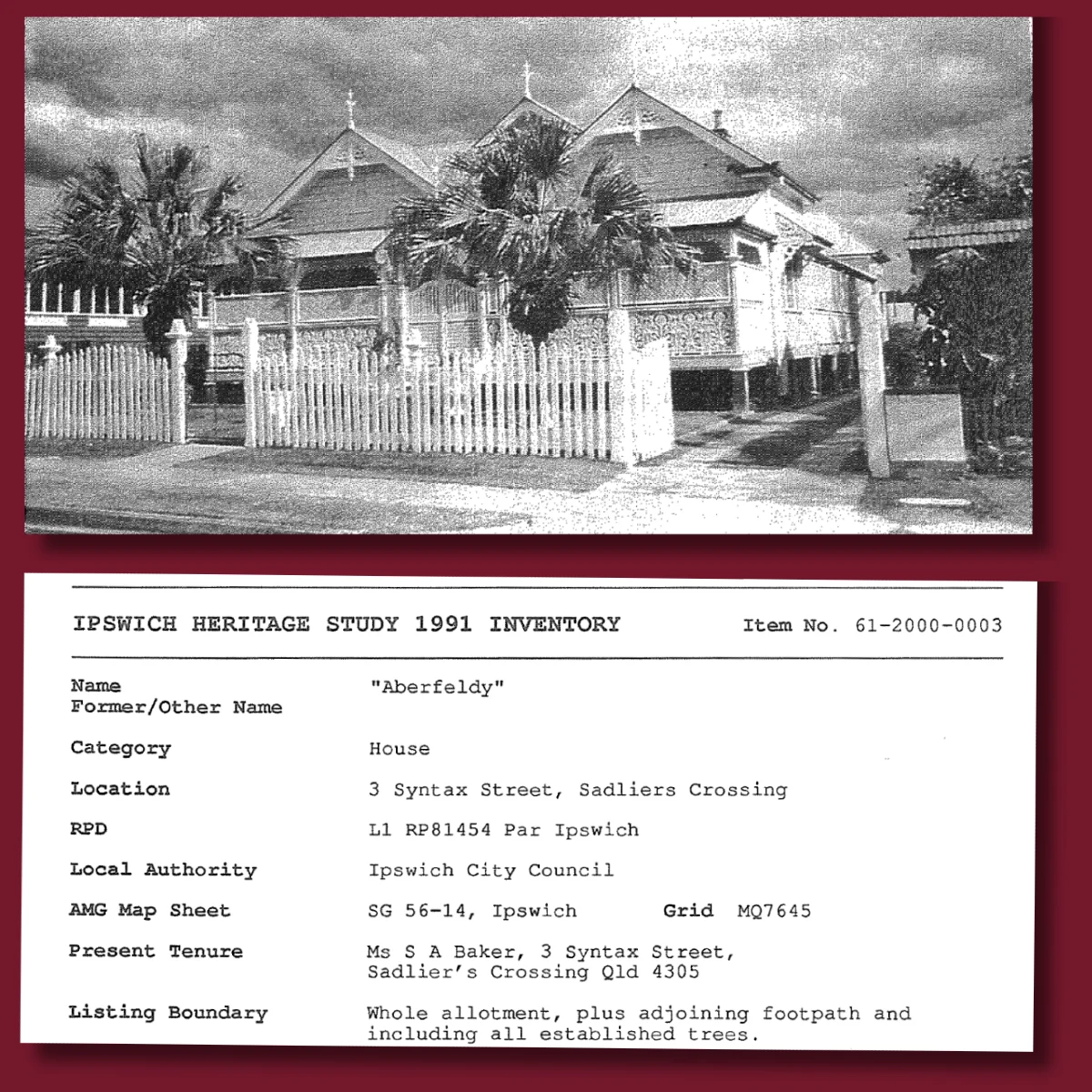
Aberfeldy – Ipswich Heritage Study 1991 Inventory listing (source)
Highlight
Aberfeldy links a prominent Ipswich architect to a major figure at the QT. Beyond the history, the decorative façade, palms, and arched fence give Syntax Street its genuine character.
- The QT Connection. Tied directly to William Kippen and The Queensland Times.
- Architect. A documented domestic work by Henry Wyman.
- Streetscape. The palms and arched fence are key to the street character.
Sources
- “Historic house Aberfeldy…”. CourierMail.com.au.
- 3 Syntax Street, Sadliers Crossing, QLD 4305. RealEstate.com.au.