
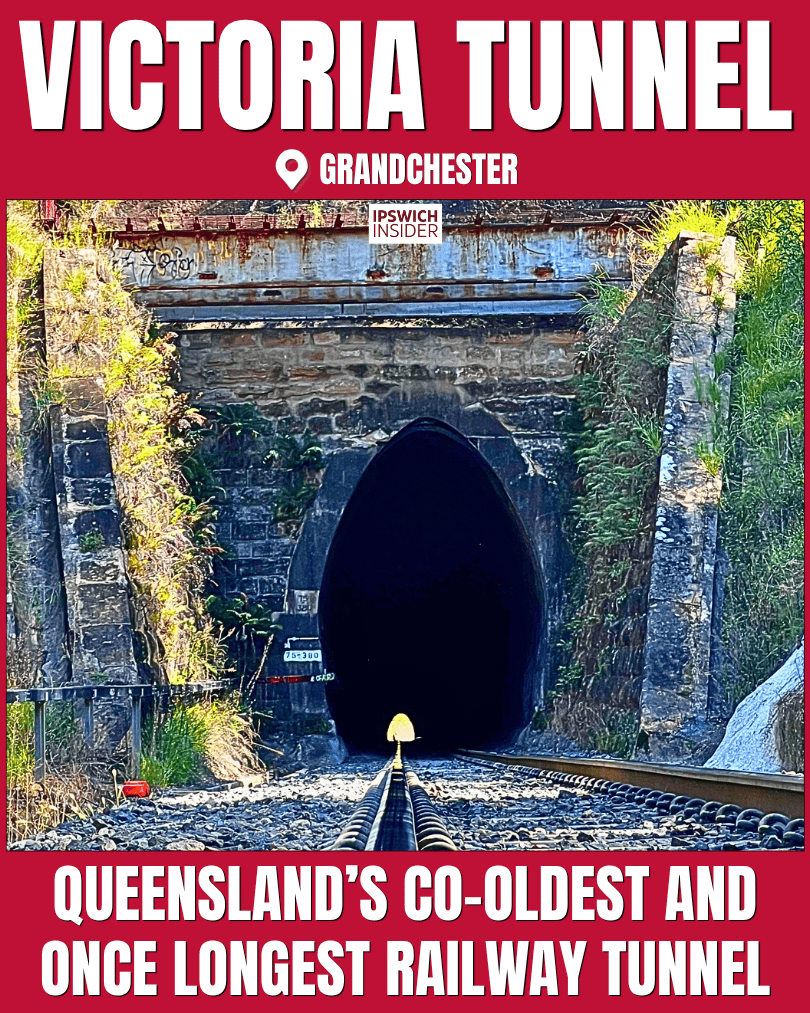
Victoria Tunnel at a Glance
- Co-oldest and once longest. Victoria and Six Chain opened together in 1866. At 537 metres, Victoria was Queensland’s longest railway tunnel when it opened.
- Still active. Freight trains and Queensland Rail Travel’s twice-weekly Westlander still use this corridor.
- Upgraded in 2020. 11 heritage tunnels across the Toowoomba and Little Liverpool ranges were lowered by about 1 metre for 9’6″ high-cube freight containers.
- Named for Queen Victoria. Rail accounts believe Victoria Tunnel was named in honour of Queen Victoria. It makes sense!
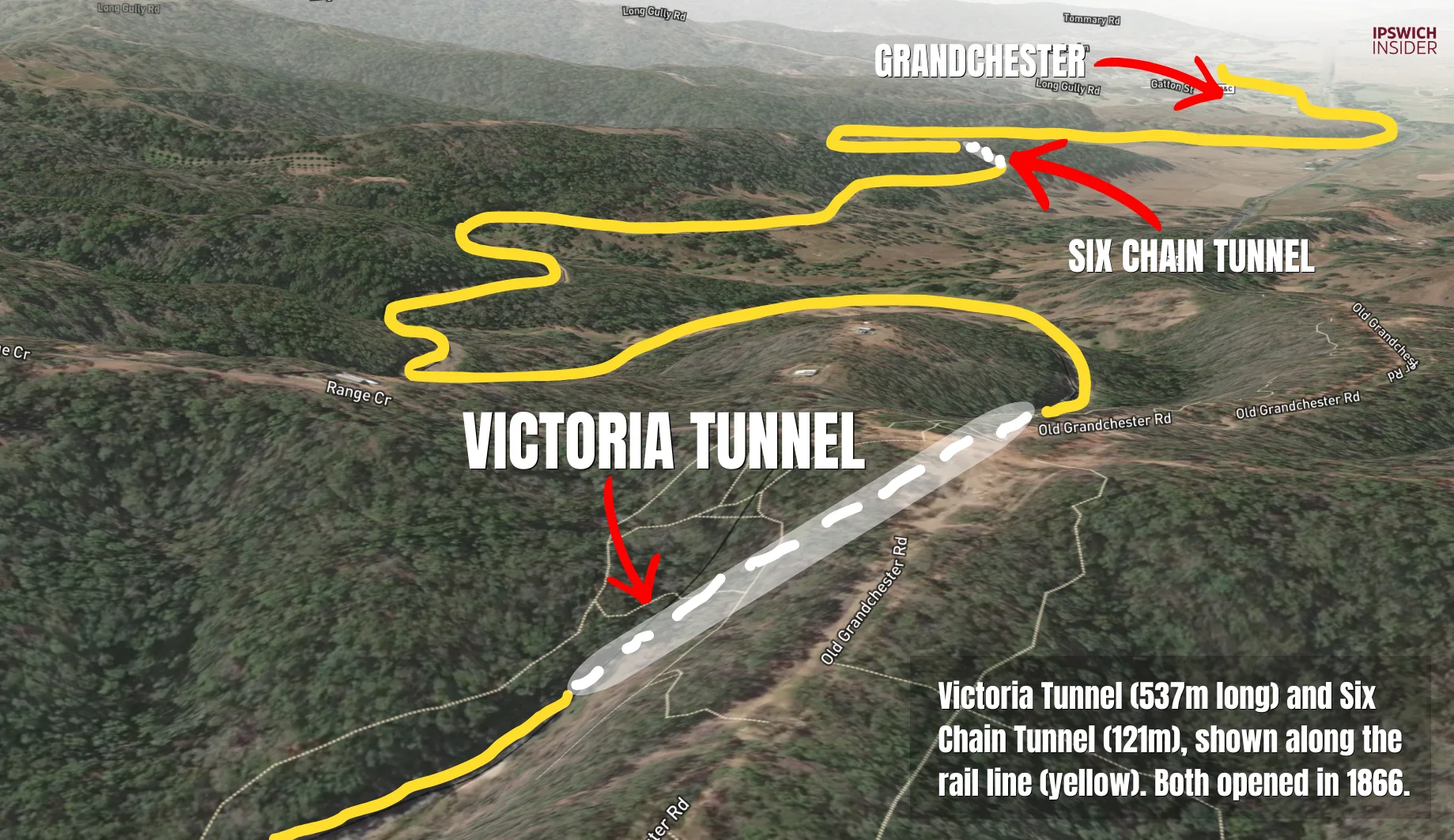
Victoria Tunnel (537m long) and Six Chain Tunnel (121m), shown along the rail line (yellow). Both opened in 1866. Image source: Ipswich Elevation Explorer
🔢 By The Numbers
- 1863 – Abram Fitzgibbon set out the official plan and cost estimate for the Little Liverpool Range crossing
- £80,000 – Fitzgibbon’s allowance for the range crossing
- 31 July 1865 – Queensland’s first railway opened from Ipswich to Bigge’s Camp, now Grandchester
- 1 June 1866 – Victoria and Six Chain opened with the next section west to Gatton
- 537 metres – Victoria Tunnel’s length
- 588 yards – Victoria Tunnel length in the 1865 engineering report
- 6 chains – Old measure behind Six Chain Tunnel’s name
- 121 metres – Modern equivalent of six chains
- 1.28 million bricks – Est. number needed to line Victoria Tunnel throughout.
- 11 tunnels – Heritage tunnels lowered in the 2020 clearance project.
- ~1 metre – Approximate floor lowering in that upgrade, according to BMD.
- 9’6″ – High-cube container height the upgrade was designed to clear.
- 2 weekly return services – Current Westlander frequency between Brisbane and Charleville.
Is it common knowledge Queensland’s oldest and once longest railway tunnel is in Grandchester?
Let’s learn more about it.
Victoria Tunnel opened in 1866. That makes it, along with Six Chain Tunnel 3 km to the east, the state’s two oldest railway tunnels.
At 537 metres, it was also Queensland’s longest railway tunnel when it opened. That title now belongs to Brisbane’s Cross River Rail tunnels at 5.9 km.
It helped push Queensland’s first railway west through the Little Liverpool Range, and it still forms part of an active rail corridor today.
More Ipswich Gold:
Jump to:
How the tunnel pushed rail through the range

The rail line (yellow) connecting Ipswich to Gatton climbs over the Little Liverpool Range. Victoria Tunnel and Six Chain Tunnel were built in 1866 to cut straight through it. Image source: Ipswich Elevation Explorer

More details
- Location: Victoria Tunnel sits on the Little Liverpool Range between Grandchester and Laidley.
- Purpose: It carried the next stage of Queensland’s first railway west beyond Grandchester.
- Opening day: The Grandchester to Gatton section opened on 1 June 1866.
- Tunnel pair: Victoria and Six Chain were the only two tunnels on this range crossing.
- Bigger line: This route later became part of the Main Line west to Toowoomba and the Darling Downs.
The first railway reached Grandchester before the tunnels
More details
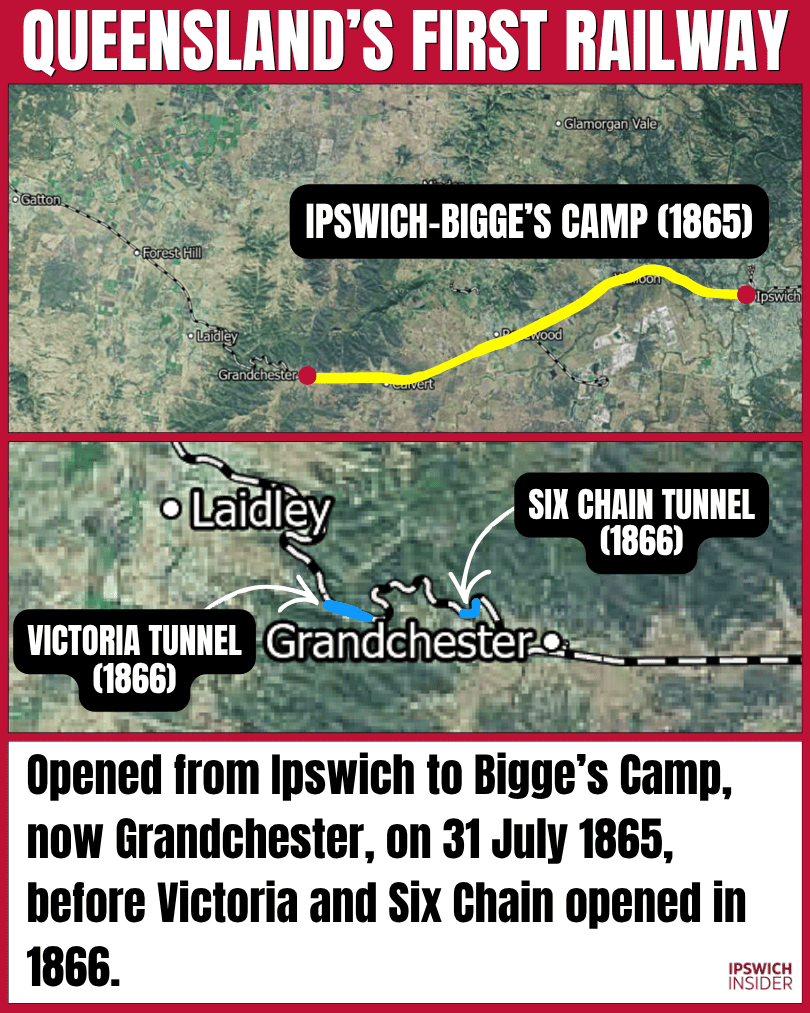
- First stage: Queensland’s first railway opened from Ipswich to Bigge’s Camp on 31 July 1865.
- New name: Bigge’s Camp was later renamed Grandchester.
- Next step: Victoria and Six Chain opened with the next section west to Gatton on 1 June 1866.
- Why it mattered: This was the start of the rail push toward Toowoomba and the rich Darling Downs.
- Gauge choice: Queensland used 1067 mm narrow gauge, a world first for a main line.
- Local importance: Grandchester was the end of the first stage and the jumping-off point for the next one.
Why Victoria Tunnel stood out in 1866

More details
- Length: Heritage records put Victoria at 588 yards, which is about 537 metres.
- Longest then: When it opened, Victoria was Queensland’s longest railway tunnel.
- Name: Contemporary railway accounts say the tunnel was named in honour of Queen Victoria.
- Co-oldest: It opened on the same day as Six Chain, so it is co-oldest rather than oldest on its own.
- Larger job: Victoria was the bigger and harder to build of the two Little Liverpool tunnels.
- Still important: It remains part of a working railway corridor nearly 160 years later (as of 2026).
The smaller tunnel 3 km west of Victoria Tunnel
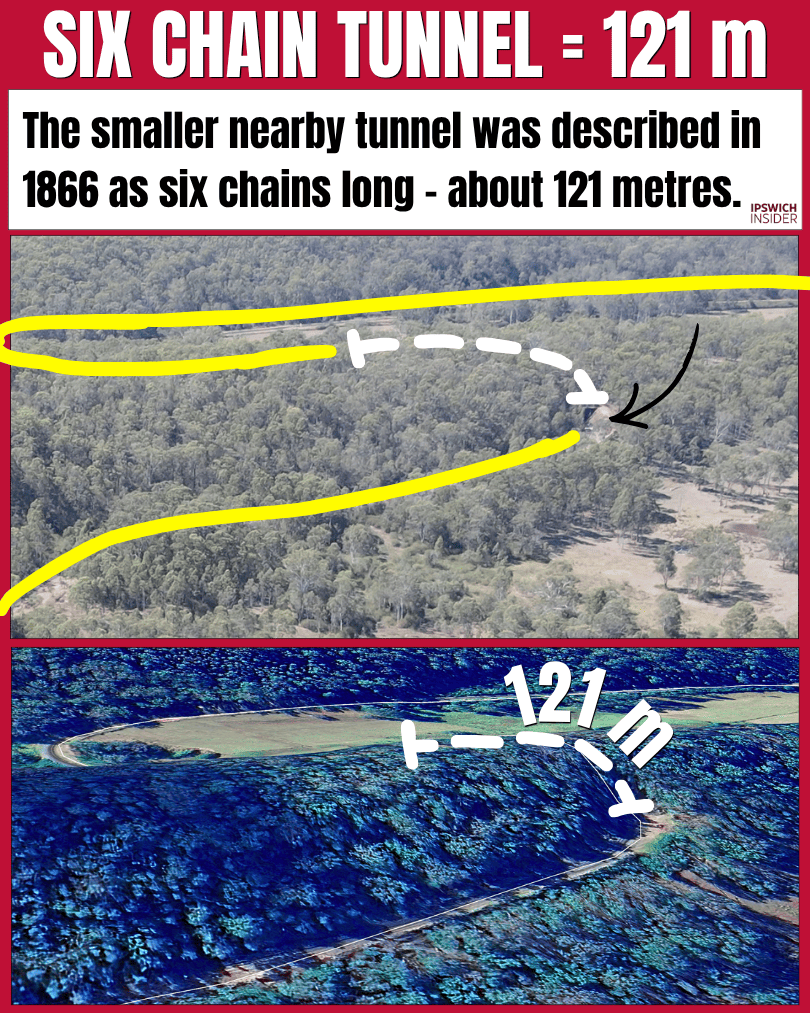
More details
- Same opening: Six Chain opened with Victoria on 1 June 1866.
- Shorter tunnel: Old reports described it as six chains long, which is about 121 metres.
- Old measure: One chain equals 20.1 metres, so six chains is just over 120 metres.
- Name clue: The name comes from an old railway measure. Some historic sources point to its length, others to its curve, and some to both.
The official plan before digging began

More details
- Chief engineer: Abram Fitzgibbon was Queensland’s first chief engineer and a key figure in the colony’s early rail plans.
- Official estimate: In 1863, he allowed £80,000 for the Little Liverpool Range crossing, with tunnel at top.
- Today’s money: Using a rough inflation-style comparison, that is about A$25 million today.
- Bigger job: Fitzgibbon’s full Ipswich to Toowoomba estimate was £617,349 13s.
- Cost pressure: The route was shaped by economy. Tight curves, steep grades and tunnels actually helped keep costs down.
- Narrow gauge: Queensland chose the 1067 mm narrow gauge because it was cheaper to build through hard country. Today, most of Australia’s interstate rail system uses the wider 1435 mm standard gauge, but Queensland still relies on 1067 mm across almost all of its network. This has reduced compatibility with the national system and limited train size, axle loads and freight capacity compared with broader-gauge railways.
How workers built Victoria Tunnel
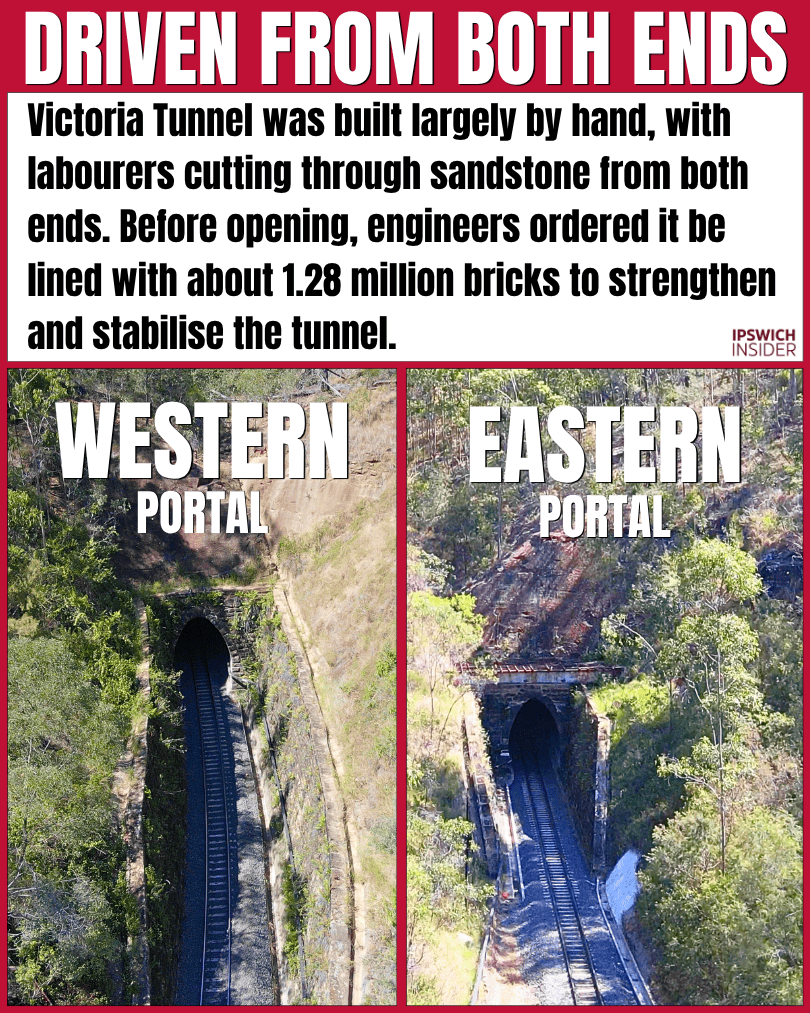
More details
- Work under way: By September 1864, excavation had already started from both portals.
- Built by hand: Labourers did the work largely by hand, cutting through rock from each end.
- Hard ground: Contemporary accounts describe the Little Liverpool tunnels as being driven through solid rock.
- Brick lining: Before opening, engineers decided Victoria needed brick lining throughout.
- Brick count: The estimate came to about 1.28 million bricks.
- Why bricks: The lining was needed to strengthen and stabilise the tunnel.
- Finished line: Victoria opened with the Grandchester to Gatton section in June 1866.
What stood beside the western portal

More details
- Early rail site: The west-end site began as a condition stop in 1866, not a public station.
- Signal cabin: An interlocked cabin followed in 1891.
- New name: The site was renamed Yarongmulu in 1913.
- Rail job: It helped manage train movements on this single-track range section.
- Moved away: The old cabin was moved to Grandchester in May 1997.
- Still in use: Today it serves as the ticket office at the Grandchester Model Steam Railway.
Why the tunnel floor was lowered in 2020

More details
- Big upgrade: In 2020, crews finished lowering 11 heritage tunnels across the Toowoomba and Little Liverpool ranges.
- Height gain: BMD says the tunnel floors were lowered by about 1 metre.
- Main reason: The work created clearance for 9’6″ high-cube freight containers.
- Extra works: The project also included 4.3 kilometres of track work plus drainage and ramp upgrades.
- Different methods: Eight tunnels received track slabs while three kept ballast and sleepers.
- Wider impact: The upgrade boosted freight capacity and also helped modernise Westlander operations.
How to experience the line today
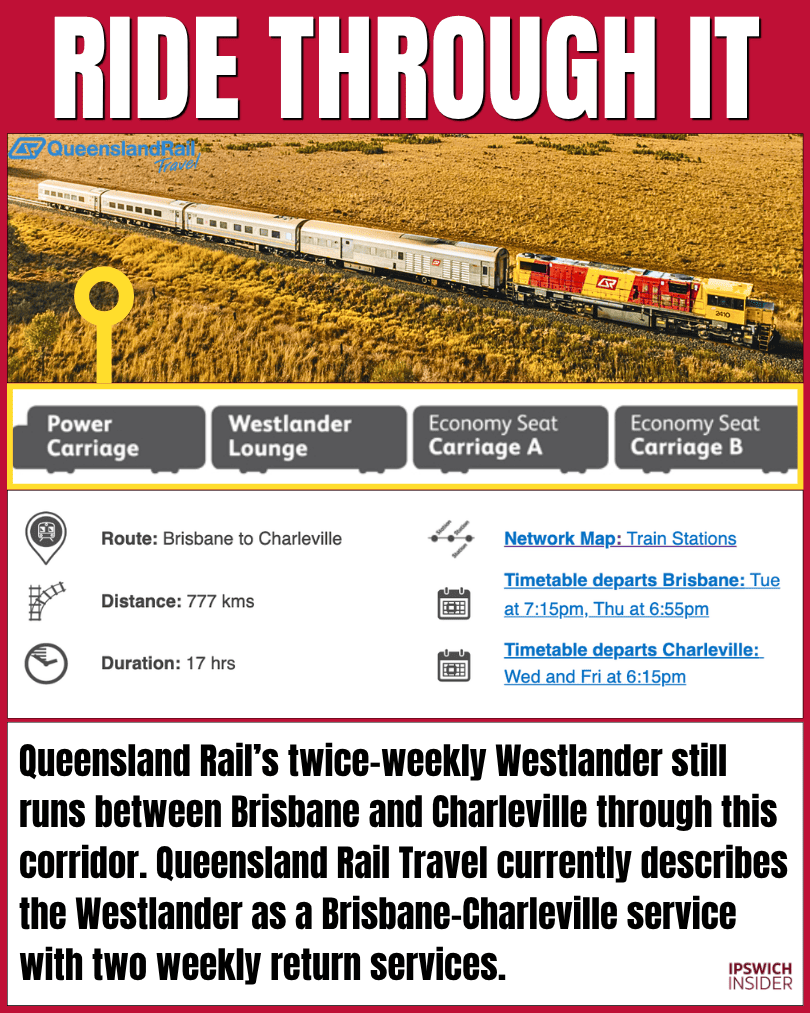
More details
- Passenger service: Queensland Rail Travel’s Westlander still runs twice weekly between Brisbane and Charleville.
- Working corridor: Freight trains still use this line alongside the Westlander.
- Same route: Westbound trains use the line through Rosewood, Laidley, Gatton, Helidon and Toowoomba.
- Ride option: If you want to pass through this part of the line as a passenger, the Westlander is the practical way to do it.
- No tunnel stop: There is no public station at Victoria Tunnel itself.
- Safer visit: For a ground-level heritage stop, Grandchester station is the better option.
- Extra stop: Grandchester station is now open as a volunteer-run museum, and the nearby model steam railway adds another rail-themed visit.
Sources
- Evolution of rail in Queensland. Queensland Museum.
- Record of the Proceedings of the Queensland Parliament – 4 August 1863. Parliament.qld.gov.au
- Laidley Shire Council Heritage Study. LockyerValley.qld.gov.au
- Opening of the Railway to Gatton. Trove / The Brisbane Courier, 19 June 1866.
- Railway Pioneering: My Fifty-Eight Years as a Railway Man. Archer Park Rail Museum.
- Mainline Winter 2012. NMRA Australia.
- Yarongmulu Queensland Government Railways. SignalBox.org
- Ride Information. Grandchester Model Steam Railway.
- Queensland Rail 2019-2020 Annual Report. QueenslandRail.com.au
- Toowoomba Range Clearance Upgrade. BMD Group.
- Westlander. Queensland Rail Travel.
- Historic Grandchester station’s new lease on life. Queensland Rail.
- Exchange Rates. Reserve Bank of Australia.
- Pre-Decimal Inflation Calculator. Reserve Bank of Australia.