
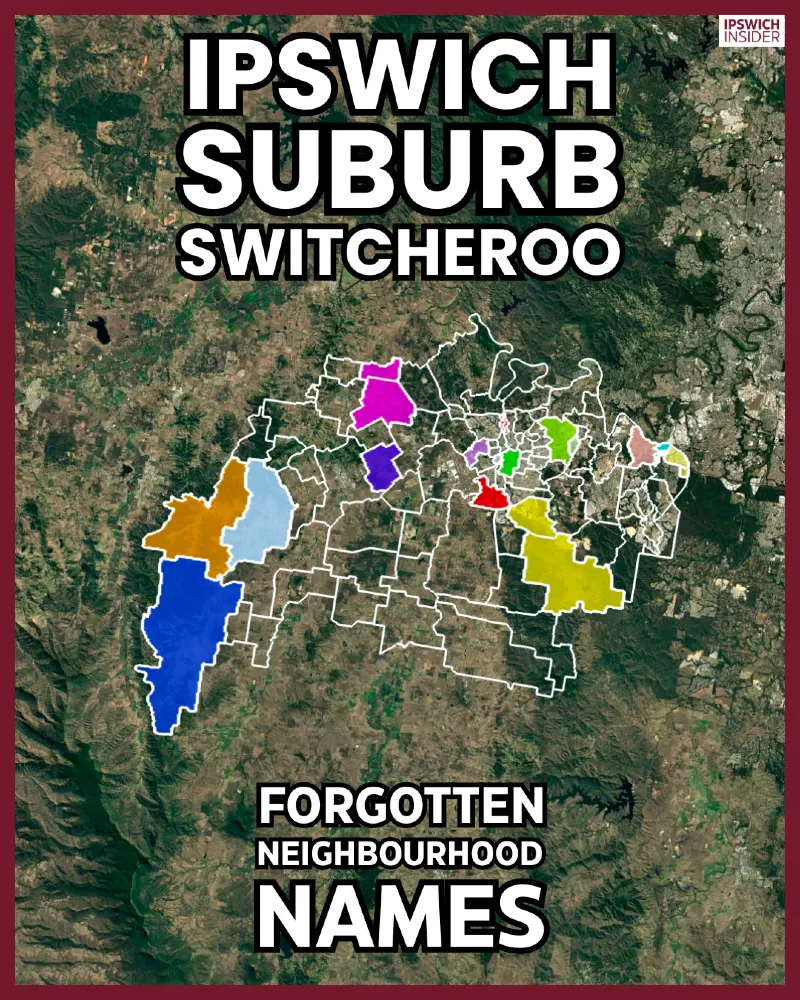
Forgotten Names at a Glance
- Why names changed: Railway stations often decided suburb names—renamed after a coal mine, a railway junction, or even a golf course. Add WWI anti-German changes, spelling fixes, and council boundary shifts. Same land. New names. We’ve mapped 16 below.
- Most familiar three: Raymonds Hill (now parts of North Ipswich and Brassall), Limestone → Ipswich, Woogaroo → Goodna.
- When it happened: Mostly 1860s–1930s, plus one in 2010. Stations and schools drove most changes.
- Your turn: Which old name would you bring back? Or what would you rename today—and why?
Jump to:
Here’s the thing: suburb names tell stories. When they change, we lose a piece of Ipswich’s hidden history.
This isn’t just trivia—it’s your connection to the past. It helps you see your neighbourhood more clearly and shows exactly how the places around you came to be.
Ready to rediscover some lost Ipswich suburbs? Here are the 16 names you’ve probably never heard of—but definitely should.
More Ipswich Gold
Raymonds Hill

You might know this place—even if you haven’t seen it on a map in decades. Raymonds Hill was once an official suburb in Ipswich. But in the early 1990s something happened…
The council split the suburb between Brassall and North Ipswich. The old suburb name officially disappeared overnight. But locals didn’t care about lines on a map. They still call the area Raymonds Hill today.
- Now: Parts of North Ipswich and Brassall.
- Why: Council split the suburb into two, officially removing the name—locals kept it alive anyway.
- When: c. 1992
Limestone
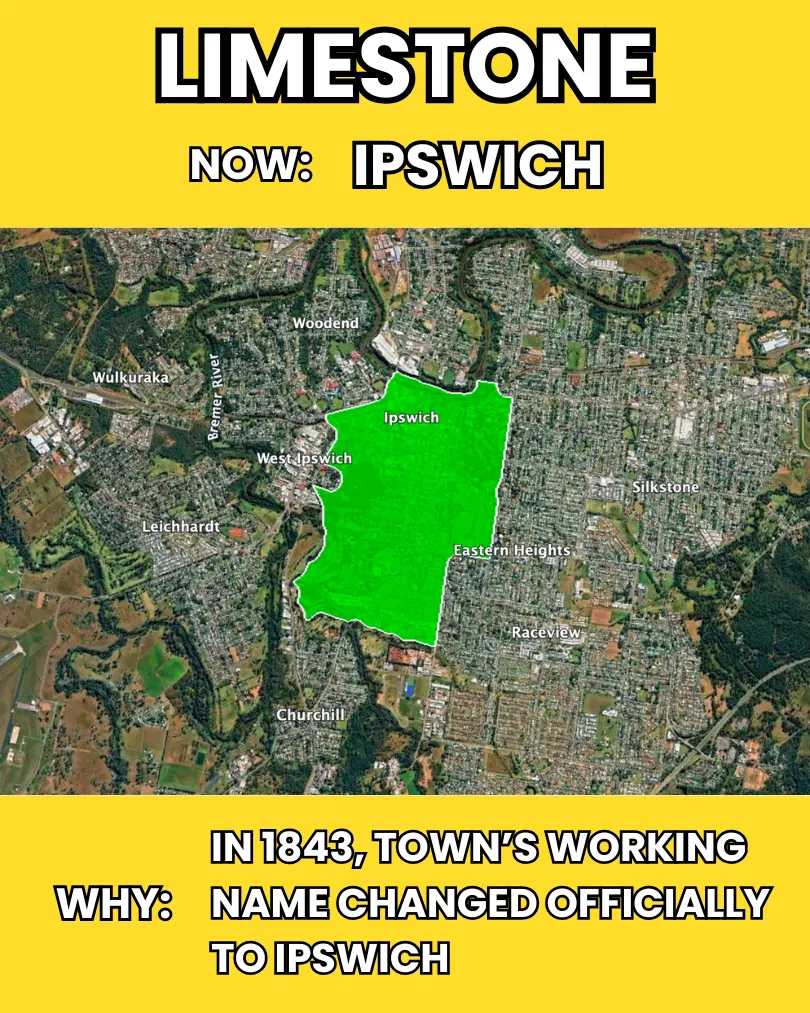
Picture Ipswich before it was Ipswich. It was called Limestone—a name that came from the quarries along the Bremer River. Then, in 1843, Governor Gipps made a decision that would erase “Limestone” from maps for good.
He officially renamed the town Ipswich. The town moved forward, but “Limestone” stayed behind—in street signs and landmarks. A quiet reminder of Ipswich’s rugged past.
- Now: Ipswich.
- Why: Governor Gipps officially renamed the town “Ipswich,” replacing the working name “Limestone.”
- When: 1843
Woogaroo

There’s an odd secret behind how the suburb Goodna got its name. Before 1865, the town was known as Woogaroo, named after the creek running through it. Then someone decided to change the name.
The new choice? “Goodna,” an Indigenous word that—believe it or not—means “dung.” Yes, dung. The creek kept the old name, but the town embraced the new one, odd meaning and all.
- Now: Goodna.
- Why: The township took the Indigenous name “Goodna” (meaning “dung”) replacing creek-based “Woogaroo.”
- When: 1865
St Helens
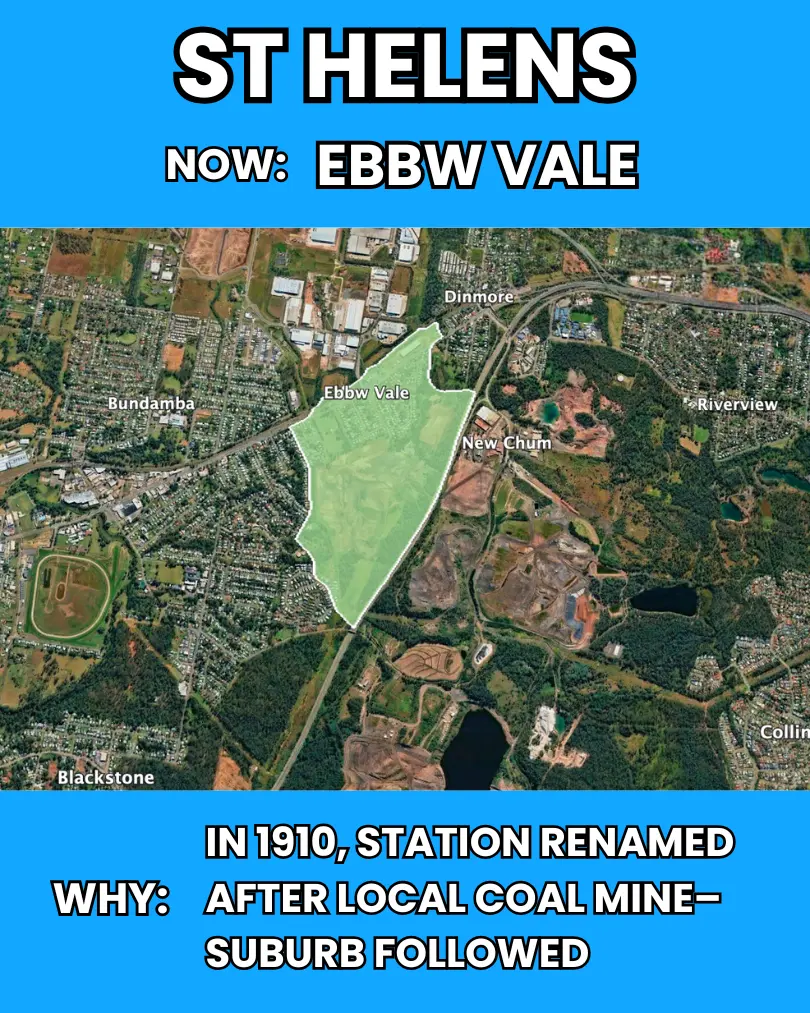
This suburb took its new name from an unlikely source: coal. Originally known as St Helens, the local railway station got renamed after the nearby Welsh-inspired Ebbw Vale Colliery.
The community soon followed suit. From then on, the whole suburb carried the distinctive name of Ebbw Vale.
- Now: Ebbw Vale.
- Why: Railway station renamed after Ebbw Vale Colliery; suburb adopted the name.
- When: 1910
Dingo Hill

It started as Dingo Hill, named after local wild dogs. In 1925, a golf course inspired the railway stop to rename itself Gailes after a Scottish course.
The suburb soon matched the railway. Today, interestingly, Gailes Station actually sits in Wacol, and the real Dingo Hill lies quietly in Camira. Same land, different labels.
- Now: Gailes.
- Why: Railway renamed after golf links; suburb adopted the new name.
- When: 1925
Carole Park (residential area)
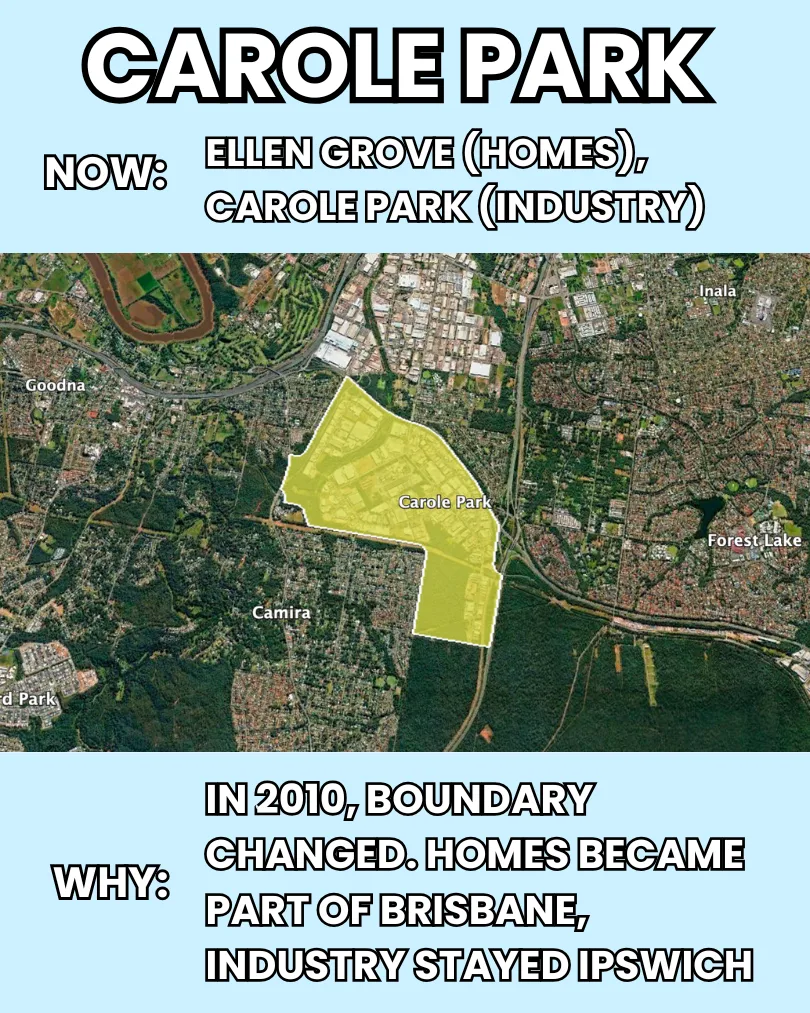
In 2010, the residents of Carole Park woke up in a different city. A council boundary change shifted the residential area into Brisbane as Ellen Grove.
Yet the industry area remained firmly Ipswich. Same streets, same neighbours, but officially a different place.
- Now: Ellen Grove (residential), Carole Park (industrial).
- Why: Boundary redrawn, residential area moved into Brisbane while industry stayed Ipswich.
- When: 2010
Bigge’s Camp

The name Bigge’s Camp sounds like an old bush story—because it was. But when Queensland’s first railway rolled in, the place needed a fresh start.
The new name? Grandchester—literally meaning “big camp.” Clever, right?
- Now: Grandchester.
- Why: Renamed with Queensland’s first railway; “Grandchester” means “big camp.”
- When: 1865
Brisbane Valley Junction
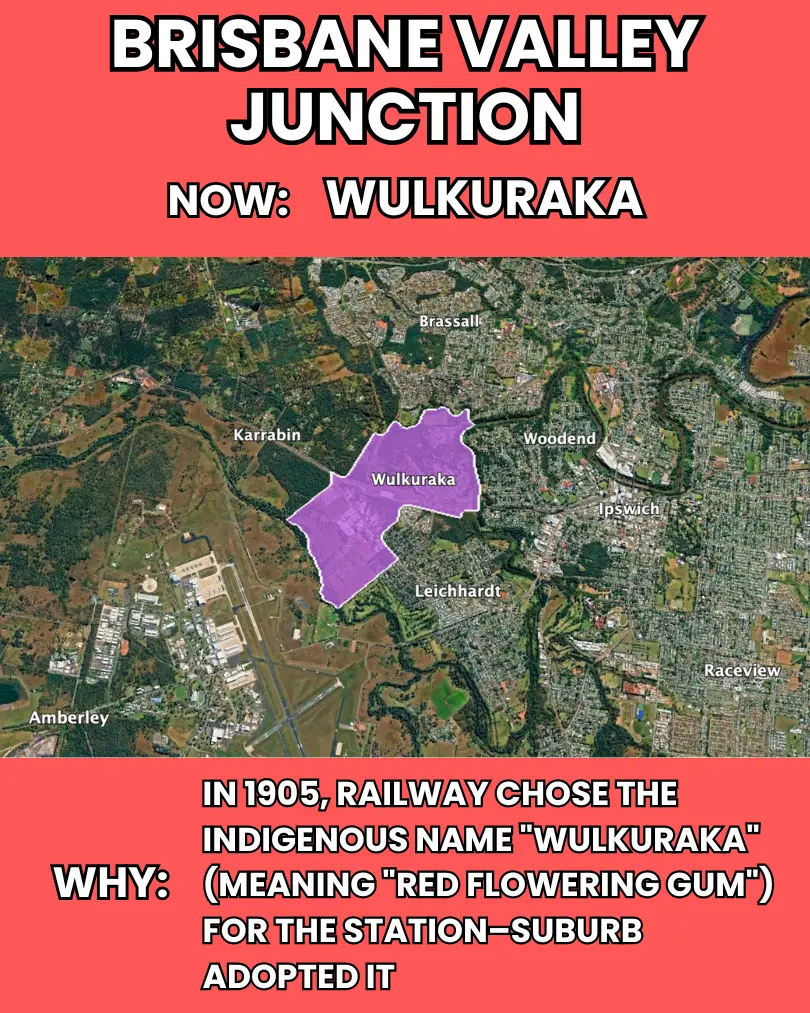
Brisbane Valley Junction was all function, no feeling. Then, in 1905, someone had the bright idea to give the railway stop a new name: Wulkuraka, from an Indigenous word meaning “red flowering gum.”
It stuck, and the suburb took the new, more poetic name.
- Now: Wulkuraka.
- Why: Railway station renamed to Indigenous “Wulkuraka” (red flowering gum), suburb followed.
- When: 1905
Little Ipswich
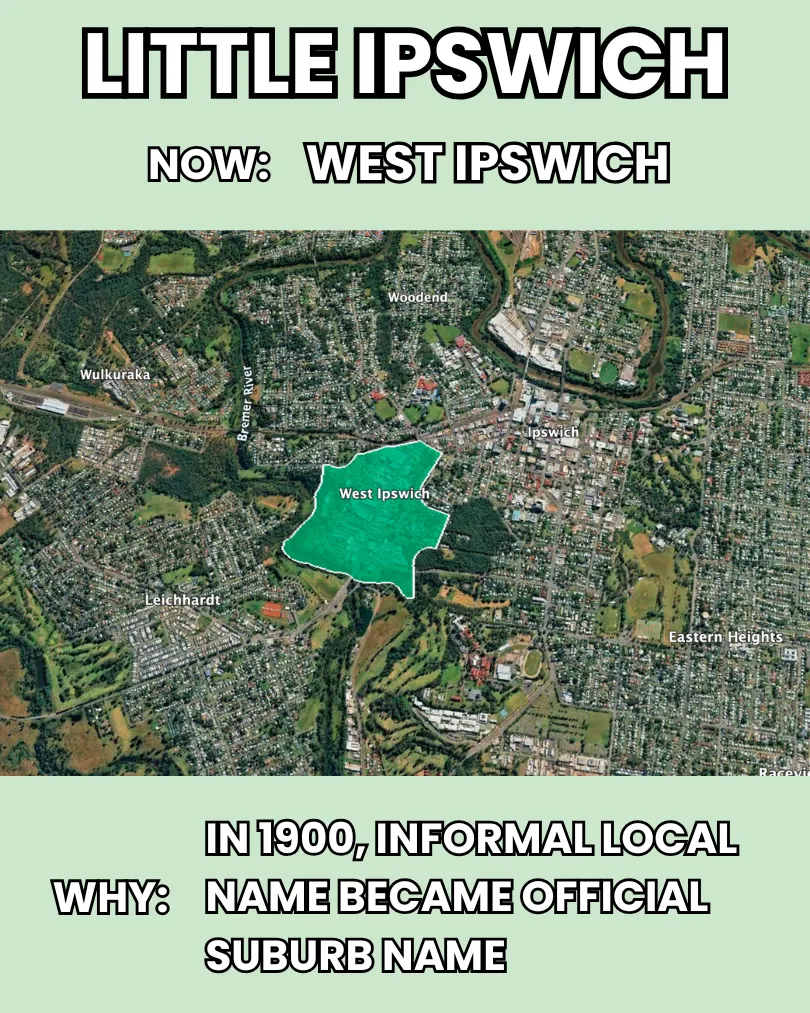
Little Ipswich was a charming nickname for the community on the west bank of the Bremer River.
But charm can only go so far. Eventually, the more official-sounding West Ipswich won out. Yet the old nickname still surfaces in local stories and old newspapers, quietly remembered.
- Now: West Ipswich.
- Why: Informal nickname “Little Ipswich” gave way to the official “West Ipswich.”
- When: c. 1900
Bundanba / Bundumba
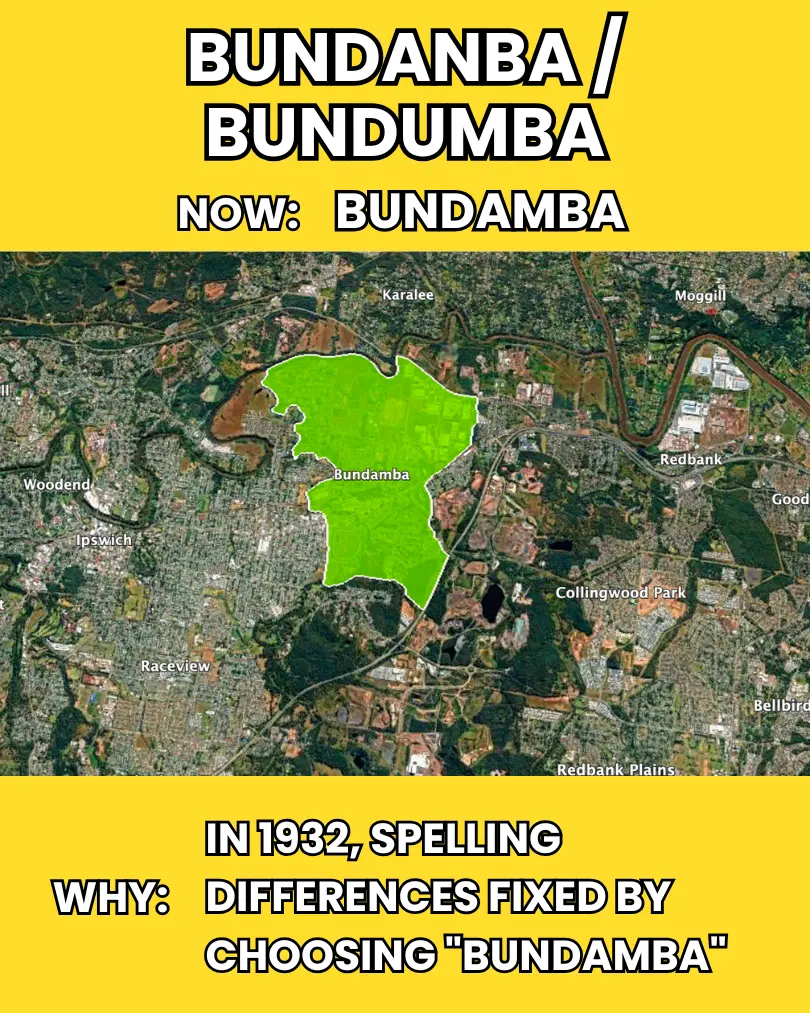
How many ways can you spell one name? For Bundamba, quite a few. In 1932, authorities finally picked one spelling to rule them all.
The name likely comes from an Indigenous word meaning “place of the stone axe,” connecting the suburb to deeper history.
- Now: Bundamba.
- Why: Multiple spellings officially unified as “Bundamba.”
- When: 1932
Loamside / Yamahanto / Mine Accident
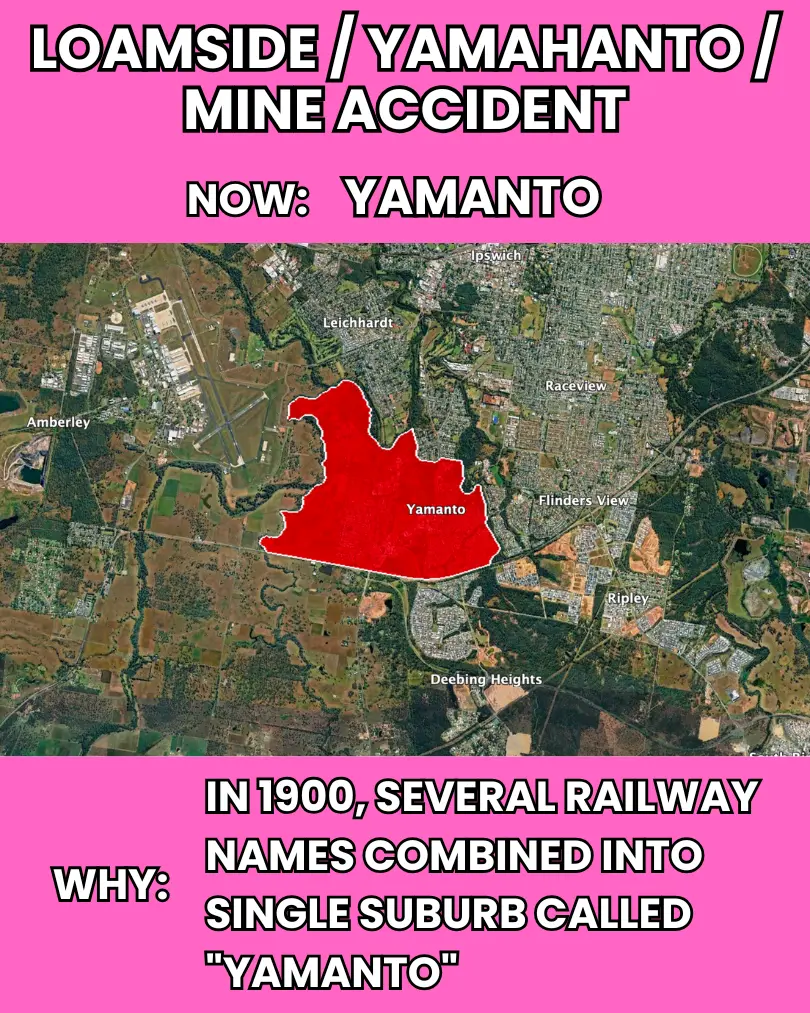
You might think “Mine Accident” is a strange name for a railway stop. It is. But the old Fassifern line had other names too—Loamside and Yamahanto.
Over time, all these quirky station names gave way to one simple suburb name: Yamanto. The railway line itself shut down in the 1960s, but the suburb name stuck around.
- Now: Yamanto.
- Why: Several railway names condensed into one suburb name—Yamanto.
- When: c. 1900
Upper Bundanba

When a school changes its name, sometimes the whole place follows. That’s exactly what happened here.
Bundamba Upper State School switched its name to Ripley State School in 1909. Soon after, everyone started calling the area Ripley. Later, South Ripley emerged too. The school closed, but the names lived on.
- Now: Ripley and South Ripley.
- Why: The school changed its name to Ripley, causing the whole area to adopt the name.
- When: 1909
Kirchheim
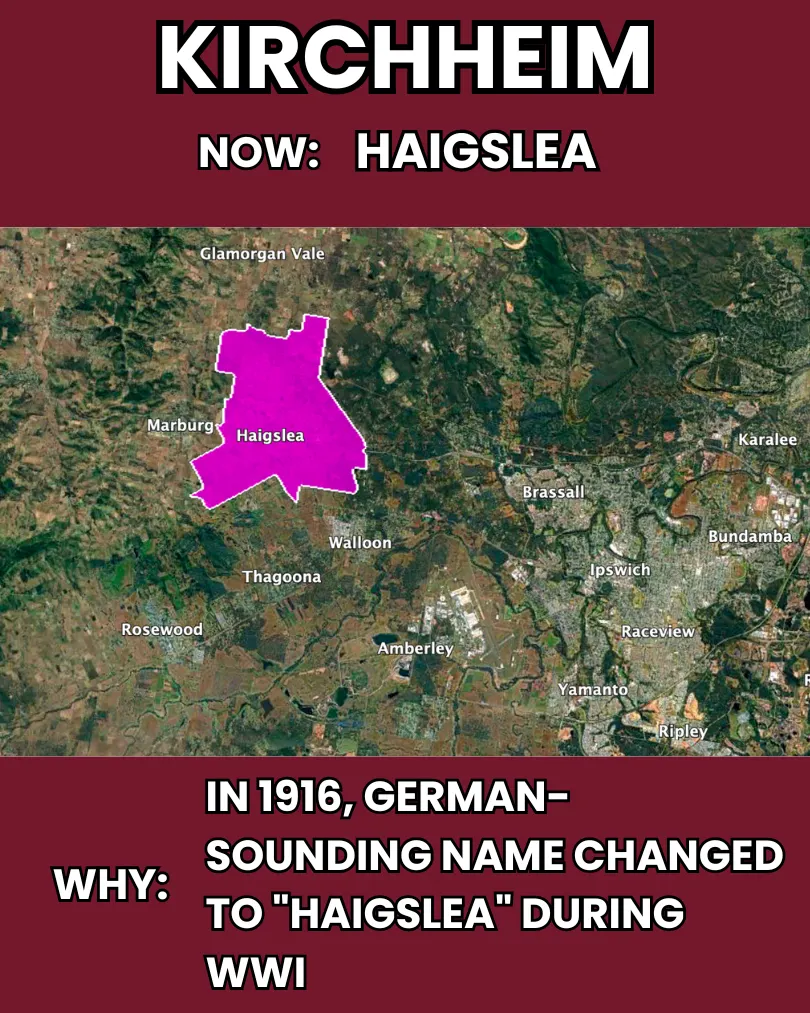
During World War I, names with a German flavour were swiftly replaced on maps across Australia. Kirchheim was no exception.
The area was renamed Haigslea after British General Haig. The land, the farms, and the people stayed the same—only the name changed.
- Now: Haigslea.
- Why: WWI sentiment forced a German name to become Haigslea, honouring General Haig.
- When: 1916
Western Creek
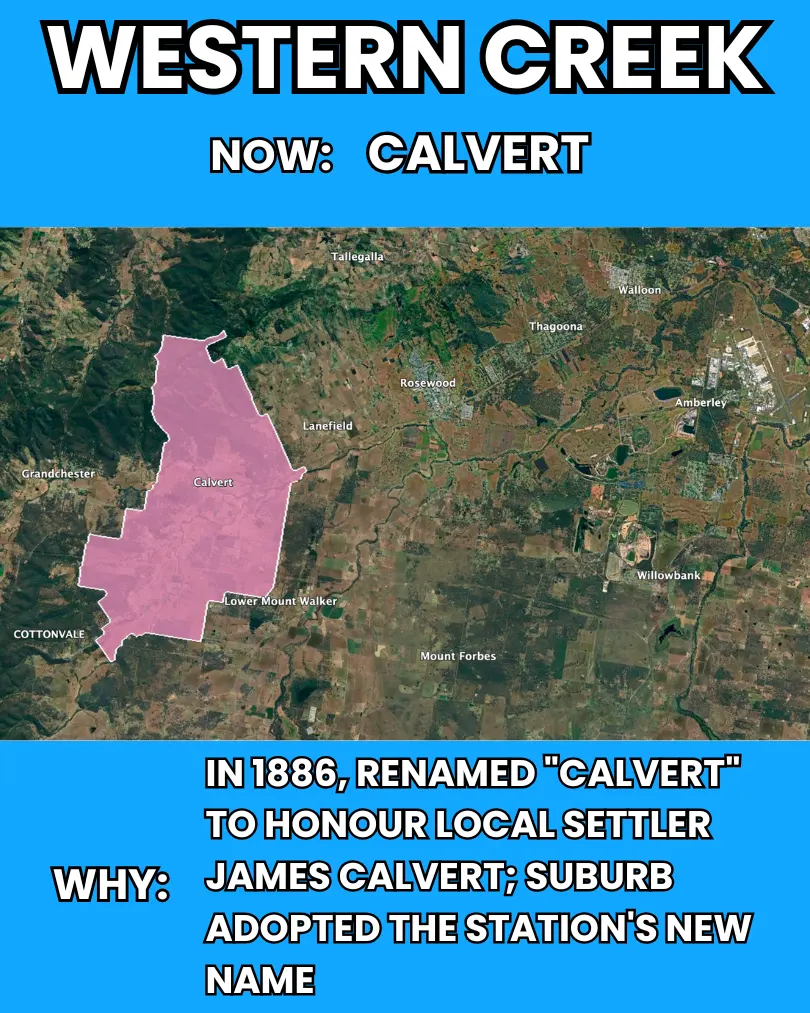
Western Creek was the practical name for a railway stop. But sometimes practical isn’t enough.
In 1886, it was renamed Calvert, likely after the Calvert family. Once the railway switched names, the suburb quickly followed suit.
- Now: Calvert.
- Why: Renamed “Calvert” to honour the local Calvert family; suburb name followed station.
- When: 1886
Raeside
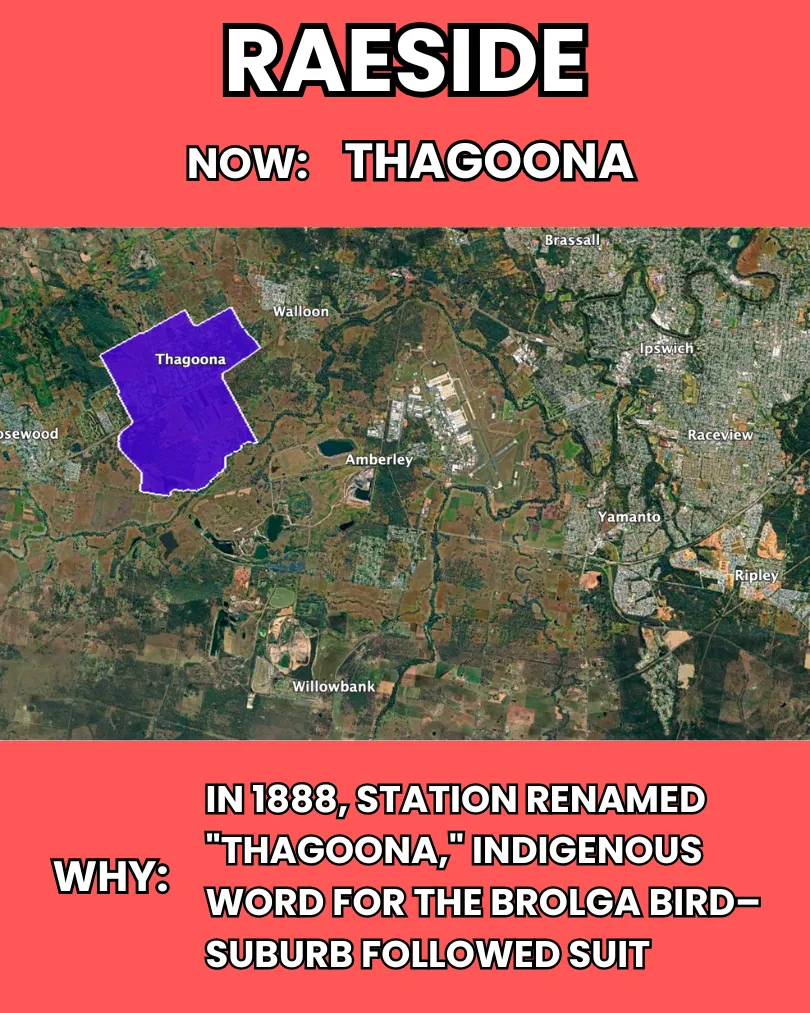
The railway stop named Raeside didn’t last long. In 1888, it was renamed Thagoona.
Thagoona isn’t random—it’s an Indigenous word for the brolga bird, a graceful native crane. Soon after the station changed its sign, locals started calling the suburb Thagoona too.
- Now: Thagoona.
- Why: Station renamed “Thagoona,” Indigenous word for the brolga bird, suburb took the name.
- When: 1888
Gehrkevale
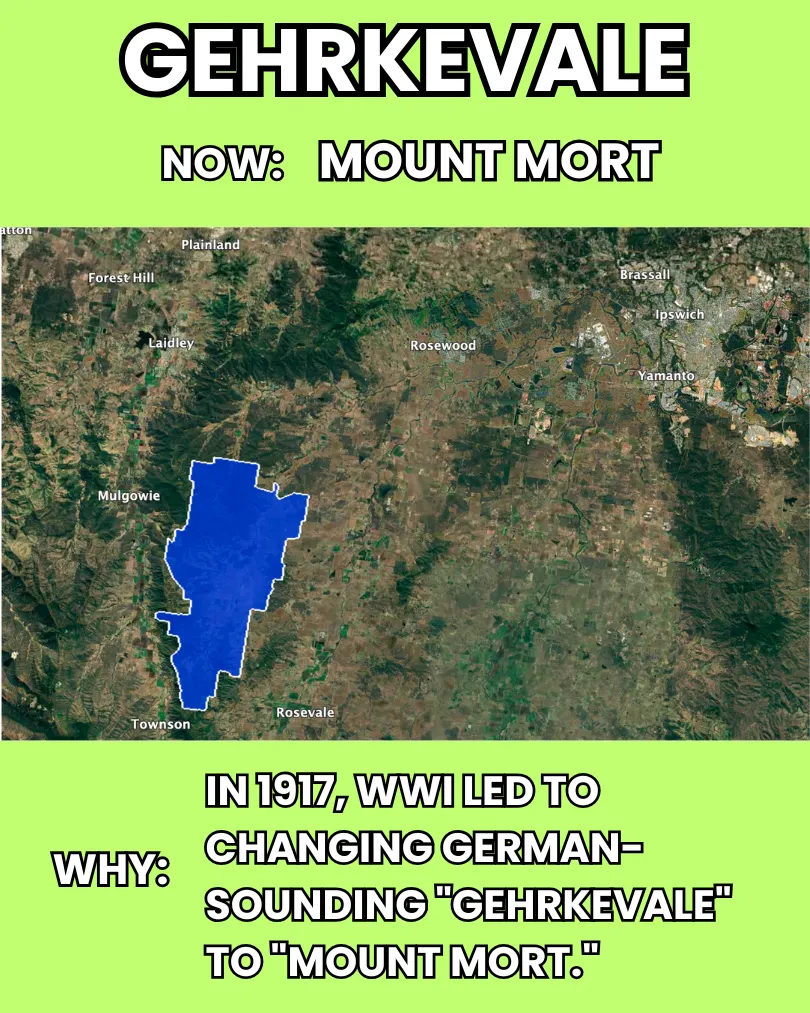
In World War I, German-sounding names quickly became unpopular. Gehrkevale, named after early German settlers, was no different.
Authorities changed the name to Mount Mort, honouring the Mort family instead. Oddly enough, there’s no actual mountain named Mount Mort here—just farmland and open skies.
- Now: Mount Mort.
- Why: War-era sentiment saw German-style “Gehrkevale” replaced with the local Mort family name.
- When: 1917
Sources
- From Limestone to Ipswich ipswichlibraries.com.au
- Goodna – local history pictureipswich.com.au
- Ebbw Vale queenslandplaces.com.au
- Ebbw Vale railway station, Ipswich wikipedia.org
- Wulkuraka – local history pictureipswich.com.au
- Queensland Places: Bigge’s Camp / Grandchester slq.qld.gov.au
- Haigslea – local history pictureipswich.com.au
- Marburg, Haigslea, Ironbark queenslandplaces.com.au
- Calvert – local history pictureipswich.com.au
- Queensland Railway Tourist Guide (1891) espace.library.uq.edu.au
- Thagoona – local history pictureipswich.com.au
- Bundamba, Queensland wikipedia.org
- Yamanto queenslandplaces.com.au
- Yamanto – local history pictureipswich.com.au
- North Ipswich queenslandplaces.com.au
- Carole Park, Queensland wikipedia.org
- Carole Park queenslandplaces.com.au